Long-distance hiking is travel at walking pace. Unlike a day hike, a long-distance trail is not defined only by scenery or difficulty, but by continuity: the repeated act of packing, walking, eating, sleeping, navigating, and moving through a landscape day after day.
These routes can be pilgrimages, wilderness traverses, mountain circuits, national trails, or historic paths linking villages, passes, forests, deserts, coastlines, and high ranges.
The hikes below were selected because they are among the most recognisable long-distance walking routes in the world. Some are famous because of their history, such as the Camino de Santiago. Some are famous because of their scale, such as the Appalachian Trail, Pacific Crest Trail, Continental Divide Trail, and Te Araroa. Others are shorter but iconic because they pass through exceptional mountain landscapes, such as the Tour du Mont Blanc, Everest Base Camp Trek, Inca Trail, Milford Track, GR20, Kungsleden, Torres del Paine W Trek, and West Highland Way.
- Selection criteria
- The fourteen hikes at a glance
- Camino de Santiago / Camino Francés
- Appalachian Trail
- Pacific Crest Trail
- Continental Divide Trail
- Tour du Mont Blanc
- Everest Base Camp Trek
- Inca Trail to Machu Picchu
- Milford Track
- Te Araroa
- West Highland Way
- GR20
- Kungsleden
- Torres del Paine W Trek
- Lycian Way
- Closing note
Selection criteria
These 14 hikes were chosen using a mixture of:
- Global name recognition
- Cultural or historical significance
- Landscape quality
- Long-distance hiking reputation
- Popularity among international walkers
- Availability of recognised route information
- Influence on hiking and thru-hiking culture
The list is not intended to be a strict ranking. Instead, it presents a balanced global selection of famous long-distance walks, from multi-month national traverses to shorter iconic treks.
The fourteen hikes at a glance
Camino de Santiago / Camino Francés
Spain · Classic European pilgrimage route, defined by medieval history and village-to-village walking.
Appalachian Trail
Eastern USA · About 2,198 miles / 3,537 km through 14 states, one of the original modern thru-hikes.
Pacific Crest Trail
Western USA · About 2,650 miles / 4,265 km from Mexico to Canada through California, Oregon and Washington.
Continental Divide Trail
US Rockies · About 3,100 miles / 4,990 km — the wildest of the American Triple Crown trails.
Tour du Mont Blanc
France, Italy, Switzerland · The classic ~170 km Alpine circuit around the Mont Blanc massif.
Everest Base Camp Trek
Nepal · About 125 – 130 km round trip through the Khumbu to the foot of the world's highest mountain.
Inca Trail to Machu Picchu
Peru · About 40 – 45 km through Andean cloud forest and high passes to Machu Picchu.
Te Araroa
New Zealand · About 3,000 km national traverse from Cape Reinga to Bluff.
West Highland Way
Scotland · 96 miles / 154 km from Milngavie to Fort William through the Highlands.
GR20
Corsica, France · About 180 km mountain traverse, one of Europe's hardest waymarked routes.
Kungsleden
Sweden · Just over 450 km of Lapland through alpine terrain and four national parks.
Torres del Paine W Trek
Chilean Patagonia · About 80 km linking Grey Glacier, the Francés Valley and Base Torres.
Camino de Santiago / Camino Francés
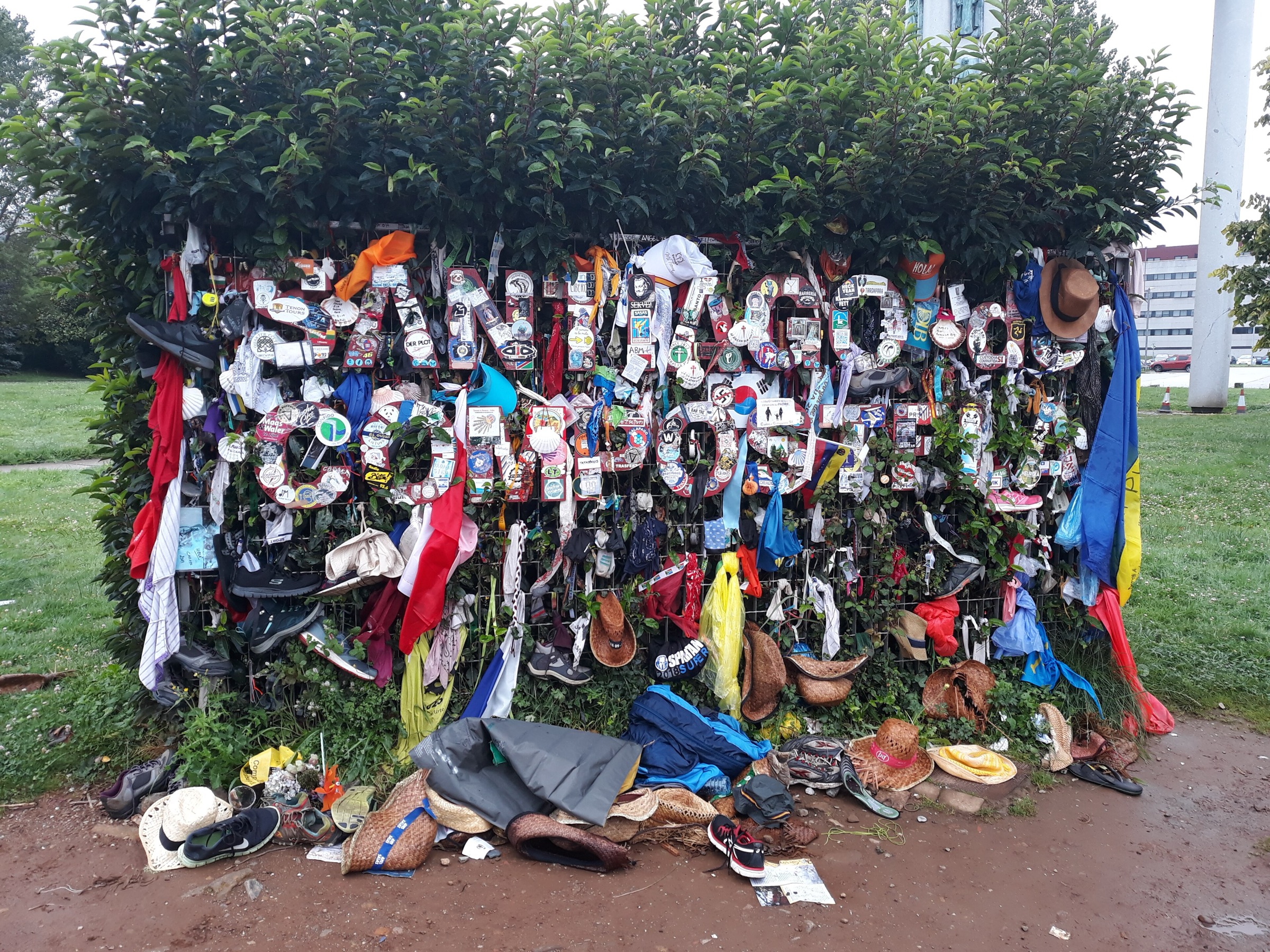
Region: Spain · Distance: Varies by route; the Camino Francés is the classic route
The Camino de Santiago is the great European pilgrimage walk, and the Camino Francés is its best-known route. The French Way is the Jacobean itinerary with the strongest historical tradition and the one most recognised internationally. Its fame comes from the combination of medieval pilgrimage history, village-to-village walking, cathedral cities, and the social culture of the Camino itself.
Why it was selected: It is arguably the most culturally famous long-distance walk in the world, and one of the few trails where the journey is as strongly associated with ritual, hospitality, and shared identity as with landscape.
Read the French Way through Galicia guide →
Appalachian Trail
Region: Eastern United States · Distance: About 2,198 miles / 3,537 km
The Appalachian Trail is one of the defining long-distance footpaths of North America. It runs through 14 states and a long chain of public lands, forests, and mountain ranges in the eastern United States.
Why it was selected: It is one of the original icons of modern thru-hiking, and the idea of walking from Georgia to Maine has become a benchmark for long-distance hiking culture.
Read the Appalachian Trail guide →
Pacific Crest Trail
Region: Western United States · Distance: About 2,650 miles / 4,265 km
The Pacific Crest Trail runs from Mexico to Canada through California, Oregon, and Washington. It links desert, the Sierra Nevada, deep forest, volcanic landscapes, and the Cascades.
Why it was selected: It is one of the world’s most famous thru-hikes, combining huge scale with immense environmental variety.
Read the Pacific Crest Trail guide →
Continental Divide Trail
Region: United States Rockies · Distance: About 3,100 miles / 4,990 km
The Continental Divide Trail is the wildest of the three great US Triple Crown trails. It runs between Mexico and Canada, traversing five states along the Rocky Mountains.
Why it was selected: It represents the more remote, rugged, and navigationally demanding side of American long-distance hiking.
Read the Continental Divide Trail guide →
Tour du Mont Blanc
Region: France, Italy, and Switzerland · Distance: About 170 km
The Tour du Mont Blanc is the classic Alpine circuit, encircling the Mont Blanc massif through France, Italy, and Switzerland. The route combines high passes, valleys, villages, refuges, and constant views of one of Europe’s great mountain groups.
Why it was selected: It is probably Europe’s most famous hut-to-hut mountain circuit, combining major Alpine scenery with strong infrastructure and a logical circular route.
9-day itinerary · 7-day itinerary · 6-day itinerary
Everest Base Camp Trek
Region: Nepal · Distance: About 125 – 130 km round trip, depending on itinerary
The Everest Base Camp Trek is the classic Himalayan trekking route. It usually starts and finishes at Lukla, passing Namche Bazaar, Tengboche, Lobuche, Gorak Shep, Kala Patthar, and the final glacier approach to Everest Base Camp.
Why it was selected: Few treks are as globally recognisable. It leads not to a summit, but to the foot of the world’s highest mountain.
Read the Everest Base Camp guide →
Inca Trail to Machu Picchu
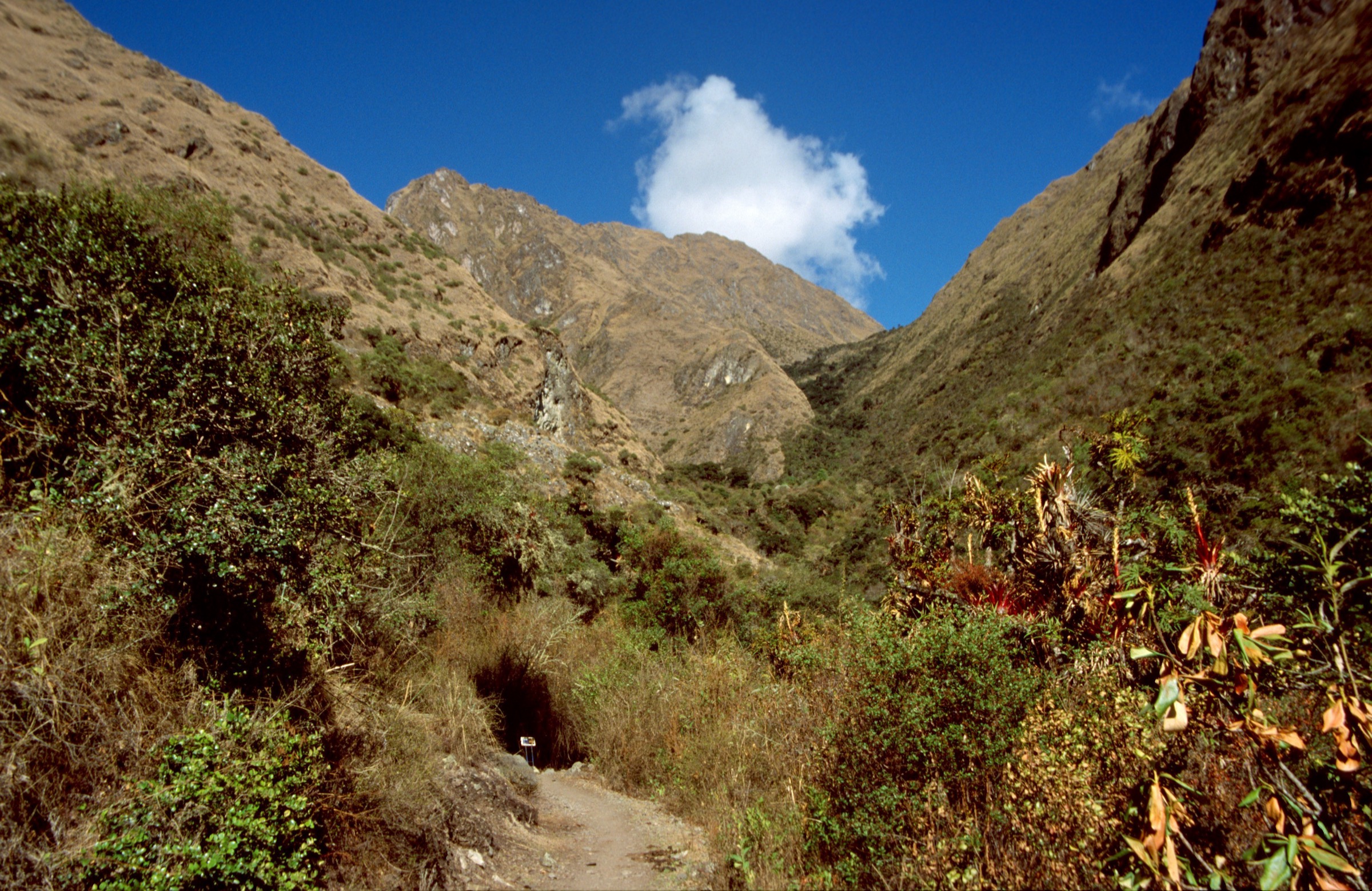
Region: Peru · Distance: About 40 – 45 km
The Inca Trail is famous because it combines mountain walking, archaeological sites, cloud forest, high Andean passes, and arrival at Machu Picchu. Classic landmarks include Warmiwañusca, also known as Dead Woman’s Pass, the Sun Gate, and the final approach to Machu Picchu.
Why it was selected: It is one of the world’s most famous short multi-day treks, with a cultural and archaeological finale unmatched by most mountain routes.
Milford Track
Region: New Zealand · Distance: 53.5 km
The Milford Track is short compared with many trails on this list, but it has enormous status. It is a four-day walk through Fiordland National Park, with rainforest, valleys, waterfalls, and Mackinnon Pass.
Why it was selected: It is one of the world’s classic managed wilderness walks, famous for its scenery, hut system, and limited seasonal access.
Read the Milford Track guide →
Te Araroa
Region: New Zealand · Distance: About 3,000 km
Te Araroa is New Zealand’s end-to-end trail, running from Cape Reinga to Bluff. It links beaches, forests, farmland, mountains, rivers, settlements, and remote country across the length of Aotearoa New Zealand.
Why it was selected: It is one of the great modern national traverses, linking a wide range of landscapes across an entire country.
West Highland Way
Region: Scotland · Distance: 96 miles / 154 km
The West Highland Way runs from Milngavie to Fort William. It moves from lowland countryside and loch shores to moorland and mountain scenery, and is usually walked from south to north.
Why it was selected: It is one of the most accessible and beloved long-distance routes in Britain, and a classic introduction to multi-day walking in the Scottish Highlands.
Read the West Highland Way guide →
GR20
Region: Corsica, France · Distance: About 180 km
The GR20 crosses Corsica’s mountains on a demanding north-south line. The route is known for red-and-white waymarking, refuges, high terrain, steep ascents, chains, slabs, and exposed passages.
Why it was selected: It is one of Europe’s most famous hard mountain trails, valued for its wild Corsican terrain and sustained physical challenge.
Kungsleden
Region: Sweden · Distance: Just over 450 km
Kungsleden, the King’s Trail, runs between Abisko and Hemavan. It passes through Lapland landscapes of alpine terrain, birch forest, lakes, peaks, villages, and four national parks.
Why it was selected: It is the great Scandinavian long-distance hike: remote, northern, hut-supported, and strongly associated with Arctic and sub-Arctic landscapes.
Torres del Paine W Trek
Region: Chilean Patagonia · Distance: About 80 km
The W Trek is the most famous multi-day route in Torres del Paine National Park. It is usually walked in four to five days, linking Grey Glacier, the French Valley, and the granite towers themselves.
Why it was selected: It is Patagonia’s signature trek: short enough to fit into a trip, but grand enough to showcase glaciers, granite towers, lakes, and fierce southern weather.
Lycian Way
Region: Turkey · Distance: About 760 km
The Lycian Way is Turkey’s first long-distance trekking route. It follows the coast of ancient Lycia, using old roads, footpaths, and mule tracks through Mediterranean landscapes, villages, mountain sections, and historic sites.
Why it was selected: It offers a rare combination of coastal walking, mountain terrain, village culture, and ancient ruins, making it one of the great Mediterranean long-distance routes.
Closing note
A long-distance hike is, in the end, a sequence of choices: when to start, how far to walk, what to carry, where to sleep, and when to turn back. The trails listed above span pilgrimage routes, national traverses, alpine circuits and short iconic walks, but they share a common shape — a route long enough that the walking itself becomes the experience.
Each linked guide on this site offers practical information for one of these routes. Official trail authorities, parks, conservation bodies and tourist boards remain the primary sources for current conditions, permits, accommodation, and safety advice, and should always be consulted before setting out.