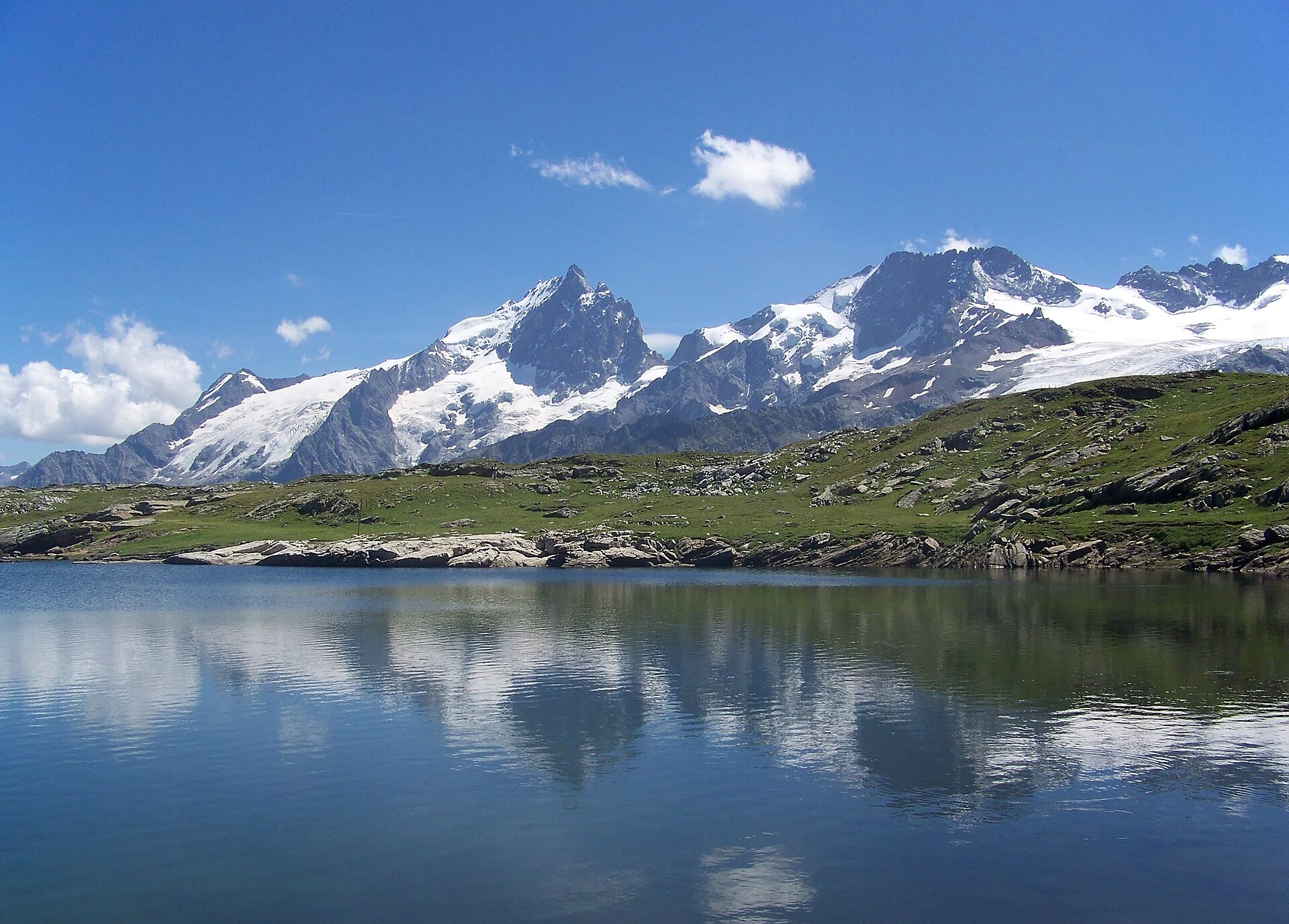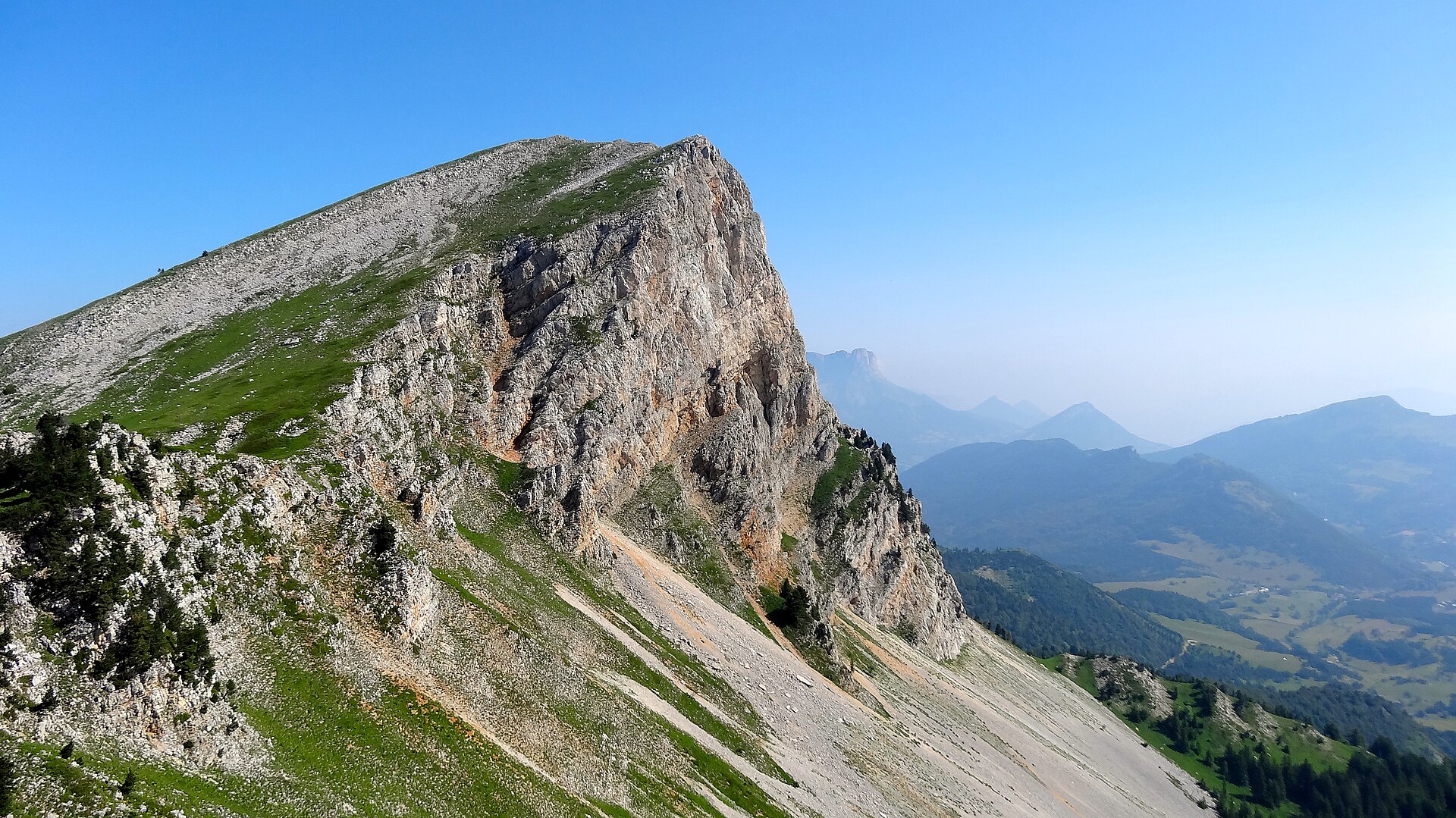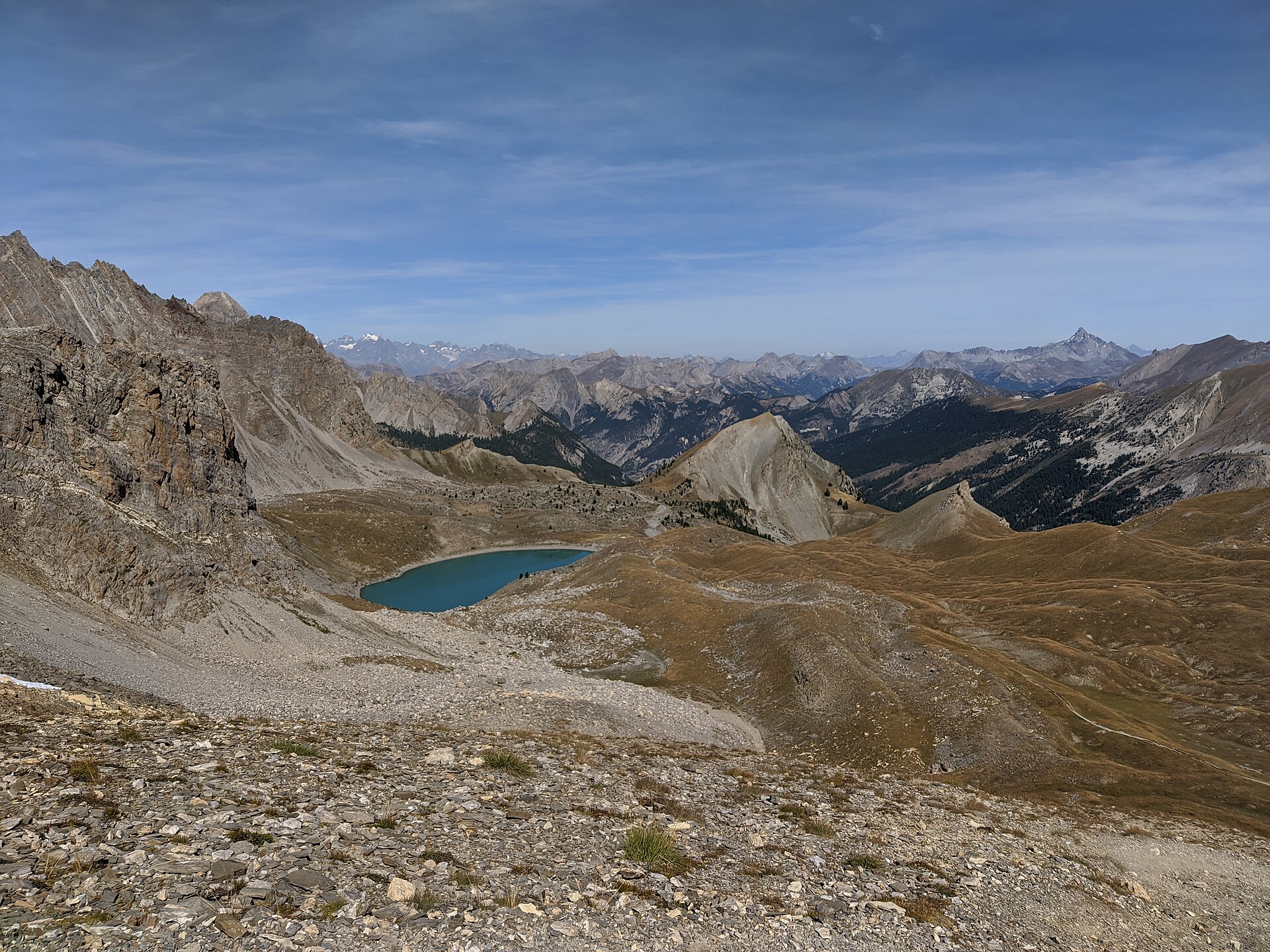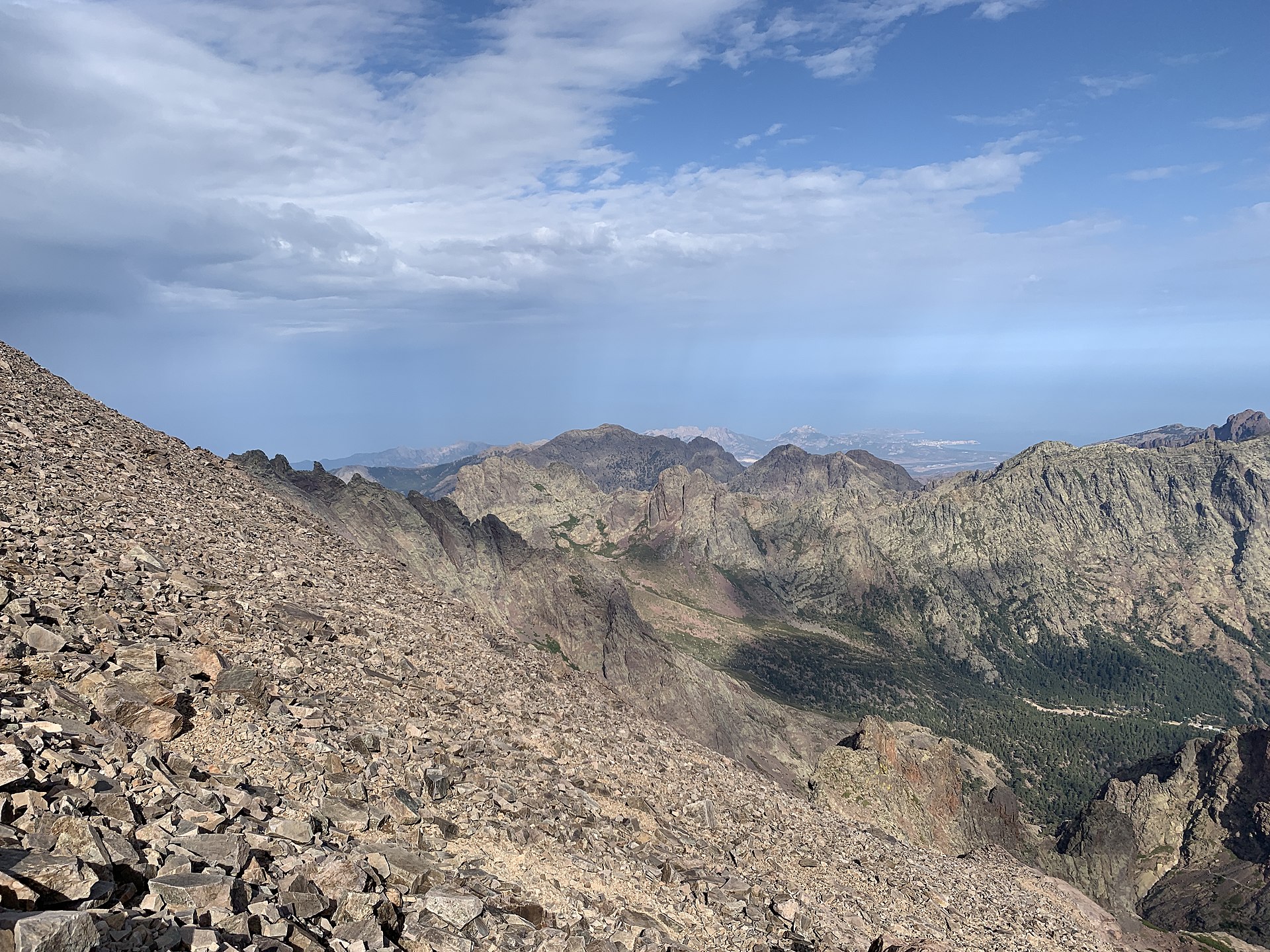
The GR20, also known as Frà li Monti, is the major mountain traverse of Corsica. It runs from Calenzana in the north-west to Conca in the south-east. The route is widely considered one of the most difficult long-distance walking routes in Europe. It is normally divided into 16 stages, with Vizzavona marking the transition between the more technical northern half and the generally less severe southern half.
Route at a glance
Current snow conditions
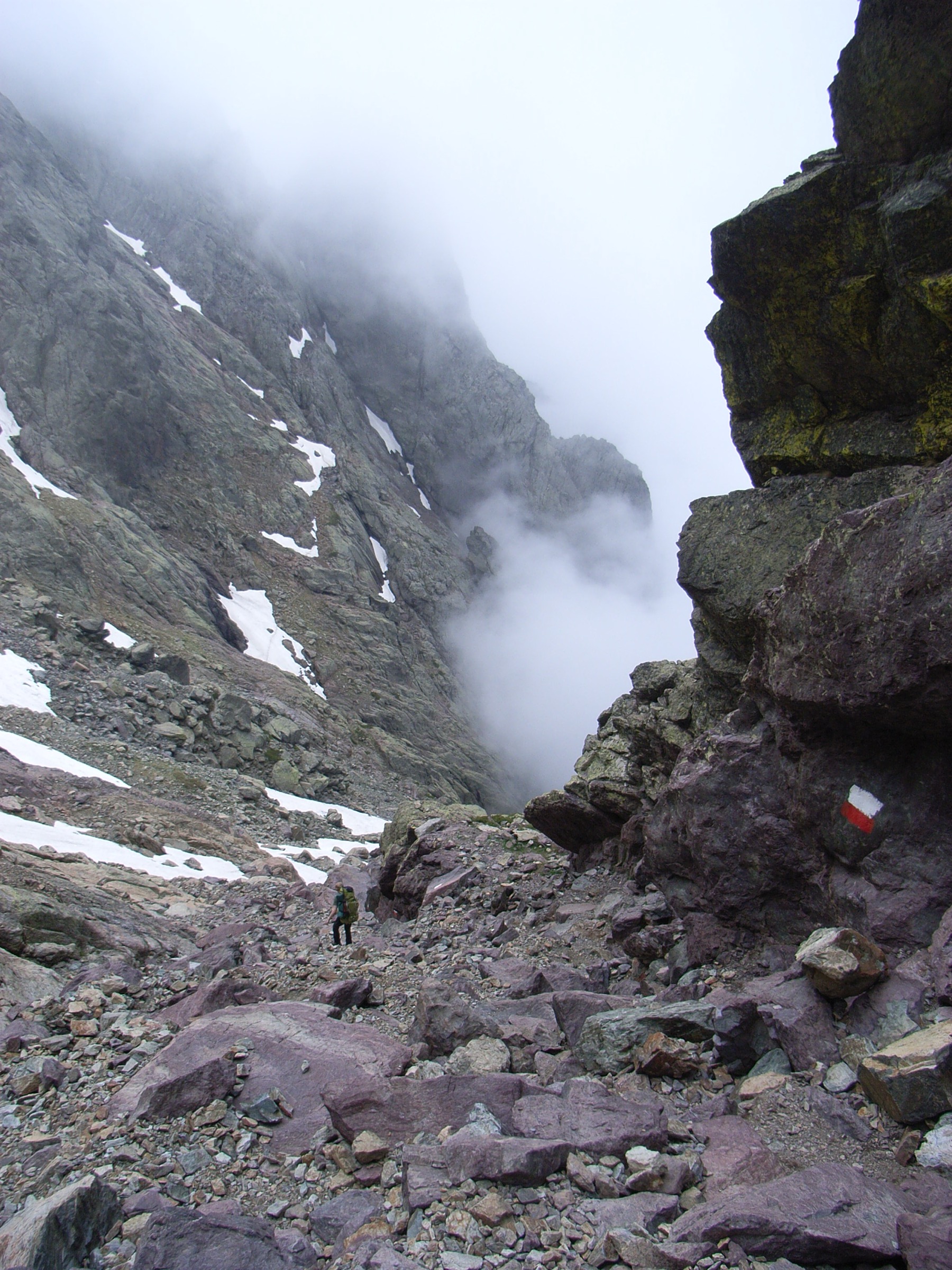
For the conditions published on 20 May 2026, valid at least until mid-June, the PNRC states that alpine crampons, an ice axe, and rigid or semi-rigid mountain boots are essential on snow-affected sections. Trail shoes or standard running shoes are strongly discouraged in those conditions.
Hikers must know how to:
- Move on hard snow with crampons.
- Use an ice axe for balance.
- Arrest a fall with an ice axe.
- Judge snow conditions according to time of day and slope aspect.
Snow-affected stages specifically flagged by the PNRC:
- Carrozzu to Ascu Stagnu
- Ascu Stagnu to Tighjettu
- Tighjettu to Ciottulu di i Mori
- Manganu to Petra Piana
- L’Onda to Vizzavona
Refuge booking and accommodation
For the 2026 season, PNRC refuges are guarded from 16 May to 4 October inclusive.
Overnight reservations are compulsory for both bivouac pitches and bat-flanc dormitory places. Reservations are made through the official PNRC reservation platform.
Meals, packed lunches, and breakfasts are ordered on site. Evening meals should be reserved with the guardian by arriving no later than 18:00.
Reservation changes must be requested at least 48 hours before the relevant hiking day. Cancellations are subject to the stated conditions of sale.
PNRC refuges provide basic mountain accommodation and services: around thirty beds per refuge, bivouac areas, exterior cooking facilities, a common room, an emergency medical kit, a small grocery supply, evening meals, breakfasts, packed lunches, dry toilets, showers, running water, and mobile charging. Mobile charging is paid at Ortu di u Piobbu and Asinao.
Dogs are not permitted inside PNRC refuges or rental tents.
Indicative 2026 prices
| Item | Price |
|---|---|
| Bat-flanc dormitory place | €20 |
| Bivouac pitch | €12 |
| One person with bivouac plus rental tent | €27 |
| Two people with bivouac plus rental tent | €39 |
| Breakfast | approx. €10 |
| Packed lunch | approx. €10 |
| Evening meal | approx. €20 |
| Suggested daily meal budget | approx. €50 |
Fire risk and access restrictions
No departure on the GR20 from Calenzana after 11:00 is authorised. From mid-June to mid-September, mountain access can be restricted or closed depending on fire risk. The official fire-risk map is updated at 18:00 for the following day. From 15 June to 30 September, lighting fires and smoking are prohibited in forests, heathland, scrub and mountain areas.
Mountain safety
The GR20 is a demanding mountain route. Hikers should:
- Choose an itinerary appropriate to their level.
- Inform someone of the planned route.
- Stay on marked trails.
- Avoid travelling alone where possible.
- Keep groups together.
- Turn back if weather, fatigue, or timing deteriorates.
Emergency numbers
- 112
- 17
- 18
- PGHM de Corse: 04 95 24 24 00, for serious cases where standard emergency numbers cannot be reached.
Mobile coverage is unreliable, particularly around Ortu di u Piobbu, Carrozzu, Tighjettu, Ciottulu di i Mori, Manganu, L’Onda, Usciolu, and Paliri.
Required basic kit
The PNRC’s compulsory GR20 pack list includes:
- Sleeping bag
- Waterproof jacket
- Warm layer
- Trousers
- First-aid kit
- Survival blanket
- Towel
- Mountain shoes
- Cap
- Shorts
- Head torch
- Filter bottle with purification tablets
- TopoGuide “À travers la Montagne Corse”, Ref. 067
Waymarking
The GR20 is marked with the standard white and red markings used for French GR routes. The route is maintained by the PNRC and the waymarking is generally easy to follow.
Conduct in the Park
Bivouac is limited to authorised bivouac areas.
Hikers should not:
- Collect plants.
- Swim in high-altitude lakes.
- Fly drones over routes.
- Trample pozzines.
- Disturb wildlife.
- Light fires.
- Leave waste.
Dogs must be kept on a lead. The route is strongly discouraged for dogs because of its technical and exposed sections.
Stages
| Stage | Route | Time | Notes |
|---|---|---|---|
| 1 | Calenzana to Ortu di u Piobbu | 6h30 | Starts at the San’Antone fountain above Calenzana and follows an old mule track. The route becomes progressively rougher after Arghjova and may require the use of hands. |
| 2 | Ortu di u Piobbu to Carrozzu | 7h | A dry, mineral stage over scree, boulders, and successive cols. Water should be carried from the source above Ortu di u Piobbu. |
| 3 | Carrozzu to Ascu Stagnu | 6h10 | No reliable water on the route. Water from Lac de la Muvrella is not drinkable. The stage crosses the Spasimata footbridge and climbs steeply to Bocca di Stagnu. |
| 4 | Ascu Stagnu to Tighjettu | 8h | The former Cirque de la Solitude route is closed. The official GR20 now follows the post-2015 deviation. This is one of the hardest mountain stages, with slabs, chains, handrails and long sections of scree. |
| 5 | Tighjettu to Ciottulu di i Mori | 4h | A shorter stage passing the bergeries d’u Vallone and climbing below the east face of Paglia Orba to Ciottulu di i Mori. Optional non-waymarked ascents of Paglia Orba or Capu Tafunatu are mountaineering-style additions. |
| 6 | Ciottulu di i Mori to Manganu | 8h | A long but more flowing stage, descending along the Golu and passing Castel di Verghju before Lac de Ninu, its pozzines, and the Camputile plateau. |
| 7 | Manganu to Petra Piana | 6h30 | A technical, rocky mountain stage via Bocca alle Porte and the Brèche de Capitellu, with views over Lac de Melu and Lac de Capitellu. Early-season snow can require alpine equipment. |
| 8 | Petra Piana to L’Onda | 4h50 | Two options are available: the main GR route through the Manganellu valley, or the ridge variant marked in yellow. The ridge variant should only be used in stable weather and avoided in strong wind or storms. |
| 9 | L’Onda to Vizzavona | 6h05 | Climbs towards Bocca d’Oreccia and Bocca Muratellu before descending into the Vizzavona forest, with the Cascades des Anglais en route. Vizzavona is the main mid-route break point with private accommodation and transport links. |
| 10 | Vizzavona to E Capanelle | 5h15 | The first southern stage is less technical, mostly through forest, with care needed to follow the red-and-white markings where tracks intersect. |
| 11 | E Capanelle to Prati | 6h10 | Forest walking leads to the Marmanu footbridge and Col de Verde, followed by an ascent through beech forest and open ground to Bocca d’Oru and the Prati refuge. |
| 12 | Prati to Usciolu | 5h45 | Mostly open ridge walking via Punta Cappella and Col de Laparu, with views towards the Valincu gulf and the Fium’Orbu side. Water shortages are possible in July and August. |
| 13 | Usciolu to Cuscionu | 4h25 | A shorter but scenic ridge stage over the “arête des statues” to Bocca Agnonu, then on towards the Cuscionu plateau. |
| 14 | Cuscionu to Asinao | 4h15 | Crosses the Cuscionu plateau and climbs to Bocca Stazzunara. The direct descent to Asinao is rocky and steep. An optional extension climbs Alcudina. |
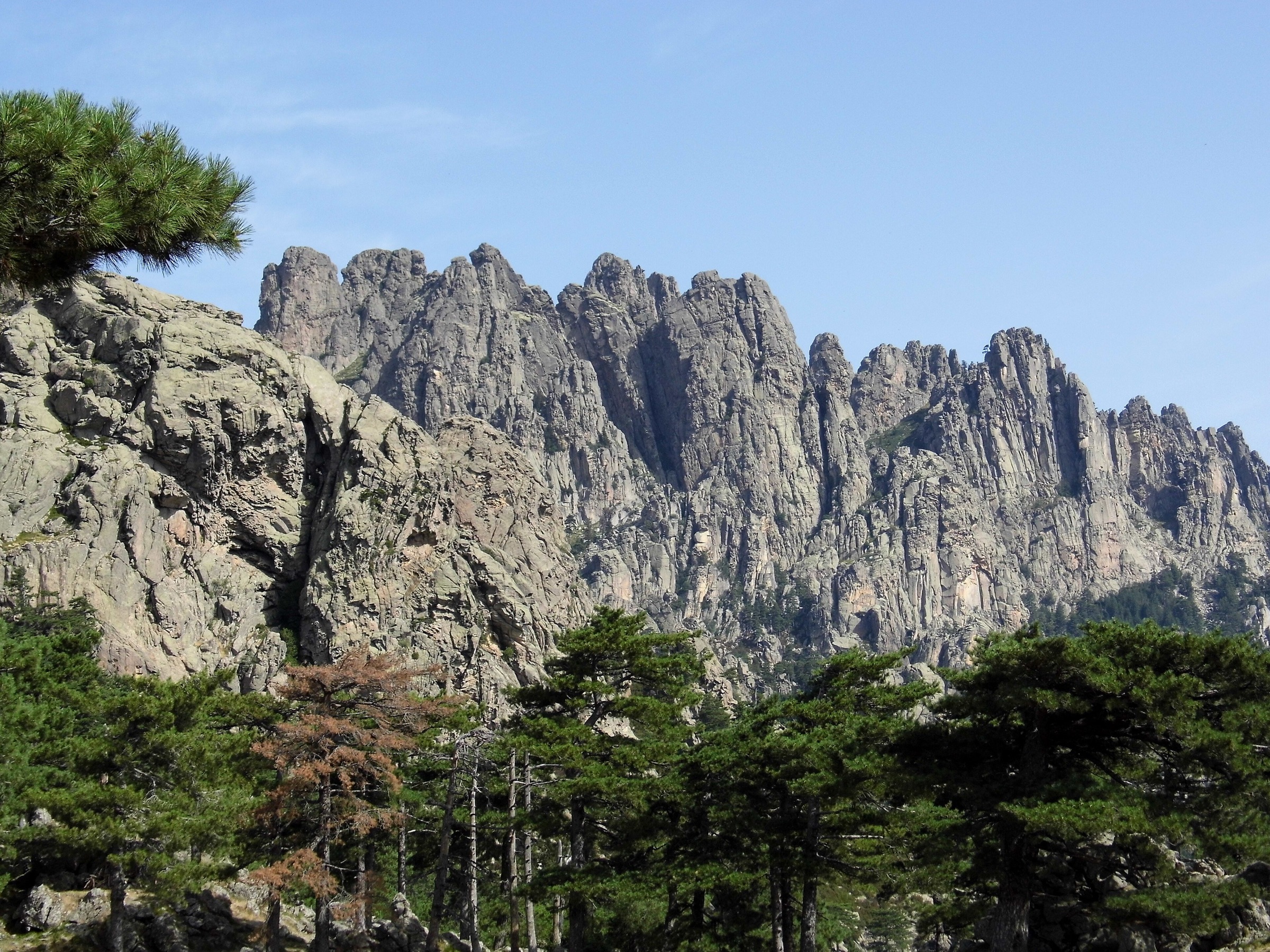
| 15 | Asinao to Paliri | 7h | Two alternatives lead towards Bavella: the classic GR or the more technical alpine variant through the Aiguilles de Bavella, with rocky slabs, handrails and scree. |
| 16 | Paliri to Conca | 5h | A long final descent through pine forest and maquis, with a possible last freshwater swim at Punta Pinzuta before reaching Conca. |
Route files and useful links
The official PNRC GR20 page and PNRC reservation site expose the route description and stage structure, but no official GPX or KML download was visible in the accessible page text.
- Official PNRC GR20 page Official Parc naturel régional de Corse page for the GR20 / Frà li Monti.
- Official PNRC downloads page Information and downloads from the Parc naturel régional de Corse.
- Unofficial GPX VisuGPX GR20 trace Third-party community-submitted trace of the GR20 route.
The VisuGPX route is a third-party trace and is not an official PNRC route file. It should be checked against the current official GR20 alignment before use.