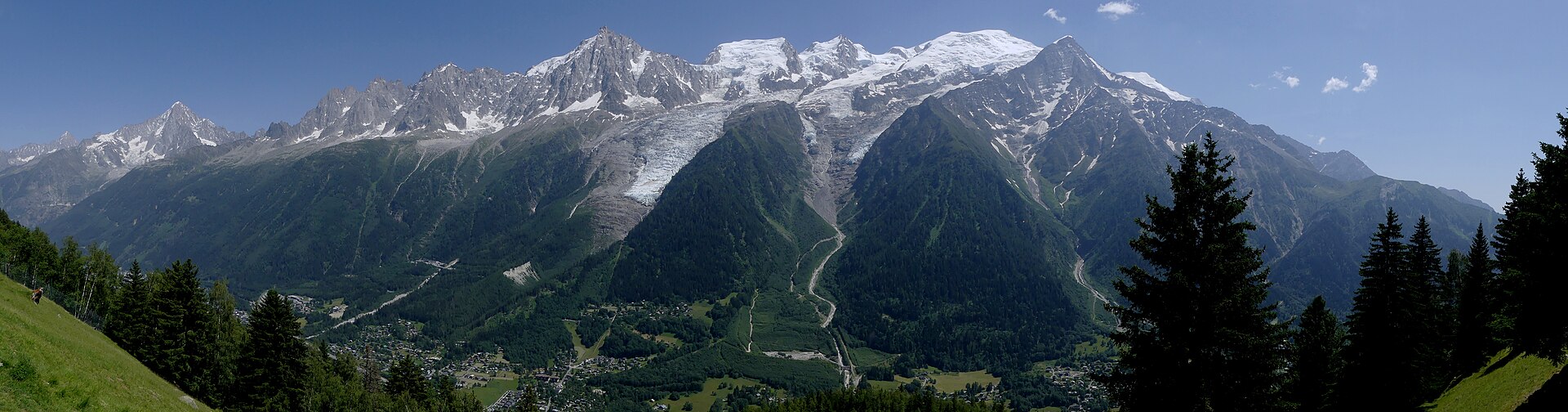
This 7-day Tour du Mont Blanc itinerary follows the TMB route from the Chamonix Valley through France, Italy, and Switzerland, returning to Chamonix by the end of the week. It uses selected public transport and lifts to make the route manageable within seven days. It does not walk every stage of the full TMB circuit: the Swiss valley stage between Ferret and Champex-Lac is skipped by bus, and the Chamonix Balcon Sud stages are omitted unless added separately.
Overview
- Start: Les Houches / Chamonix Valley, France
- Finish: Chamonix, France
- Duration: 7 days
- Route style: Condensed TMB route using some transport shortcuts
- Best suited to: Moderately fit hikers with experience of full mountain days
Main stages
- Les Houches – Val Montjoie / Les Contamines
- Val Montjoie – Les Chapieux or Refuge des Mottets
- Les Chapieux / Refuge des Mottets – Courmayeur
- Courmayeur – Rifugio Bonatti or Val Ferret
- Rifugio Bonatti / Val Ferret – Champex-Lac
- Champex-Lac / Relais d’Arpette – Trient
- Trient – Chamonix
This itinerary relies on several shortcuts, including the Bellevue cable car from Les Houches, the Les Contamines–Notre-Dame-de-la-Gorge shuttle, the Les Chapieux–Ville des Glaciers shuttle, and the Maison Vieille / Dolonne lift system above Courmayeur where operating. These transport links are seasonal and should be checked before departure.
Important route notes
Several variant routes are included or suggested. The Col du Tricot, Col des Fours, Fenêtre d’Arpette, and Les Grands variants should only be used in stable weather and good visibility. The Col des Fours and Fenêtre d’Arpette variants should not be attempted early in the season when snow bridges, snowfields, or unstable conditions may be present.
Walking times are approximate and generally do not include stops for lunch, rest, photography, weather delays, or route-finding. Early starts are advisable, especially in midsummer when afternoon thunderstorms are common in the Alps.
Day 1: Les Houches to Val Montjoie via Col du Tricot
- Les Houches to Les Contamines: 17.9 km, +1,410 m / -1,260 m, about 7 hrs 45
- Bellevue Plateau to Les Contamines: 12 km, +730 m / -1,230 m, about 5 hrs
The route starts in Les Houches. The Bellevue cable car can be used to bypass the initial climb from the valley floor and join the trail close to the Col du Tricot variant. Without the lift, the day includes an additional climb from Les Houches to the Bellevue area.
From Bellevue, the trail crosses towards the Bionnassay area and passes the suspension bridge before climbing steadily to the Col du Tricot. The descent into the Miage Valley is steep and requires care, particularly in wet conditions. Refuge Miage is reached shortly after the valley floor.
The route then climbs briefly to Auberge du Truc before descending through forest to Les Contamines. Accommodation is normally in Les Contamines, although stronger hikers may continue to Refuge Nant Borrant to reduce the following day.
Suggested lunch stops: Refuge Miage or Auberge du Truc
Overnight: Les Contamines, or Refuge Nant Borrant for a longer first day
Day 2: Val Montjoie to Les Chapieux or Refuge des Mottets
- Les Contamines to Les Chapieux, without transport: 18.8 km, +1,300 m / -930 m, about 7 hrs
This stage climbs from the Val Montjoie to the Col du Bonhomme and Col de la Croix du Bonhomme. From Les Contamines, the route can either be walked along the river to Notre-Dame-de-la-Gorge or shortened using the seasonal shuttle. From Notre-Dame-de-la-Gorge, the trail climbs steeply on the old Roman road towards Refuge Nant Borrant and Refuge de la Balme.
Above Refuge de la Balme, the route continues towards the Col du Bonhomme and then traverses to the Col de la Croix du Bonhomme. Early-season snow can remain on this section, and the traverse between the two cols may require additional care or hiking crampons when snow-covered.
In good weather, hikers staying at Refuge des Mottets may use the Col des Fours variant. This bypasses Les Chapieux and descends towards Ville des Glaciers. The variant should not be used in poor weather or early-season snow conditions. Hikers booked in Les Chapieux must stay on the standard route, because the Col des Fours variant misses the hamlet entirely.
Suggested lunch: Packed lunch, with possible refuge stops en route
Overnight: Les Chapieux or Refuge des Mottets
Day 3: Les Chapieux or Refuge des Mottets to Courmayeur
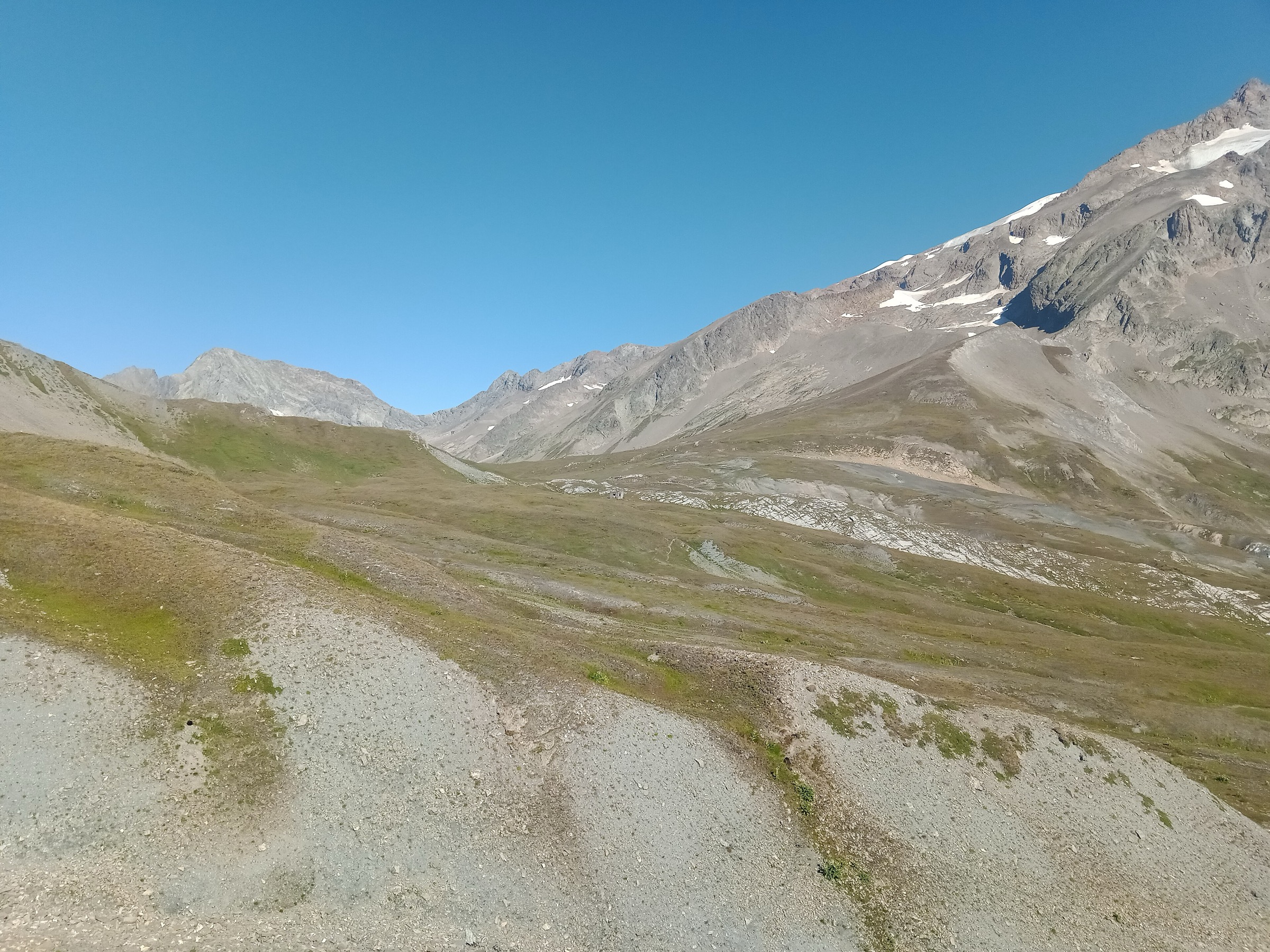
- Ville des Glaciers to Maison Vieille chairlift: 19.7 km, +1,200 m / -1,020 m, about 7–8 hrs
This day combines two standard TMB stages and is made more manageable by using transport. From Les Chapieux, the shuttle to Ville des Glaciers shortens the approach. From there, the trail climbs past Refuge des Mottets to the Col de la Seigne, which marks the border between France and Italy.
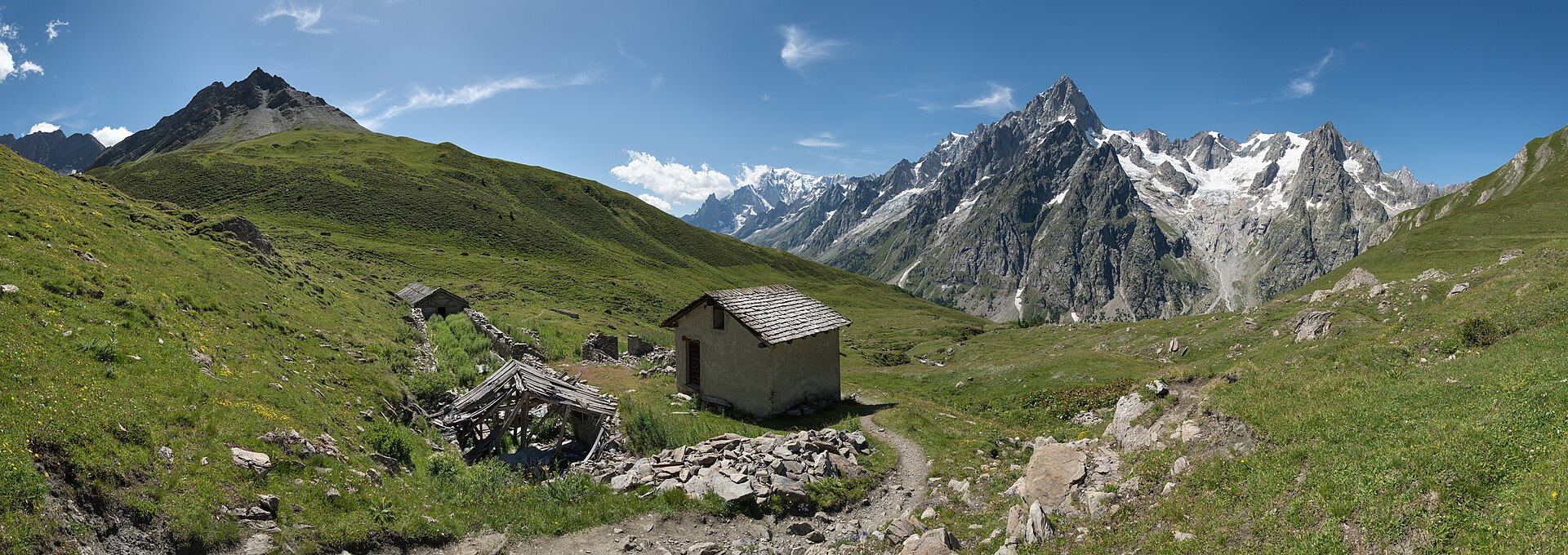
After the pass, the route descends into the Italian Val Veny. The Casermetta environmental centre is located shortly below the col on the Italian side. The route then continues past Rifugio Elisabetta and towards Lac Combal and Cabane Combal.
At Cabane Combal, there is an exit option towards La Visaille, where a bus can be taken to Courmayeur. Continuing on the TMB, the trail climbs towards the Mont Favre spur before following the high balcony route across the southern side of Val Veny to Rifugio Maison Vieille.
In July and August, the Maison Vieille chairlift and Dolonne cable car can be used to descend to Dolonne, a short walk from Courmayeur. Outside the lift season, a taxi from the Val Veny cable car area may be needed, or the descent to Courmayeur must be completed on foot.
Suggested lunch: Packed lunch
Overnight: Courmayeur
Day 4: Courmayeur to Rifugio Bonatti or Val Ferret
- Approximate distance: 12.1 km
- Elevation: +1,088 m / -263 m
- Time: 4–5 hrs
The day begins with the climb out of Courmayeur to Rifugio Bertone. Most of the elevation gain is completed during this first part of the stage. From Rifugio Bertone, the route continues across the Italian Val Ferret.
The standard option follows the balcony trail towards Rifugio Bonatti. In good weather, a higher variant via Mont de la Saxe and Tête de la Tronche can be used. This variant is more demanding but provides a higher-level route above the valley. Both options rejoin at or near Rifugio Bonatti.
Accommodation is usually at Rifugio Bonatti. If Bonatti is unavailable, alternatives include descending to Hotel Lavachey or continuing further along the valley to accommodation such as Chalet Hotel Val Ferret.
Suggested lunch: Food bought in Courmayeur
Overnight: Rifugio Bonatti, Hotel Lavachey, or Val Ferret accommodation
Day 5: Rifugio Bonatti or Val Ferret to Champex-Lac
- Approximate distance before bus: 16.8 km
- Elevation: +890 m / -1,210 m
- Time: about 6 hrs
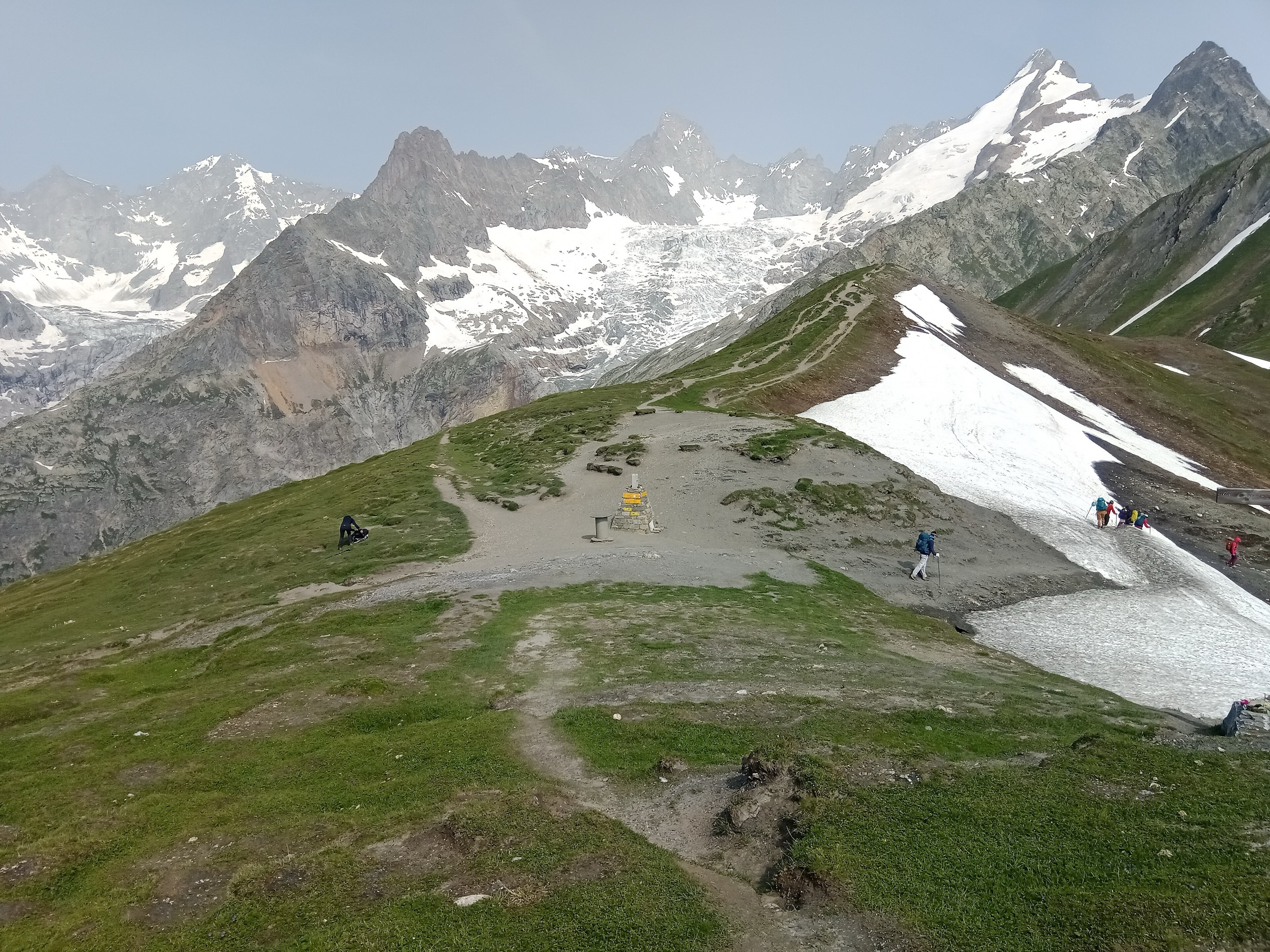
This stage crosses from Italy into Switzerland. The route follows the Italian Val Ferret before climbing to the Grand Col Ferret at 2,537 m. The pass marks the border between Italy and Switzerland.
From the col, the trail descends through open pasture to Alpage de la Peule, a working dairy farm, then continues down towards Ferret. From Ferret, the itinerary uses the bus to Champex-Lac, skipping the standard Swiss valley stage of the TMB.
Champex-Lac is the normal overnight stop. Hikers planning to take the Fenêtre d’Arpette variant the following day may prefer to stay at Relais d’Arpette, located further up the approach trail.
Suggested lunch: Packed lunch or Alpage de la Peule
Overnight: Champex-Lac or Relais d’Arpette
Day 6: Champex-Lac or Relais d’Arpette to Trient
- Champex-Lac to Trient, standard route: 16.7 km, +856 m / -1,052 m, about 4–5 hrs
There are two main options for this stage: the standard Bovine route or the Fenêtre d’Arpette variant. The standard route is less technical and passes through pasture and forest before descending towards Trient. It still includes a meaningful amount of ascent and should not be treated as an easy day.
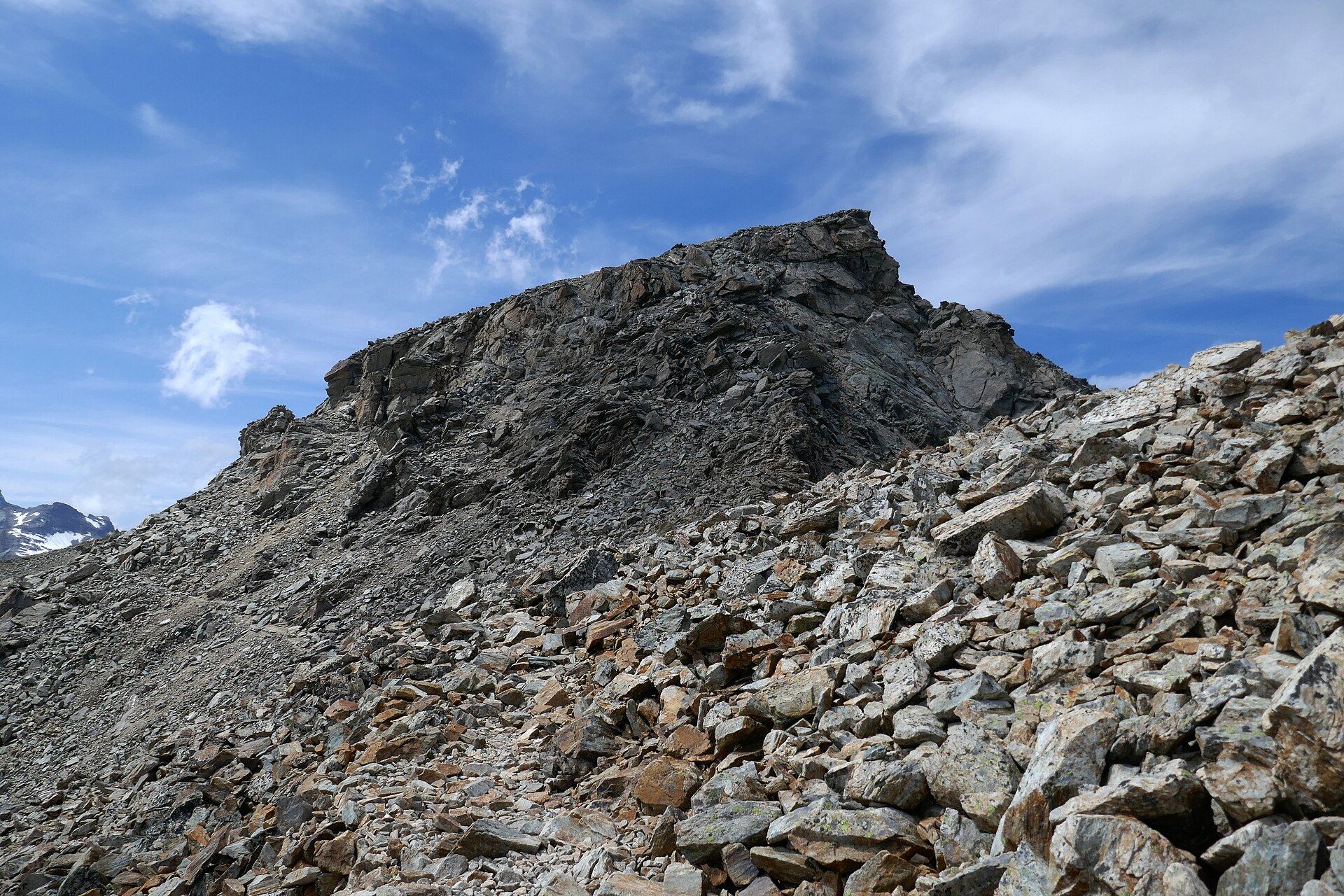
The Fenêtre d’Arpette variant is one of the most demanding sections of the Tour du Mont Blanc. It crosses rough terrain and includes a long boulder-field approach before the col. The trail is less consistently marked than the standard route, and the descent towards the Trient Glacier is steep and rocky in places. This variant should only be attempted in good weather, with clear visibility and suitable conditions underfoot.
A packed lunch and extra water are required for the Fenêtre d’Arpette route, as there are no reliable food stops until late in the day. On the Bovine route, lunch may be possible at Alpage de Bovine, subject to opening and available space.
Alternative in poor weather: Bovine route
Overnight: Trient
Day 7: Trient to Chamonix
- Distance and elevation: Variable, depending on route and lift choices
The final day climbs from Trient to the Col de Balme, crossing from Switzerland back into France. From the col, there are views into the Chamonix Valley and across to the Mont Blanc massif in clear weather.
Several route choices are possible. The direct route climbs from Trient to the Col de Balme. A more scenic but longer variant goes via Les Grands, providing views of the Trient Glacier. This variant should be avoided early in the season if snow remains on the traverse.
From the Col de Balme, the traditional route continues via the Posettes ridge towards Tré-le-Champ. This descent is long and can be tiring. A shorter option is to descend towards Le Tour, using the chairlift and cable car when operating, then continue by train or bus from Montroc or Le Tour to Chamonix.
Where time, fitness, and lift schedules allow, part of the next TMB stage can be added in the afternoon: from Tré-le-Champ towards the Aiguilles Rouges, Tête aux Vents, Lac Blanc, or La Flégère. This extension includes the TMB ladders and should only be added if there is enough time and energy remaining.
Suggested lunch: Refuge Col de Balme
Finish: Chamonix, usually by train, bus, or lift-assisted descent
Optional additional days
This 7-day itinerary omits the Balcon Sud sections above Chamonix. These stages can be added before or after the main itinerary as day hikes from Chamonix. A common extension is to add the Tré-le-Champ to La Flégère / Lac Blanc section as an eighth day, or to continue towards Le Brévent and Les Houches for a fuller finish.