Some city breaks make you choose. You can have museums, old streets, cafés and restaurants, or you can have trails, ridgelines, cable cars and mountain air. But in some European cities, that choice barely exists. The mountains are not a distant day trip or a scenic backdrop on the horizon. They are part of the rhythm of the city itself.
This is a guide to European cities where you can spend the morning in the centre, then be on a mountain trail, forested ridge, cable car or panoramic summit route before lunch. The rule is deliberately strict: the city has to be worth visiting in its own right, and the outdoor experience has to be genuinely close. Not two hours away by car. Not “somewhere in the region”. Not a ski resort that happens to share the same airport. The aim is a proper city break with real mountain access within roughly 30 minutes of the centre.
The 30-minute rule is about access, not completion. In some places, that means stepping onto a funicular in the old town. In others, it means taking a local bus, cable car or short taxi ride to a trailhead. Once there, the walk can be as easy or as ambitious as you want. The point is that the mountains are close enough to change the way you plan the trip.
- Innsbruck, Austria
- Grenoble, France
- Bergen, Norway
- Bolzano, Italy
- Annecy, France
- Salzburg, Austria
- Ljubljana, Slovenia
- Brașov, Romania
- Sarajevo, Bosnia and Herzegovina
- Trento, Italy
- Worth considering: Sofia and Tirana
- Near-misses: famous cities that do not quite fit
- How to choose the right one
- Final thought
- Further reading
Innsbruck, Austria
Best for: the purest mountain city break in Europe.
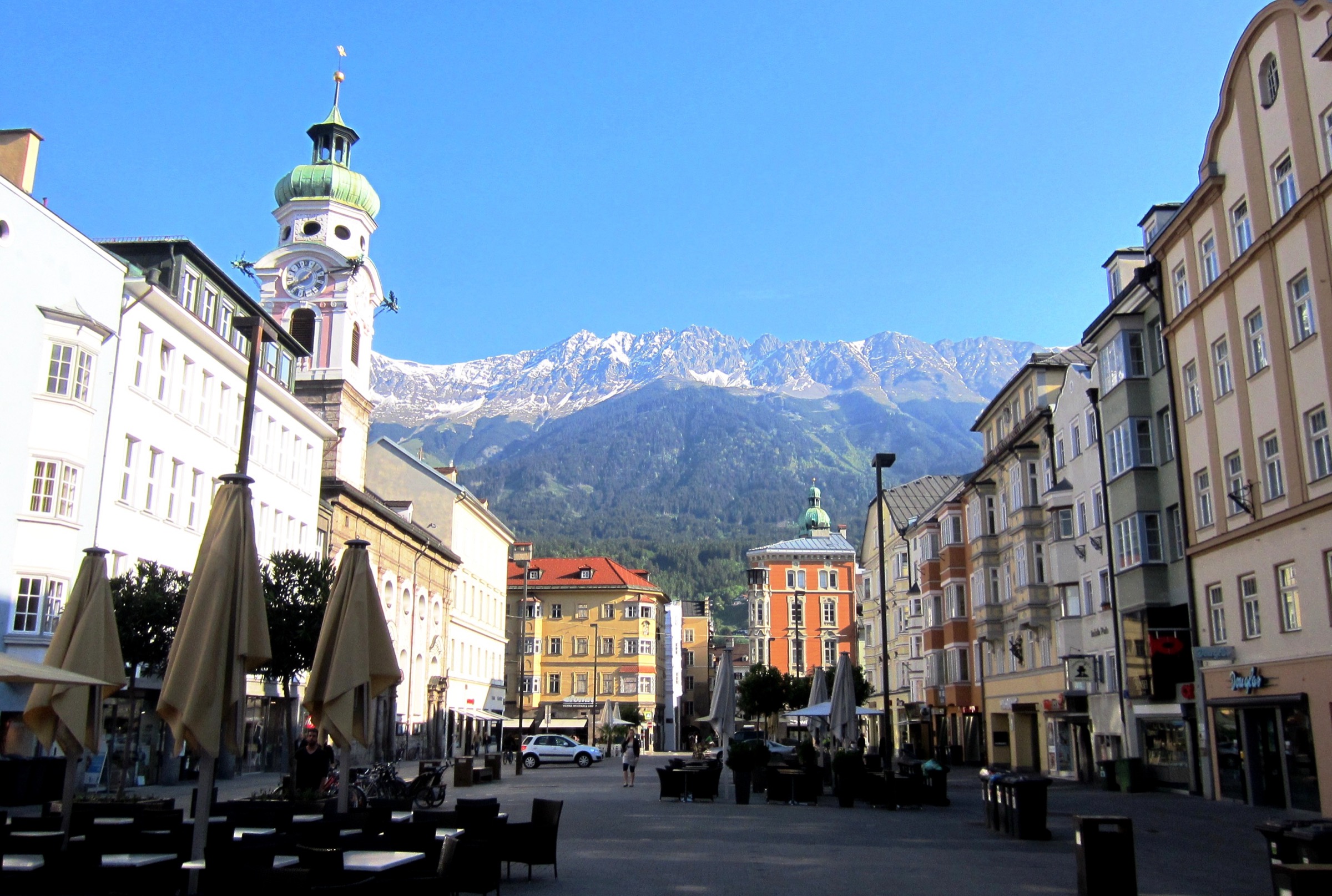
Innsbruck is the obvious place to begin because it may be the clearest example in Europe of a city where the mountains start almost immediately. The historic centre has painted façades, imperial architecture, arcaded streets and the Golden Roof, but look up and the Nordkette rises directly above the rooftops.
That contrast is what makes Innsbruck so compelling. You can have breakfast in the old town and, not long afterwards, be moving through a sequence of funicular and cable car stations towards high alpine terrain. The Nordkette route starts close to the old town and continues towards the Top of Innsbruck in less than half an hour, making the journey itself part of the city-break experience: first urban, then wooded slopes, then rock, sky and views over the Inn Valley.
The best short-break outdoor hit is the Nordkette. Visitors who want an easy version can ride up for the views and walk one of the shorter marked paths around the upper stations. Stronger hikers can use the lift system as a springboard for more serious routes, while climbers and via ferrata users have options higher on the mountain. The important thing is that you do not have to sacrifice a whole day to reach the mountains. The mountains are already there, waiting above the city.
Practical note. Innsbruck’s access is excellent without a car, but altitude changes the conditions quickly. Even when the city feels warm, the upper stations can be cold, windy or snowy. Check lift status, weather and footwear before treating it like an ordinary city viewpoint.
Grenoble, France
Best for: a serious mountain city with an urban via ferrata.
Grenoble is not a postcard-pretty resort town pretending to be a city. It is a real city, with universities, trams, museums, neighbourhoods, cafés and a long industrial and scientific identity. It also happens to sit in a bowl of mountains, surrounded by the Chartreuse, Vercors and Belledonne ranges.
The classic first move is the Bastille. From the city centre, the famous bubble cable cars cross the Isère and climb to the fortified hill above town in only a few minutes. For many visitors, the view alone would be enough: Grenoble spread across the valley floor, mountain ranges layered in every direction, the river bending below. But the Bastille is more than a viewpoint. It is a walking and trail-running area, a gateway towards the Chartreuse, and the home of one of the most distinctive outdoor experiences in Europe: an urban via ferrata.
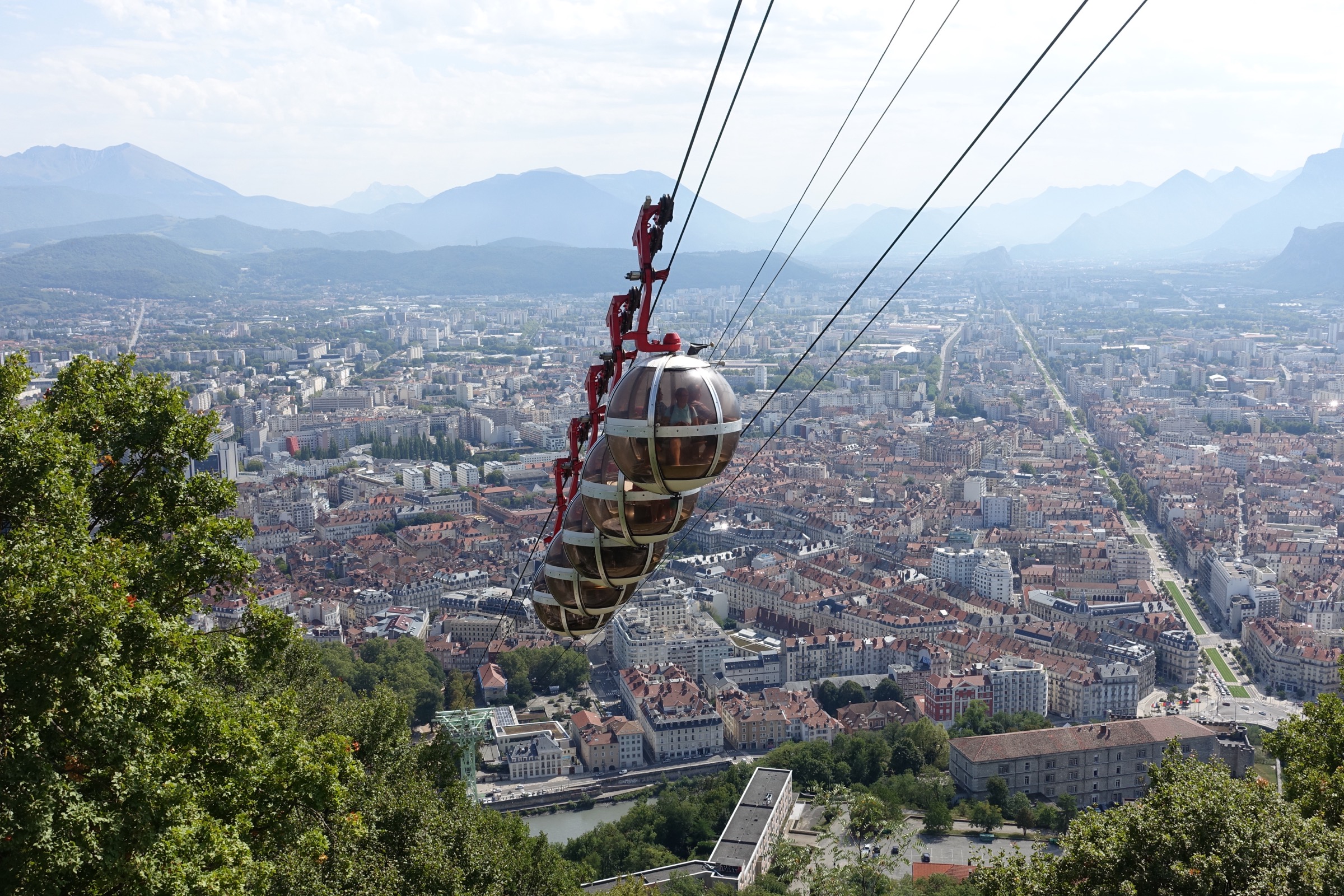
That is why Grenoble belongs high on this list. The mountains here are not decorative. They shape the city’s identity. You can walk up from the centre, ride the cable car, run the Bastille paths, continue towards longer trails, or tackle the via ferrata if you have the experience and equipment. Few cities make that transition from tram stop to limestone and exposure so quickly.
The best short-break outdoor hit is to take the cable car up, walk the Bastille paths, then descend on foot towards the old town. For a more adventurous version, the via ferrata makes Grenoble feel like an outdoor capital rather than simply a city with views.
Practical note. The Bastille is accessible, but the surrounding mountains are real mountains. The via ferrata is not a casual tourist stroll and should be treated as a proper equipped route.
Bergen, Norway
Best for: fjord, forest and mountain without leaving the city.
Bergen is a different kind of mountain city from Innsbruck or Grenoble. It is not alpine in the same way, and its summits are lower, softer and wetter. But the combination of harbour, wooden houses, steep hillsides, forest trails and fjord light makes it one of Europe’s best city breaks for people who want urban life and outdoor escape in the same weekend.
The most famous route is Fløyen. The Fløibanen funicular starts in the centre of Bergen and climbs to Mount Fløyen in around six minutes. From the top, you can look back over the city, harbour and surrounding water, then continue onto a network of walks and trails. There are short family-friendly loops, longer forest routes, and connections towards higher ground for visitors who want more distance.
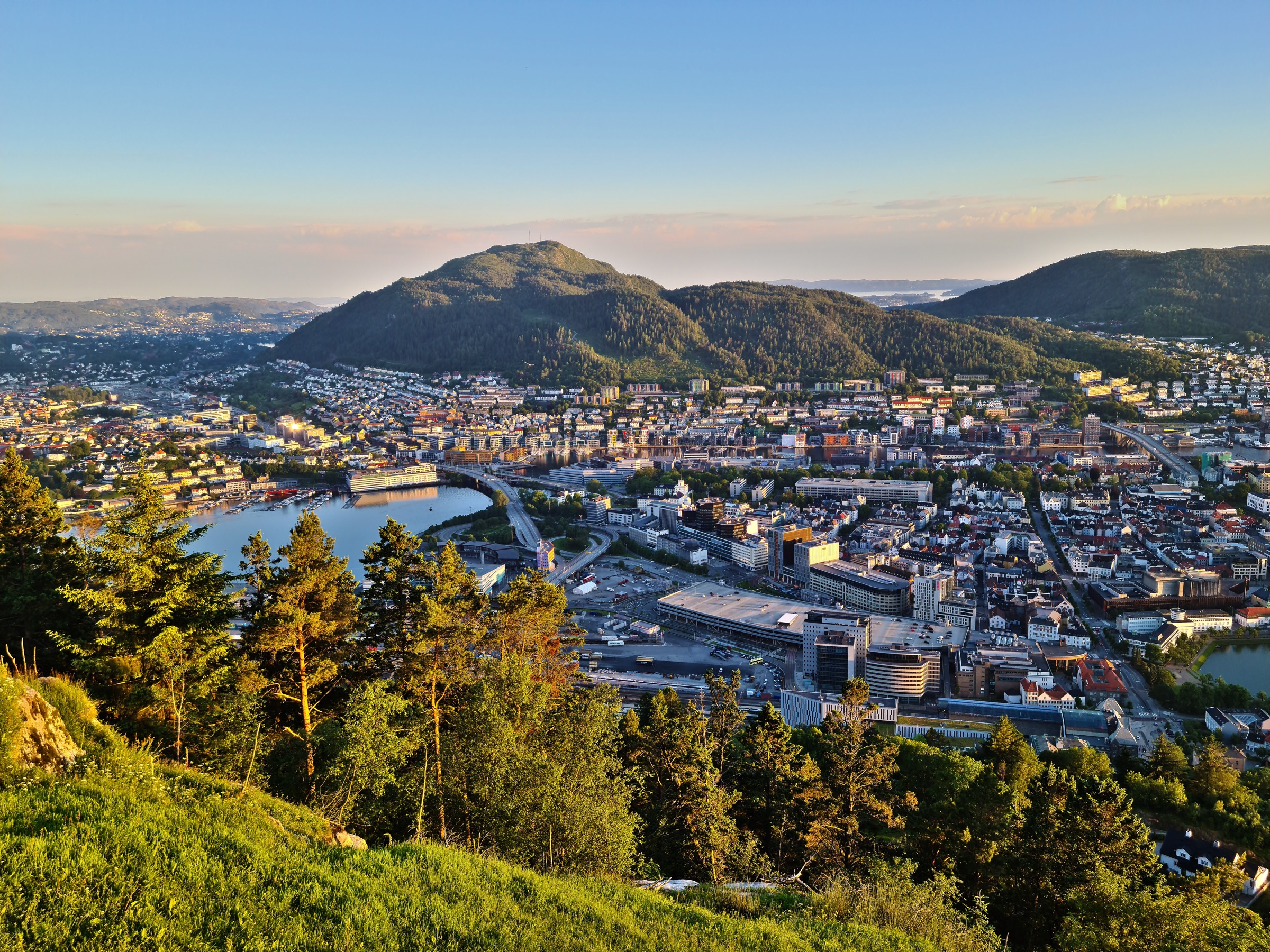
What makes Bergen special is the ease of the transition. You can be in Bryggen or around the fish market, then shortly afterwards be walking above the city with the smell of wet forest and sea air around you. The mountain is close enough for a quick morning escape, a sunset walk, or a half-day hike before returning to the city for dinner.
The best short-break outdoor hit is to ride the Fløibanen up to Fløyen, walk one of the marked loops from the top station, then either descend on foot or continue further into the hills if the weather is good. Visitors who want to earn the view can also walk up from the city centre, usually allowing around 45 minutes to an hour depending on pace and stops.
Practical note. Bergen is famously wet, and the weather can change quickly. Waterproof layers matter more here than in many supposedly more “mountainous” cities. The reward is a city where mist, rain, forest and harbour all belong to the experience.
Bolzano, Italy
Best for: Dolomite atmosphere without resort logistics.
Bolzano is one of the most elegant answers to this brief. It is a real city, with arcaded streets, markets, museums, Italian and South Tyrolean influences, and a location that makes the Dolomites feel close without turning the whole trip into a mountain-resort holiday.
The cleanest outdoor link is the Ritten cable car. From Bolzano, it climbs to Soprabolzano on the Renon/Ritten plateau in around 12 minutes, with regular departures through the day. Suddenly the city gives way to open slopes, villages, walking routes, mountain views and a very different pace. The cable car runs frequently, which makes the plateau feel less like an excursion and more like an extension of the city.
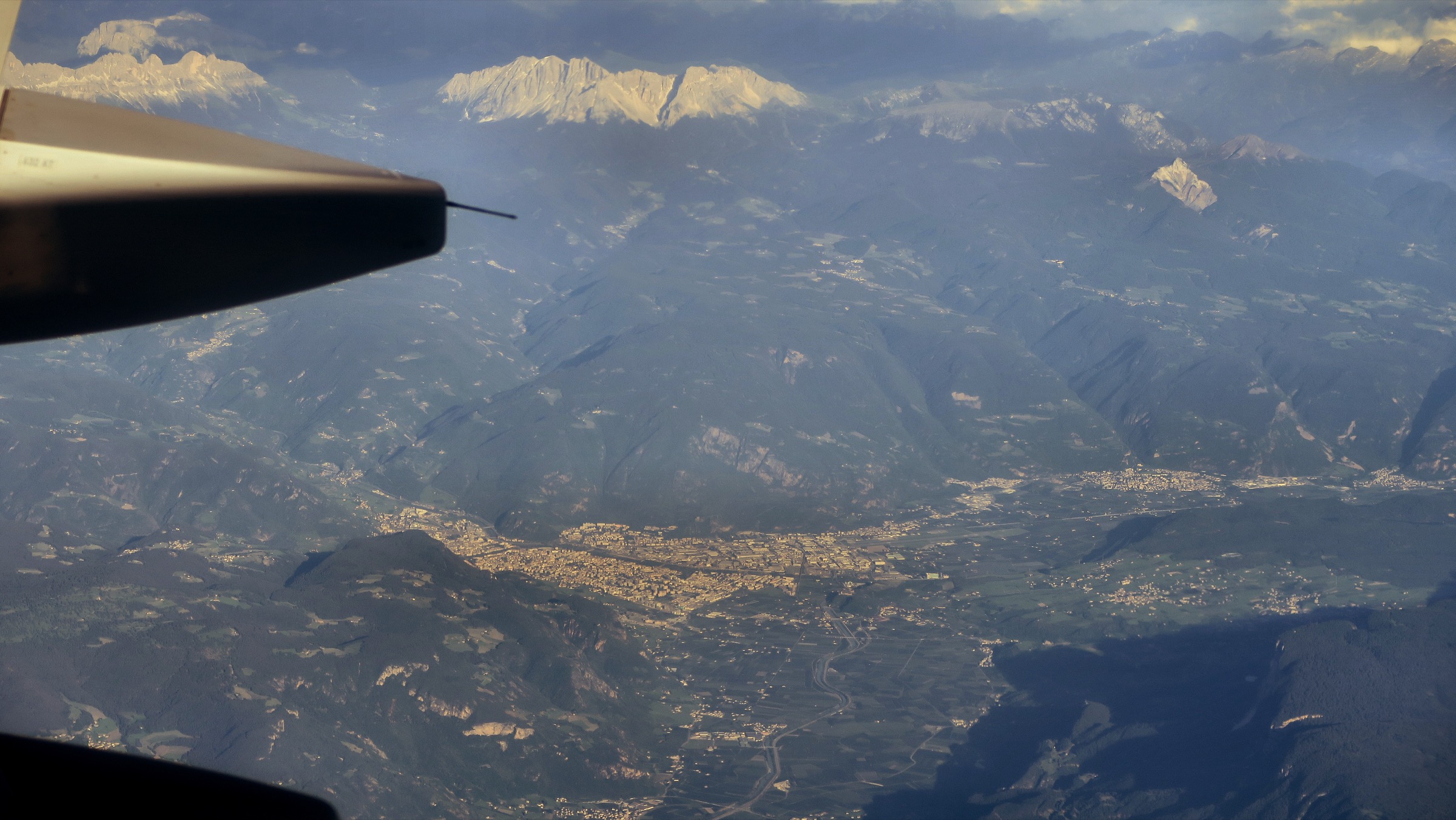
The appeal of Bolzano is not just altitude. It is texture. You can move from espresso and arcades to vineyards, chestnut paths, plateau walks and Dolomite views with very little friction. It is gentler than Innsbruck and less dramatic than Grenoble, but for a short break that combines food, culture and mountain air, it is hard to beat.
The best short-break outdoor hit is to take the Ritten cable car to Soprabolzano, then use the plateau for an easy walk, a village-to-village route, or a viewpoint-oriented loop. It is particularly good for travellers who want scenery and fresh air without committing to a full alpine hike.
Practical note. Bolzano can be very warm in summer, while the plateau is cooler and more open. It is a good destination for shoulder seasons, especially spring and autumn, when walking, food and landscape all come together.
Annecy, France
Best for: lake, old town and mountain ridge in one weekend.
Annecy is smaller and softer than some of the cities on this list, but it earns its place because the combination is so strong: canals, old streets, a luminous lake, swimming spots, markets, mountain roads, ridges and viewpoints. It is one of the easiest European places to understand the appeal of a city break with mountains attached.
The outdoor choice depends on how ambitious you want to be. For a straightforward mountain escape, Semnoz is the obvious option. It is often described as the local mountain of Annecy, and it offers open views, pastures, forest sections and a sense of space above the lake. On the other side of the lake, the mountains above Talloires and the Col de la Forclaz give a more dramatic edge, though those generally require a little more planning.
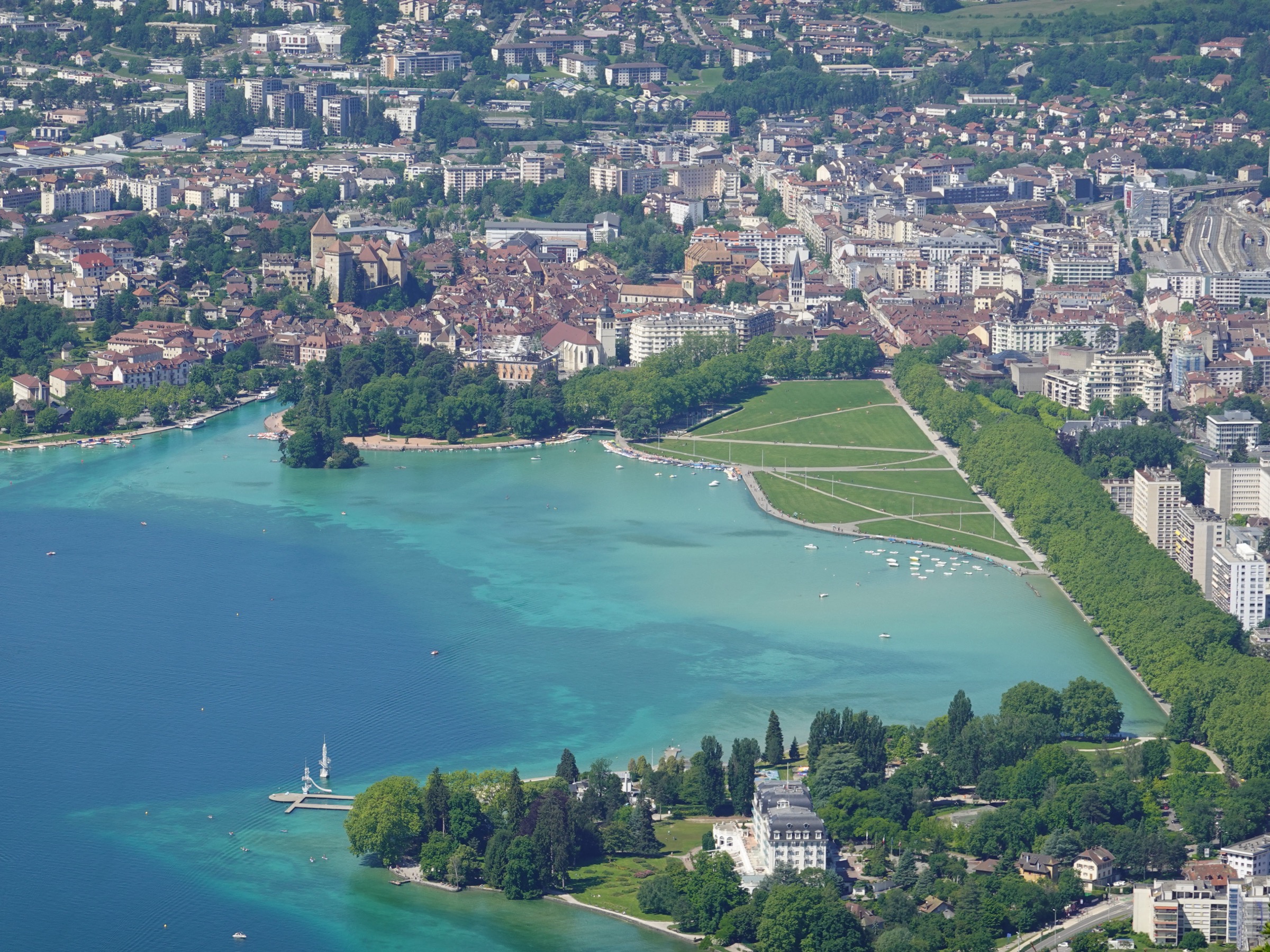
Annecy’s strength is variety. You can spend one day entirely in the old town and around the lake, then use the next morning for a hike, a ridge walk, a mountain-bike outing or a high viewpoint. The water also changes the character of the trip. This is not just city plus mountains; it is city plus lake plus mountains, which makes it especially good for summer and early autumn.
The best short-break outdoor hit is a half-day trip to Semnoz for walking and views over the surrounding ranges. If you have more time and transport, the lake-edge mountains add wilder options.
Practical note. Annecy is popular, especially in summer. For a better rhythm, go early for the outdoor part of the day, then return to the lake and old town later. In hot weather, the lake becomes part of the recovery plan.
Salzburg, Austria
Best for: culture first, mountains immediately after.
Salzburg is famous for music, baroque architecture, church domes, the fortress and the Salzach River, but it also works surprisingly well as a mountain city break. The city itself is beautiful enough to justify the trip even without the mountains. The bonus is that Untersberg rises close by, giving Salzburg an outdoor escape that feels properly alpine.
The Untersberg cable car is the key. The valley station is outside the historic centre, so Salzburg is not quite as seamless as Innsbruck, but the overall access still fits the concept. Once you reach the cable car, the ride to the upper station takes about 8.5 minutes, and the terrain changes fast. The city and surrounding lakes open below, while the plateau gives access to walking and more serious mountain routes.
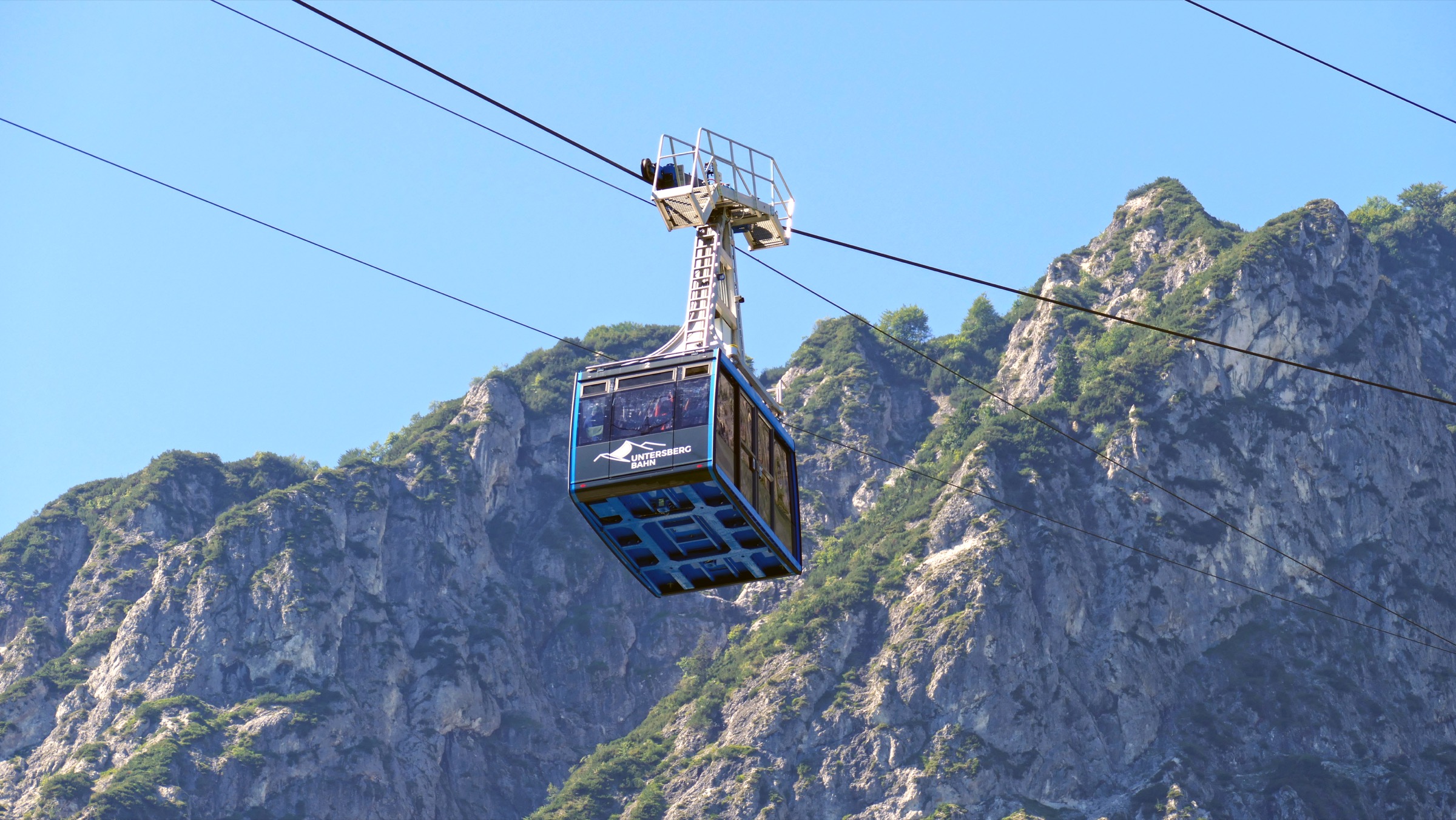
This is a good destination for travellers who want the city-break side to be especially strong. You can spend a day on Mozart, churches, gardens and cafés, then set aside a morning for Untersberg. The mountain element does not overwhelm the city; it sharpens it. Salzburg feels more complete when you see it from above.
The best short-break outdoor hit is to take the Untersberg cable car, walk from the upper station towards one of the accessible viewpoints, and return in time for an afternoon in the city.
Practical note. The upper area of Untersberg is real alpine terrain. Weather, visibility and snow can affect the experience, and some routes require proper mountain judgement. Check cable car operation before building your day around it.
Ljubljana, Slovenia
Best for: an easy first hiking city break.
Ljubljana is not a mountain city in the same dramatic sense as Innsbruck or Grenoble. Its charm is lower-key: riverside cafés, bridges, the castle hill, markets, greenery, a relaxed centre and a capital-city feel that remains very manageable. But it belongs in this article because a good outdoor escape is close, simple and very much part of local life.
The classic choice is Šmarna Gora, a hill north of the centre that functions as Ljubljana’s favourite short hike. It is not a high alpine summit, but it gives exactly what many city-break travellers need: a manageable climb, forest paths, views, a summit church and a place to eat or drink at the top. For visitors who want to combine a city weekend with an accessible hike, it is ideal.
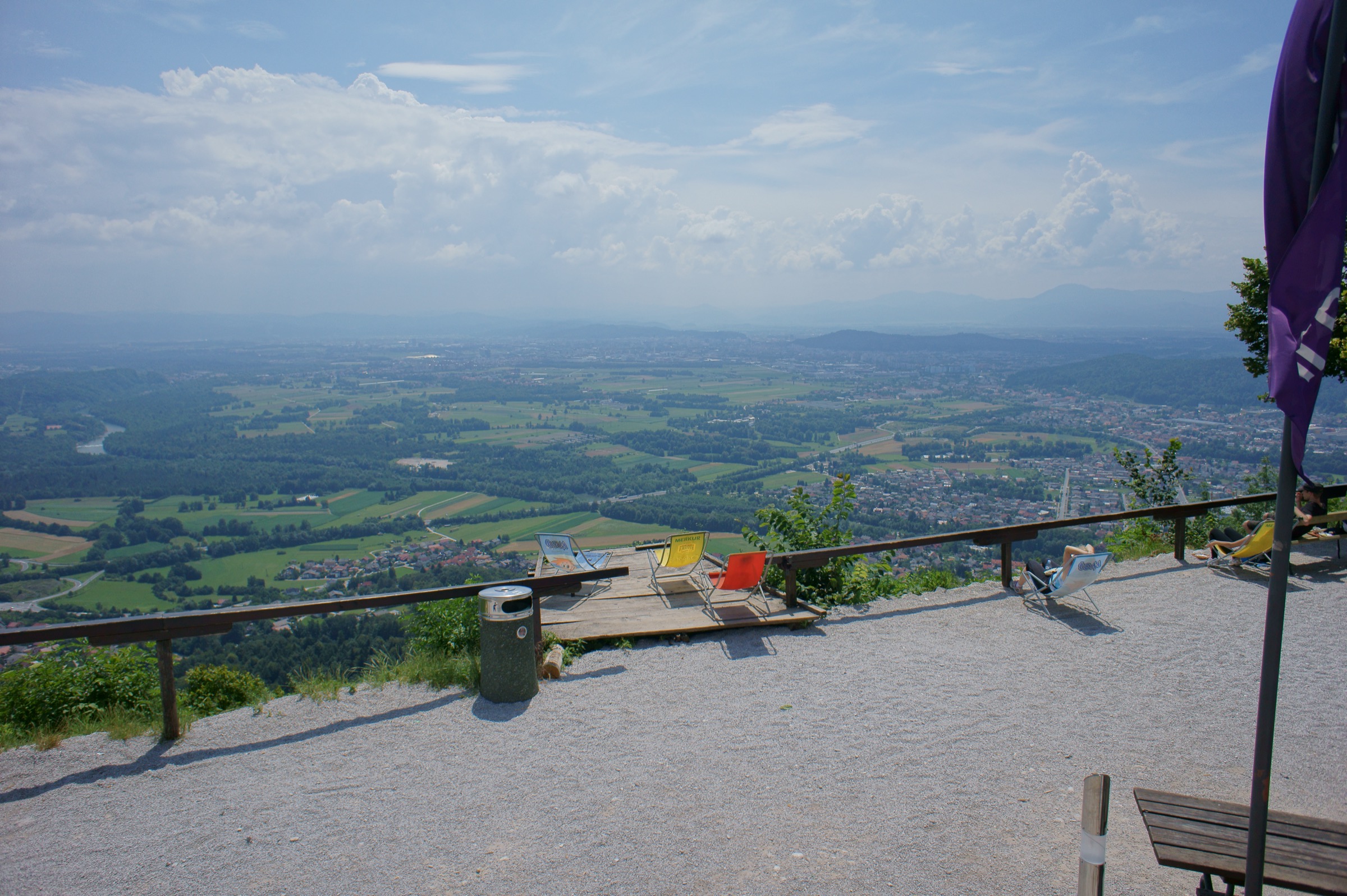
The access is slightly less immediate than a city-centre funicular, so this is a softer inclusion. You should allow time to reach the trailhead, especially by bus. But the overall experience still fits the spirit of the article: you can be staying in a European capital and still plan a proper morning walk with views before returning to the centre for lunch.
The best short-break outdoor hit is an early hike up Šmarna Gora, ideally before the day gets busy, followed by a slow afternoon in Ljubljana’s centre. Once at the trailhead, a normally fit walker can expect the ascent to take roughly 30–40 minutes, with extra time needed if travelling by bus from the city centre.
Practical note. Because the hike is short and popular, it is easy to underestimate it. Wear proper shoes if the path is muddy, icy or wet. It is a hill by Alpine standards, but still a real climb.
Brașov, Romania
Best for: medieval streets under the Carpathians.
Brașov feels made for this article. The old town has Saxon architecture, defensive walls, Council Square, the Black Church and a compact historic centre. Directly above it rises Mount Tâmpa, a forested Carpathian slope that makes the city feel physically pressed against the mountains.
The simplest outdoor move is Tâmpa itself. You can walk up from close to the centre, following marked trails through the forest, or use the cable car when it is operating. At the top, the famous Brașov sign and viewing areas give a clear sense of the old city below and the surrounding mountain landscape. It is not a remote wilderness experience, but that is precisely why it works: the mountain is part of the city’s everyday geography.
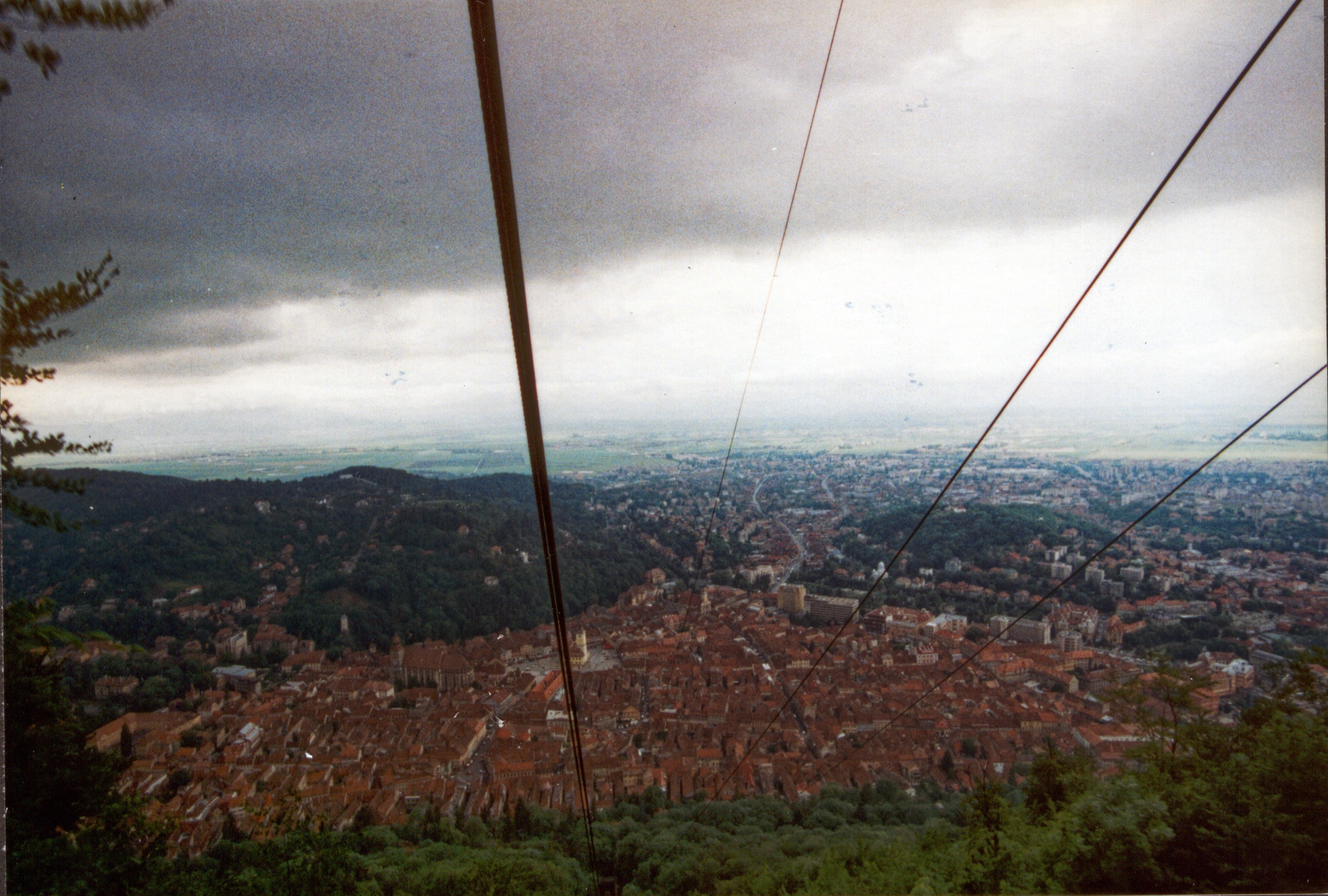
Brașov also has the advantage of depth. If you stay longer, the nearby Carpathians offer more substantial hikes and excursions, including gorges, forests and higher routes. But for the strict concept of this article, Tâmpa is enough. You can step out of the old town and begin climbing.
The best short-break outdoor hit is to hike up Tâmpa in the morning, enjoy the view over the old town, then descend for lunch and a slow afternoon in the historic centre. The walk to the top is commonly described as taking about an hour, while the cable car offers a shorter alternative for visitors who want the view without the climb.
Practical note. Paths can be slippery in wet or winter conditions, and bears are a real consideration in parts of Romania’s mountain environment. For central Tâmpa walks, stay on marked routes and follow local advice.
Sarajevo, Bosnia and Herzegovina
Best for: history, atmosphere and a mountain cable car.
Sarajevo is one of Europe’s most powerful city breaks: Ottoman lanes, Austro-Hungarian streets, cafés, mosques, churches, synagogues, museums, war history and a valley setting that makes the surrounding hills impossible to ignore. It is also a city where the mountain above town has deep emotional resonance.
The Trebević cable car links the city with Mount Trebević, historically one of Sarajevo’s favourite excursion areas. The ride takes only a few minutes, but the change in atmosphere is significant. The city drops away, the air cools, and the upper station gives access to forested slopes, viewpoints and the remains of Sarajevo’s Olympic landscape, including the bobsleigh track area.
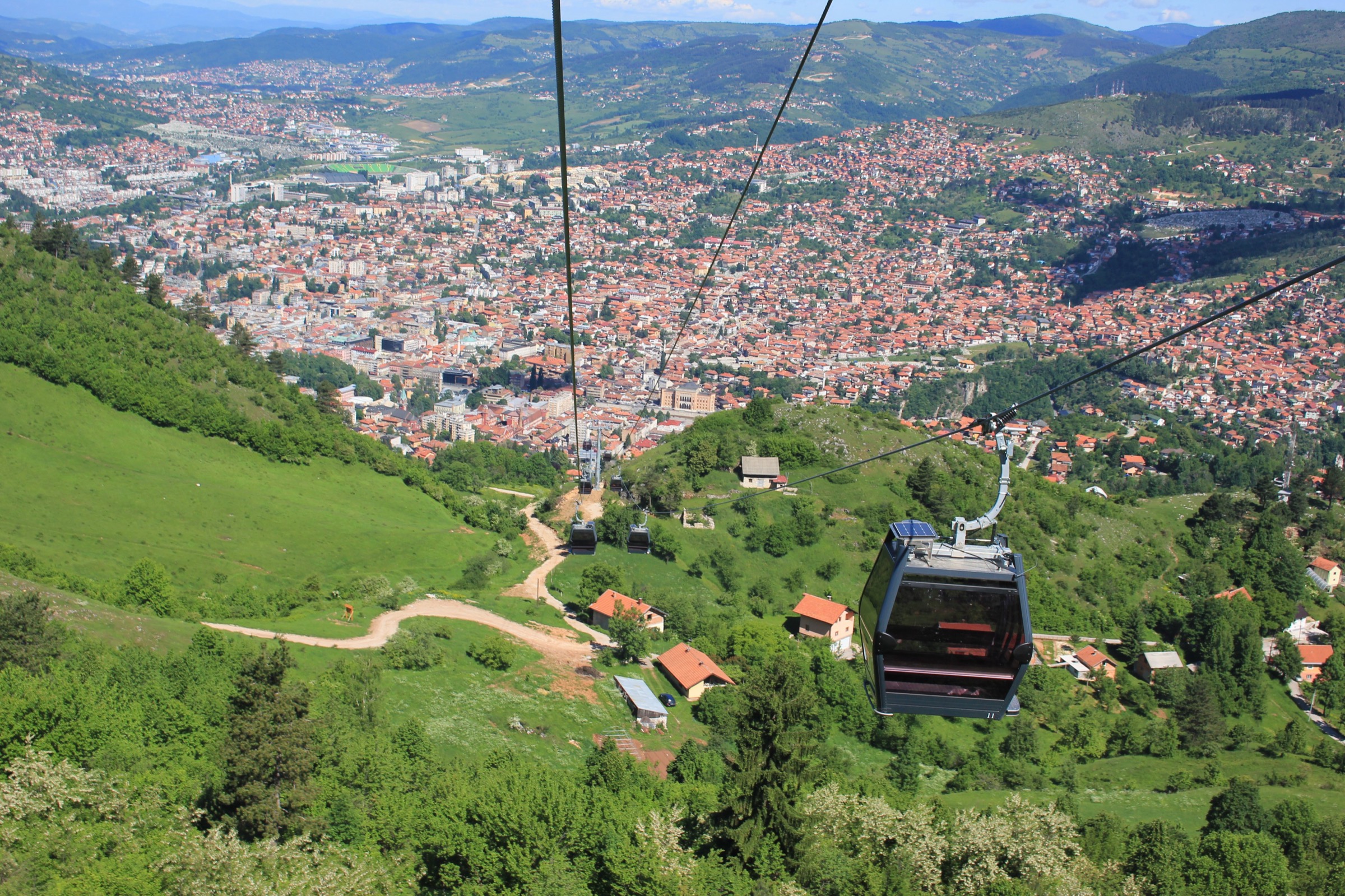
This is one of the most distinctive inclusions in the article because the mountain is not just scenic. It carries memory. Trebević was part of Sarajevo’s leisure culture, then part of its wartime trauma, and now again part of its public life. A visit can be light, with views and a short walk, or more reflective, connecting the landscape to the city’s recent history.
The best short-break outdoor hit is to ride the cable car to Trebević, walk around the upper area and viewpoints, and allow enough time to understand the mountain’s Olympic and wartime layers rather than treating it as a simple lookout.
Practical note. For longer walks on Trebević, use current local information and marked routes. The casual visitor should distinguish clearly between the accessible upper-station area and more ambitious mountain itineraries.
Trento, Italy
Best for: a compact Italian city with a cable car escape.
Trento is smaller and less famous than Bolzano, but it has a strong case for inclusion. The centre has painted façades, a handsome cathedral square, Renaissance buildings, museums, cafés and a distinctly Trentino character. Around it, the Adige Valley narrows between steep slopes, making the mountains feel close from almost everywhere.
The easiest outdoor link is the Sardagna cable car, which rises from Trento to the village above the city in only a few minutes. The ride is short, but it gives a fast change of perspective: river, rooftops, vineyards, cliffs and valley all opening below. From Sardagna and the surrounding slopes, visitors can connect with viewpoints and walking routes, while Monte Bondone offers a larger mountain playground nearby for those with more time.
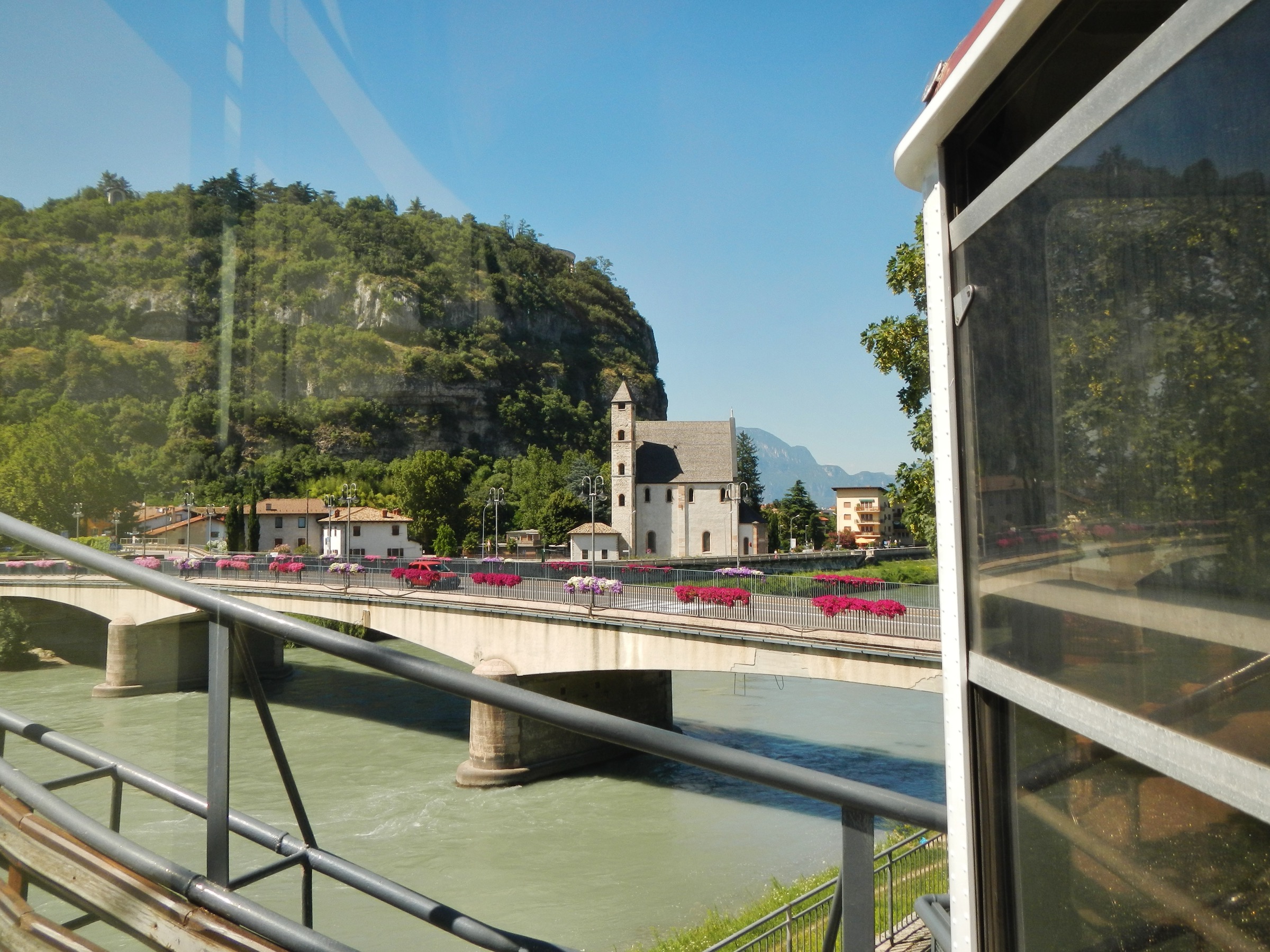
Trento works best for travellers who like compact cities and easy logistics. It may not have the instant drama of Innsbruck or Grenoble, but it has a calm, lived-in feel and excellent access to the surrounding landscape.
The best short-break outdoor hit is to take the Sardagna cable car for views over the city and a short walk above the valley, then return to Trento for museums, aperitivo and dinner.
Practical note. The Sardagna cable car is short and useful, but not the whole mountain story. If you want a bigger hike, plan beyond the top station and check transport or route options towards Monte Bondone.
Worth considering: Sofia and Tirana
Two cities almost make the main list and may deserve a separate Balkan or south-eastern Europe article.
Sofia has one of the most impressive mountain backdrops of any European capital. Vitosha rises directly south of the city, and there are public transport links towards trailheads and mountain areas. The reason Sofia is slightly more conditional is that the best access depends heavily on the exact route, day, transport option and starting point. It is unquestionably a city with a mountain attached; it just needs careful wording if the promise is “within 30 minutes”.
Tirana is another interesting case. The Dajti Ekspres cable car gives access to Mount Dajti above the Albanian capital, with views back over the city and towards the coast. It is a strong outdoor experience, but the transfer to the lower cable car station means it is better treated as a “worth considering” entry than as one of the cleanest examples.
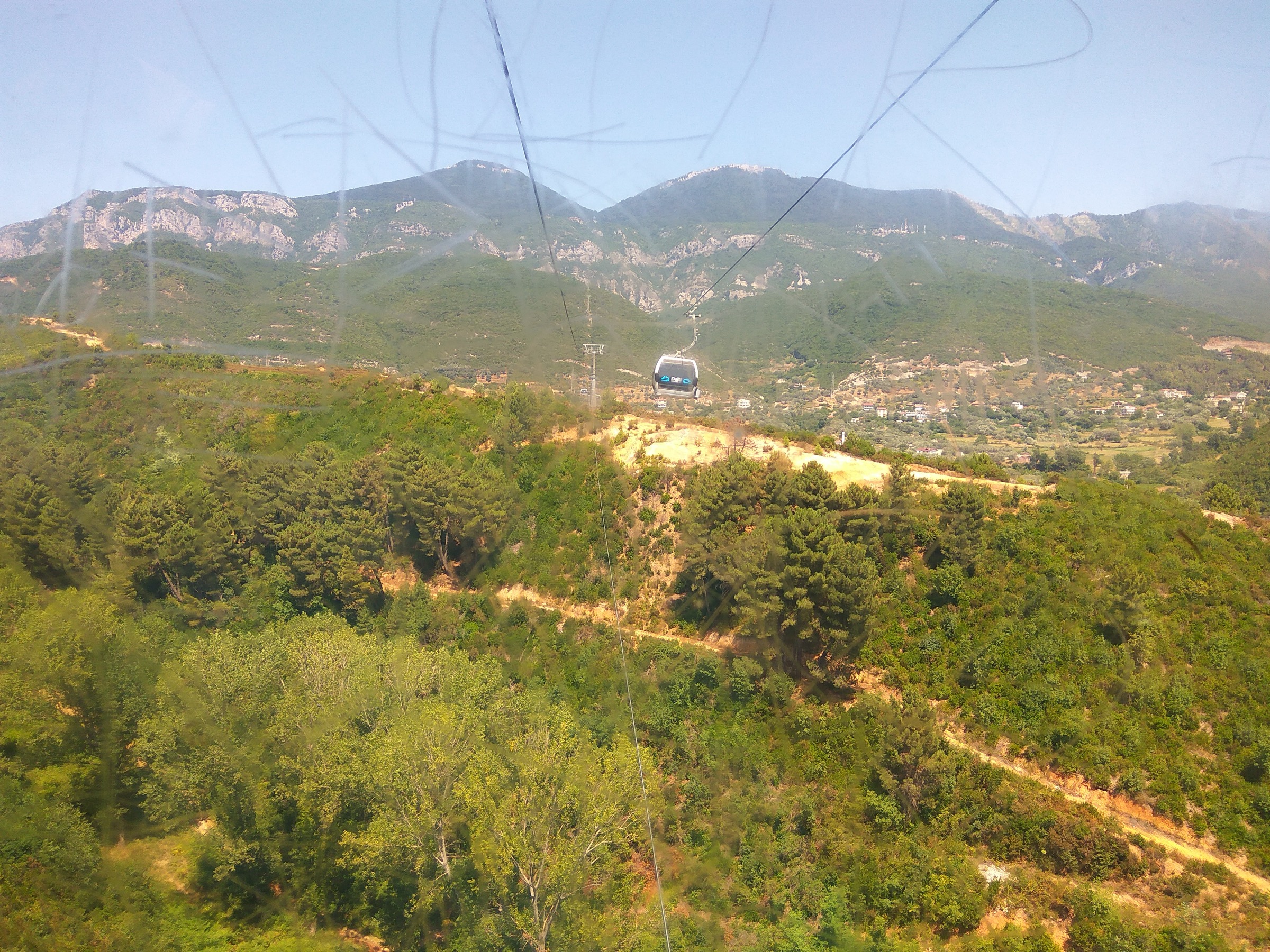
Both cities would be excellent in a follow-up article focused on Balkan capitals and mountain access.
Near-misses: famous cities that do not quite fit
The strictness of the rule matters. Without it, almost any attractive European city within reach of hills could qualify.
Zürich has excellent lake, forest and pre-Alpine access, but the more substantial mountain experiences tend to feel like excursions rather than immediate city-break add-ons. Munich is a classic gateway to the Bavarian Alps, but the best mountain days usually require more travel than this article allows. Turin has the Alps on its horizon, yet the strongest mountain experiences are not as tightly connected to the centre as in Innsbruck or Grenoble. Nice, Barcelona and Edinburgh all have superb outdoor qualities, but they lean more towards coast, hills or regional escapes than true mountain access within the strict definition used here.
Excluding them is not a criticism. It is what keeps the article useful. This is not a list of cities with mountains somewhere nearby. It is a list of cities where the mountains can realistically be part of the same short break, the same day, and sometimes the same morning.
How to choose the right one
For the cleanest version of the concept, choose Innsbruck. It is the benchmark: city centre, funicular, cable cars and high mountains in one seamless chain.
For a French mountain-city experience, choose Grenoble if you want a real urban environment with serious outdoor identity, or Annecy if you want beauty, lake swimming and easier holiday rhythm.
For a no-car northern option, choose Bergen. The weather is less predictable, but the access from harbour to hillside is exceptional.
For Italian food, architecture and mountain atmosphere, choose Bolzano or Trento. Bolzano is stronger for the Dolomite feel; Trento is quieter and more compact.
For culture first and mountains second, choose Salzburg. It gives you one of Europe’s great historic city breaks with a genuine alpine escape nearby.
For an easy first hiking city break, choose Ljubljana. It is relaxed, accessible and ideal for travellers who want a gentle outdoor addition rather than a demanding mountain weekend.
For something with Carpathian or Balkan character, choose Brașov or Sarajevo. Brașov gives you medieval streets under forested slopes. Sarajevo gives you history, atmosphere and one of Europe’s most meaningful cable car journeys.
Final thought
The best mountain city breaks do not make the outdoors feel like an optional extra. They let the landscape shape the trip. You notice the mountains while crossing a square, ordering coffee, walking back from dinner or looking down a side street. They are close enough to change your plans.
That is the real appeal of these cities. You can pack for a city break, but leave room for walking shoes. You can visit museums and markets, then climb above the rooftops. You can spend the weekend in a city without ever feeling enclosed by it.
In these European cities, the mountains are not a separate destination. They are part of the city’s edge.
Further reading
| City | Local mountain / route | Access from centre |
|---|---|---|
| Innsbruck | Nordkette / Hafelekar | Hungerburgbahn funicular + Nordkettenbahnen cable cars |
| Grenoble | La Bastille (Chartreuse gateway) | “Les Bulles” bubble cable car |
| Bergen | Mount Fløyen | Fløibanen funicular |
| Bolzano | Renon / Ritten plateau | Ritten cable car to Soprabolzano |
| Annecy | Semnoz | Road / bus to summit area |
| Salzburg | Untersberg | Untersbergbahn cable car from Grödig |
| Ljubljana | Šmarna Gora | Bus + short walk to trailhead |
| Brașov | Mount Tâmpa | Trail from old town or Tâmpa cable car |
| Sarajevo | Mount Trebević | Trebević cable car from Bistrik |
| Trento | Sardagna / Monte Bondone | Sardagna cable car |