Regional overview
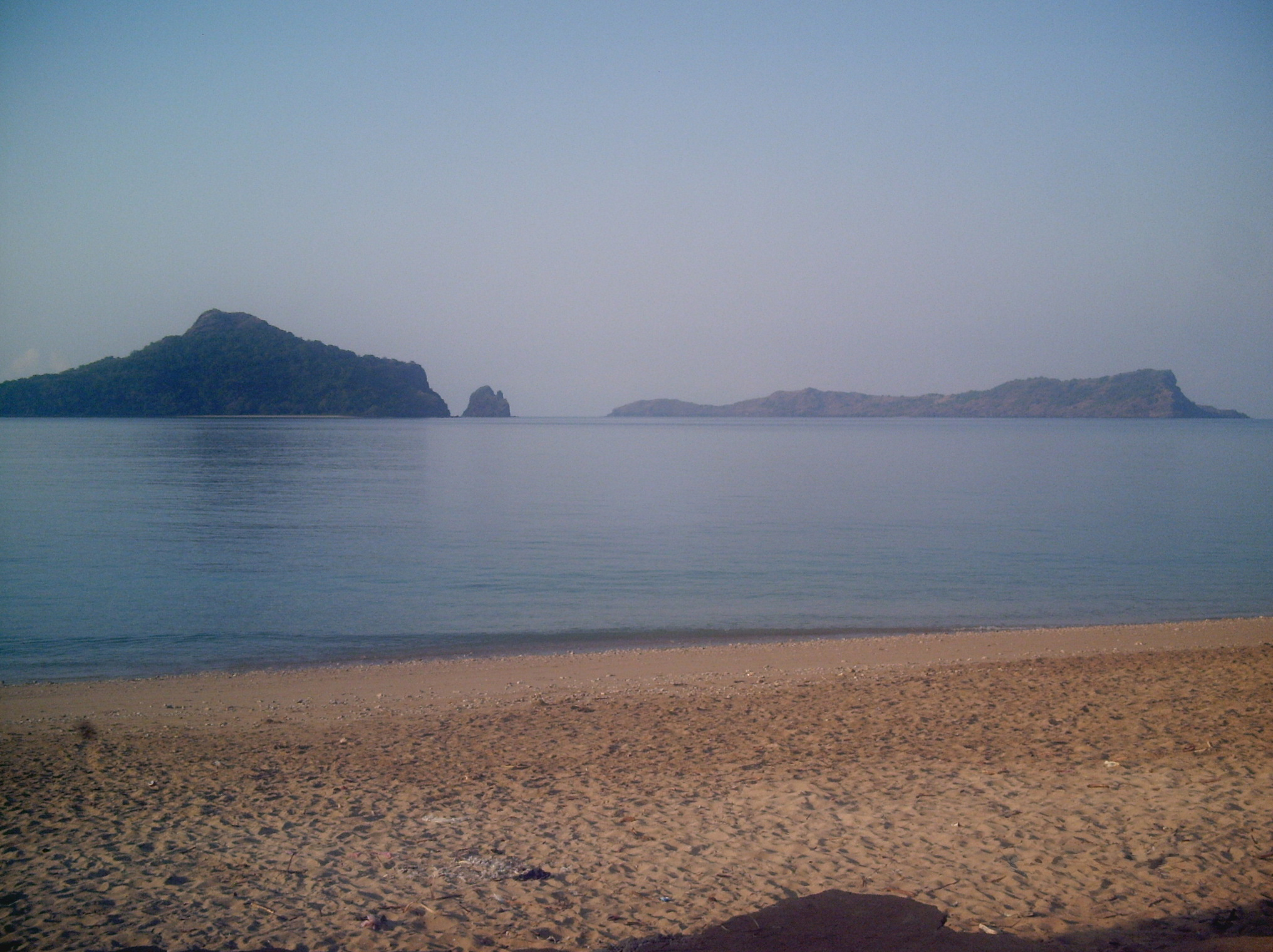
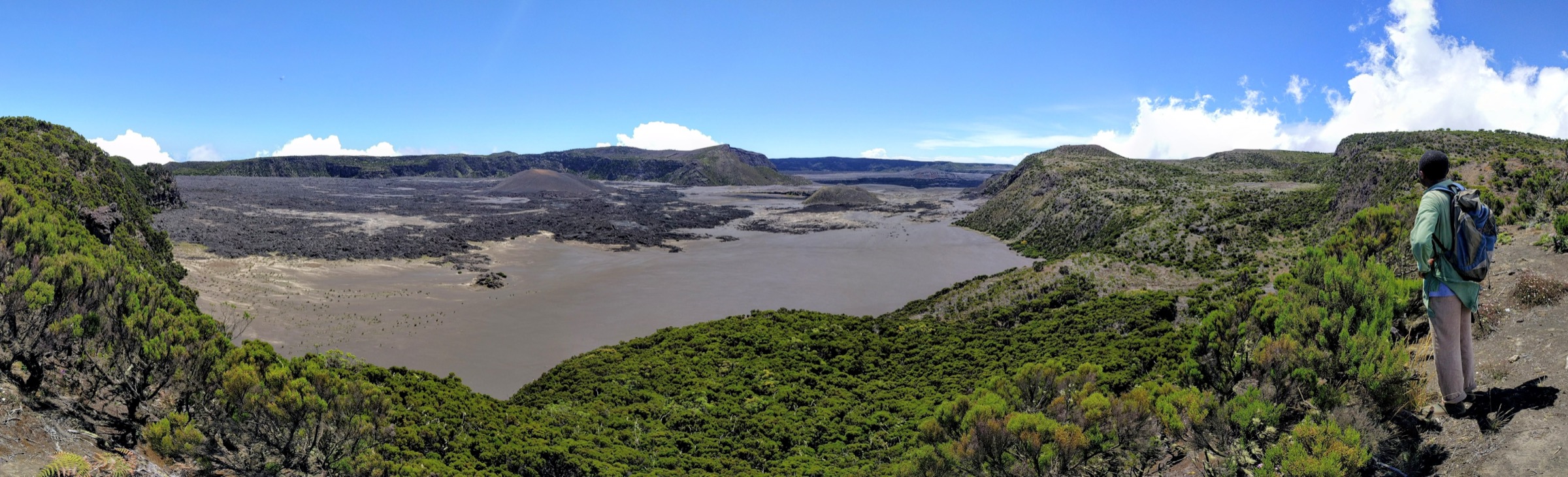
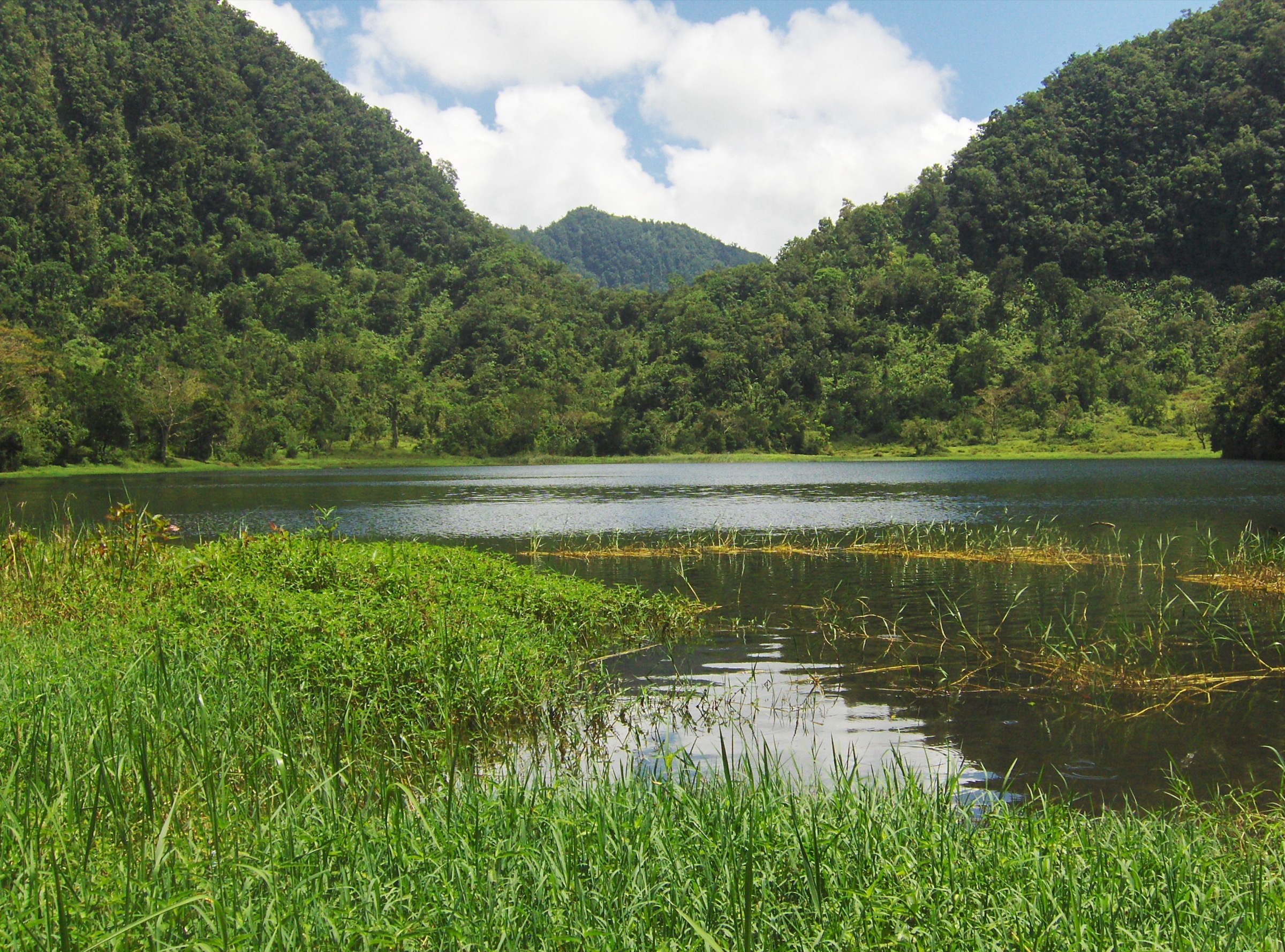
Anjouan (Nzwani) is the second-largest of the four main Comoros islands, sitting between Grande Comore and Mohéli in the western Indian Ocean. The island is a steep, dissected volcanic edifice: sharp ridges radiate from the central massif of Mount Ntringui toward the coast, separated by deeply eroded cirques, narrow valleys and dense agricultural slopes. The central highlands are protected within Mount Ntringui National Park and the Le Mont Ntringui Ramsar site — the Ramsar profile records the site as 3,000 ha lying between about 800 m and 1,595 m, and includes both Mount Ntringui itself (the island high point) and Lac Dzialandzé, the largest freshwater body on Anjouan.
The hiking character on Anjouan is unlike the better-mapped islands of the western Indian Ocean. The terrain is dominated by humid highland forest on the upper slopes, transitioning to intensive agriculture (ylang-ylang, banana, cassava and clove) below, with very few formally signed routes. The Ramsar profile highlights erosion, shrinking water resources, deforestation and agricultural pressure around the lake and the highland catchments — low-impact access and local permission matter more here than on the neighbouring islands. Most of the walking infrastructure that does exist relies on local guides, and even the documented summit and lake routes are recorded primarily through traveller accounts and a handful of academic references rather than through an official trail network.
Three planning issues dominate every Anjouan day-hike. The first is route documentation: outside the Ntringui summit line and the short Dzialandzé access path, neither distance, elevation gain nor trailhead coordinates are reliably published in reusable form, and several of the obvious candidate routes presented below have to be flagged as research candidates rather than verified itineraries. The second is climate: the island is hot and humid at lower elevations year-round, with a wetter season from November to April that turns steep forest paths into slip hazards. The third is access and protocol: the lake area around Dzialandzé is ecologically sensitive and locally sacred, swimming is strongly discouraged, and informal access fees or village gatekeeping may apply on the upper slopes — engage a local guide and ask permission rather than turning up unannounced.
Access to Anjouan is via Ouani Airport (AJN) near Mutsamudu, served by short hops from Moroni on Grande Comore (HAH) and by Yemenia and Inter Iles Air; some travellers arrive by ferry from Moroni or Mohéli. From Mutsamudu, the road south-west to Koni-Djodjo and Dindri reaches the Ntringui / Dzialandzé side in about an hour by hire car. Public transport in the form of taxi-brousse runs to the main villages but does not reach the trailheads themselves — every route here assumes a private vehicle or a guided arrangement.
For neighbouring sub-regions of the Comoros, see Mount Karthala on Grande Comore (the archipelago’s highest summit and the only active volcano on the islands) and Mohéli (the smallest of the four main islands, with marine-park coast walks and small-scale highland trails).
Selection rationale
Five day-hikes are presented across the central and southern highlands of Anjouan: the full Mount Ntringui ascent from Dindri via the Lac Dzialandzé basin, the short access trail to the lake itself, and three research-candidate entries covering the Moya forest / Trindrini sector in the south, the Lingoni / Tratringa waterfall and valley system, and the Tsembehou / Jimilimé eastern-ridge approach. The Ntringui summit and Dzialandzé access trail have partial route evidence — at minimum a route account, Ramsar references and verified high-point and lake elevations — while the remaining three are retained as honest research candidates because no mapped day-hike line or measured statistics could be verified from reusable sources. The set is built around landscape rather than length: two routes that share the Ntringui / Dzialandzé objective, plus three sector entries that locate the gaps in the island’s published walking record.
Excluded from the catalogue are multi-day traverses of the central massif, village walks that do not engage the highlands themselves, and routes on the coast and lower agricultural belt better treated as orientation walks. The neighbouring Mount Karthala and Mohéli catalogues cover the rest of the archipelago.
Summary
| # | Hike | Trailhead | Route type | Distance | Gain | Max elevation | Difficulty |
|---|---|---|---|---|---|---|---|
| 1 | Mount Ntringui from Dindri via Lac Dzialandzé | Dindri / Dzialandzé side | Out-and-back | Unresolved | ~600 m | 1,595 m | Hard |
| 2 | Lac Dzialandzé access trail | Koni-Djodjo–Dindri road | Out-and-back | ~2 km | Unresolved | 910 m | Easy–Moderate |
| 3 | Moya Forest / Trindrini highland edge | Moya area | Unverified | Unresolved | Unresolved | up to 1,474 m (Trindrini) | Unverified |
| 4 | Lingoni / Tratringa waterfall and river-valley walk | Lingoni or Tratringa valley | Unverified | Unresolved | Unresolved | Unresolved | Unverified |
| 5 | Tsembehou / Jimilimé eastern-ridge viewpoint route | Tsembehou ridge access | Unverified | Unresolved | Unresolved | Unresolved | Unverified |
1. Mount Ntringui from Dindri via Lac Dzialandzé
Snapshot
Itinerary
From the Dindri / Dindi side the route approaches the Dzialandzé basin, passing agricultural slopes and wet ground near the crater lake before turning west and climbing steeply through humid forest toward Ntringui. The published account describes a poorly visible path, very steep ground, frequent use of roots and branches for balance, and a return by the same line — there is no loop variant in the documented record. The summit itself is a small forested high point with limited views in cloud and longer-range views toward Grande Comore on the rare clear day. A local guide is the standard arrangement: the path is easy to lose, and the lake basin sits within ecologically sensitive and locally sacred ground where outside walkers should not move unaccompanied.
Why it is essential
Mount Ntringui is Anjouan’s high point and the central summit of the island’s principal protected highland. The route combines the crater-lake basin, the remaining stretch of montane forest, and the main ridge system of the island — there is no comparable single-day objective on Anjouan, and no realistic alternative summit for walkers in the highland sector.
Equipment
- Sturdy mountain boots with good ankle support
- Long trousers and gloves for the steep vegetated ground
- 2–3 L water (no surface water above the lake basin)
- Rain shell and lightweight insulating layer for the upper forest
- Sun protection and insect repellent for the lower slopes
- Offline map and GPS — the path is poorly visible and easy to lose in cloud
- Headlamp with spare batteries
- First aid kit and emergency food
Hazards and notes
- The route is not adequately mapped for independent publication; engage a local guide.
- Steep rooty ground, route-finding uncertainty, wet vegetation and lower-altitude heat are the leading hazards.
- Informal access fees or village gatekeeping around the Dzialandzé basin should be expected; ask permission rather than walking through unannounced.
- The lake area is ecologically sensitive and locally sacred — avoid bathing and keep to accepted tracks.
- No cell coverage on the upper mountain; tell someone in the village your turn-around time and stick to it.
2. Lac Dzialandzé access trail

Snapshot
Itinerary
The access walk reaches Lac Dzialandzé from the Koni-Djodjo–Dindri road on a short forest path described as around 1 km one way. The lake sits on the south-east flank of Mount Ntringui at 910 m, below wooded slopes, and is documented as a small crater lake — Anjouan’s principal freshwater body and the centrepiece of the Ramsar designation. The path crosses agricultural land before entering the forest fringe around the lake, ending on the eastern shore. Return is on the same line. The route is the most accessible entry to the highland landscape that anchors the rest of this catalogue, and is sometimes combined with the Ntringui summit climb (entry 1) as a single longer day.
Why it is essential
Lac Dzialandzé is the most accessible documented natural objective in the Anjouan highlands. The walk delivers the crater-lake landscape that underpins the Ramsar designation without requiring the technical forest climb to the Ntringui summit, and is the most realistic introduction to the central highlands for visitors who do not want a hard day.
Equipment
- Walking shoes or light boots
- Light rain layer
- 1–1.5 L water
- Sun protection and insect repellent
- Basic offline map / GPS for the road approach
- Small first aid kit
Hazards and notes
- The lake is ecologically sensitive and locally sacred — swimming is strongly discouraged by the published Wikipedia route note and by local custom.
- Ramsar records declining water levels, erosion, agricultural pressure, pesticide run-off and sedimentation around the lake; stay on accepted tracks.
- Fees and access controls were not officially verified in the source pass; expect informal village arrangements.
- Wet conditions make the access path muddy and slippery — postpone in heavy rain.
- No cell coverage in the basin.
3. Moya Forest / Trindrini highland edge
Snapshot
Itinerary
This candidate targets the Moya forest and the southern highland edge and, if an acceptable route exists, the Mount Trindrini sector at the southern end of the central massif. The Ramsar text identifies Trindrini as one of the island’s high summits and describes Anjouan’s steep ridges, forest remnants and agricultural pressure on the surrounding slopes — but no mapped day-hike line and no measured statistics could be verified from reusable sources, and the entry is retained here only to mark the gap. Field confirmation by a guide based in Moya or the nearby coast villages is the realistic way forward.
Why it is essential
The Moya–Trindrini sector would broaden the selection beyond Ntringui and represent the southern highland block of Anjouan. It remains a research candidate because no mapped day-hike line or measured statistics have been verified; the section is included here for honesty rather than as a usable itinerary.
Equipment
- Standard to mountain hiking equipment if attempting any documented path with a guide
- Boots, rain protection, water and navigation backup as a minimum
- Local guide arrangement is strongly recommended
Hazards and notes
- Route access, land permission, forest condition, water availability and trail continuity are all unresolved.
- Treat this entry as a planning placeholder, not a usable itinerary.
- Engage a guide based locally in the Moya or Mremani area before any attempt.
4. Lingoni / Tratringa waterfall and river-valley walk
Snapshot
Itinerary
This candidate would follow one of the highland watercourse or waterfall approaches associated with the Ntringui catchments. Ramsar identifies rivers including the Tratringa and Lingoni and lists the Lingoni waterfall as a tourism attraction, but a day-hike line, trailhead and route geometry could not be verified from reusable sources. Field confirmation with a local guide is the realistic way forward.
Why it is essential
Watercourses and ravines are a defining feature of Anjouan’s dissected volcanic terrain. A verified waterfall or river-valley walk would add a lower-altitude counterpart to the Ntringui summit and lake — water, ravine vegetation and a different angle on the island’s hydrology — but the catalogue should not pretend the route is mapped when it is not.
Equipment
- Grippy footwear for wet rock
- Rain protection
- Sun protection and insect repellent at lower altitude
- Navigation backup
- Local guide arrangement strongly recommended
Hazards and notes
- Flooding, slippery rock, erosion, cultivated land and access permissions require field confirmation.
- Treat this entry as a planning placeholder rather than a usable itinerary.
5. Tsembehou / Jimilimé eastern-ridge viewpoint route
Snapshot
Itinerary
This candidate represents the high ridges that radiate from the Ntringui massif toward the eastern and north-eastern parts of Anjouan. The Ramsar profile describes three mountain chains issuing from Ntringui, including the Jimilimé direction, but no published hiking itinerary, trailhead or measured route file could be verified from reusable sources. A guided ridge walk from Tsembehou or one of the neighbouring villages is the realistic way to test the line.
Why it is essential
A verified ridge viewpoint walk would capture the island’s sharp volcanic relief and village-to-ridge character without requiring the full Ntringui summit climb. Until route geometry is confirmed, the entry is retained as a research candidate.
Equipment
- Standard to mountain hiking equipment
- Boots, rain layer, water and sun protection as a minimum
- Local guide arrangement strongly recommended
Hazards and notes
- Trail existence, public access, exposure and route statistics are all unresolved — confirm with local or official route sources before any attempt.
Routes excluded as out of scope
The following sit inside or adjacent to the Anjouan highlands but fall outside a day-hike entry, are too duplicative of the five above, or are better understood as coastal / agricultural walks rather than highland routes.
- Multi-day traverses of the central massif combining Ntringui, Dzialandzé and the southern ridges. No published multi-day itinerary was verified, and such a route would in any case fall outside this catalogue’s day-hike scope.
- Coastal and lower agricultural walks around Mutsamudu, Domoni and Ouani. These are short orientation walks rather than highland routes and are better treated as add-ons to the entries above.
- Mount Karthala summit and Grande Comore routes. Covered separately in the Mount Karthala catalogue.
- Mohéli highland and marine-park walks. Covered separately in the Mohéli catalogue.
- Mayotte routes. Although geographically part of the Comoros archipelago, Mayotte is administratively part of France and has a separate hiking record outside the scope of this Comoros sequence.
External links
| Source | URL |
|---|---|
| Ramsar Sites Information Service — Le Mont Ntringui | rsis.ramsar.org |
| Ramsar RIS PDF — Le Mont Ntringui | rsis.ramsar.org |
| Mount Ntringui National Park summary | en.wikipedia.org |
| Lac Dzialandzé — access path, altitude and lake dimensions | fr.wikipedia.org |
| Route account — Dindri / Lac Dzialandzé / Mount Ntringui | cariboumahore.wordpress.com |
| Wikipedia — Anjouan | en.wikipedia.org |
| OpenStreetMap — Mount Ntringui search | openstreetmap.org |
| OpenStreetMap — Lac Dzialandzé search | openstreetmap.org |
| OpenStreetMap (ODbL 1.0) | openstreetmap.org |