Regional overview
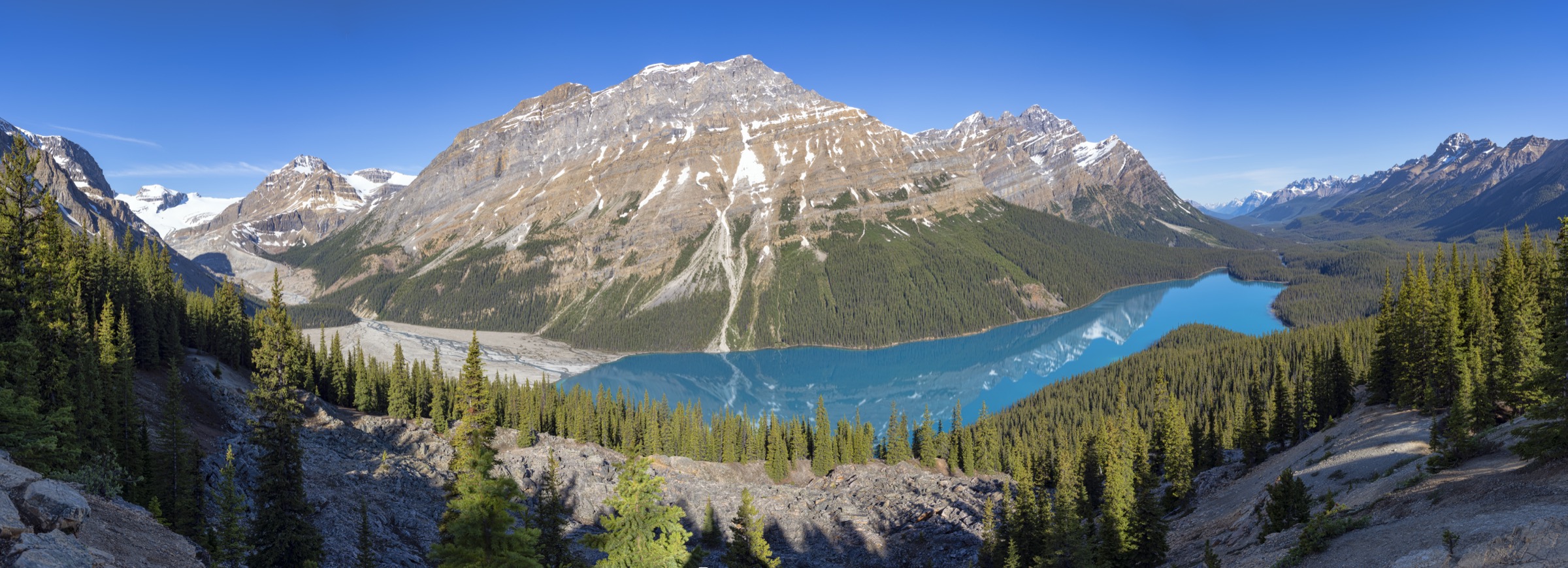
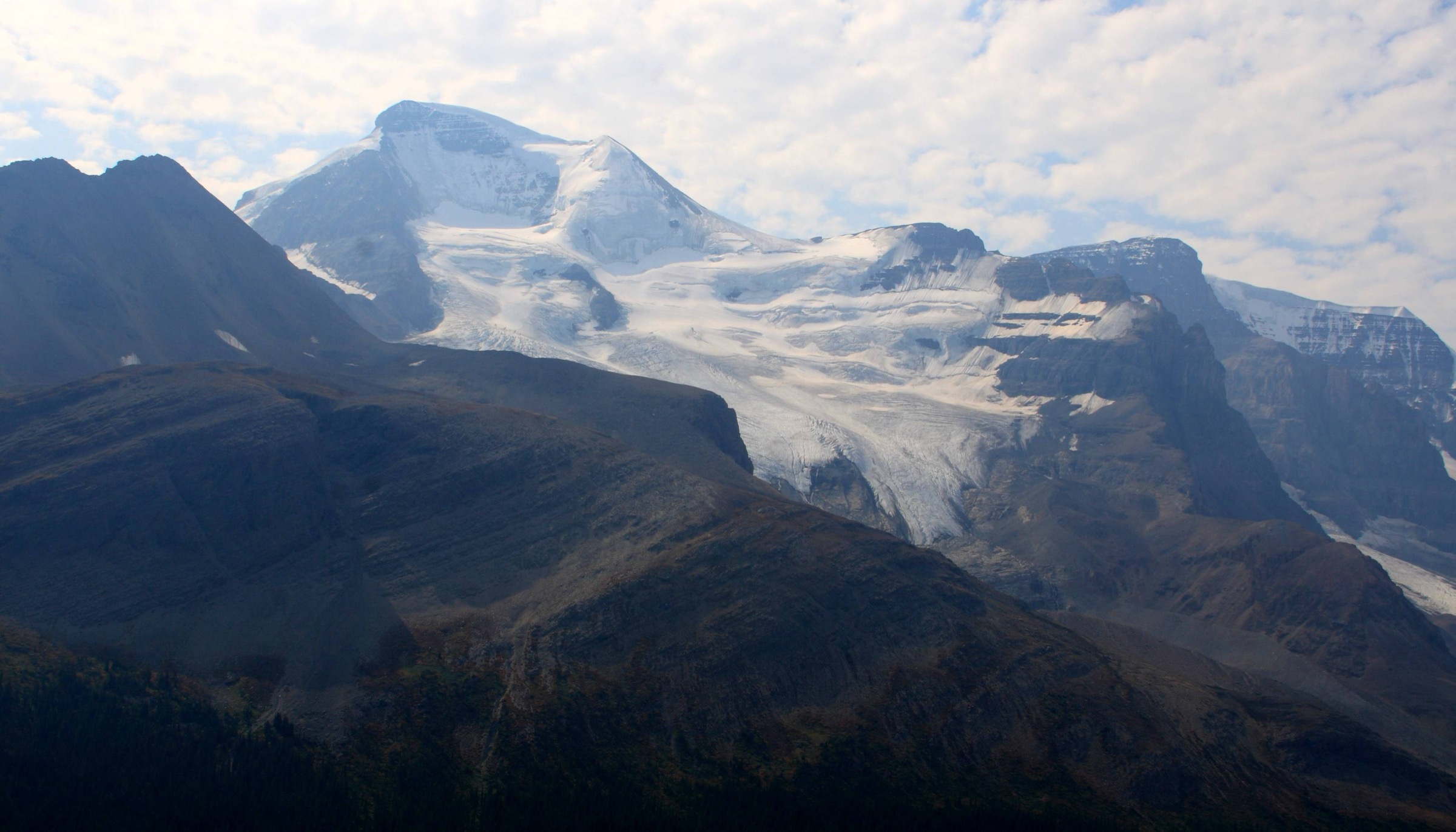
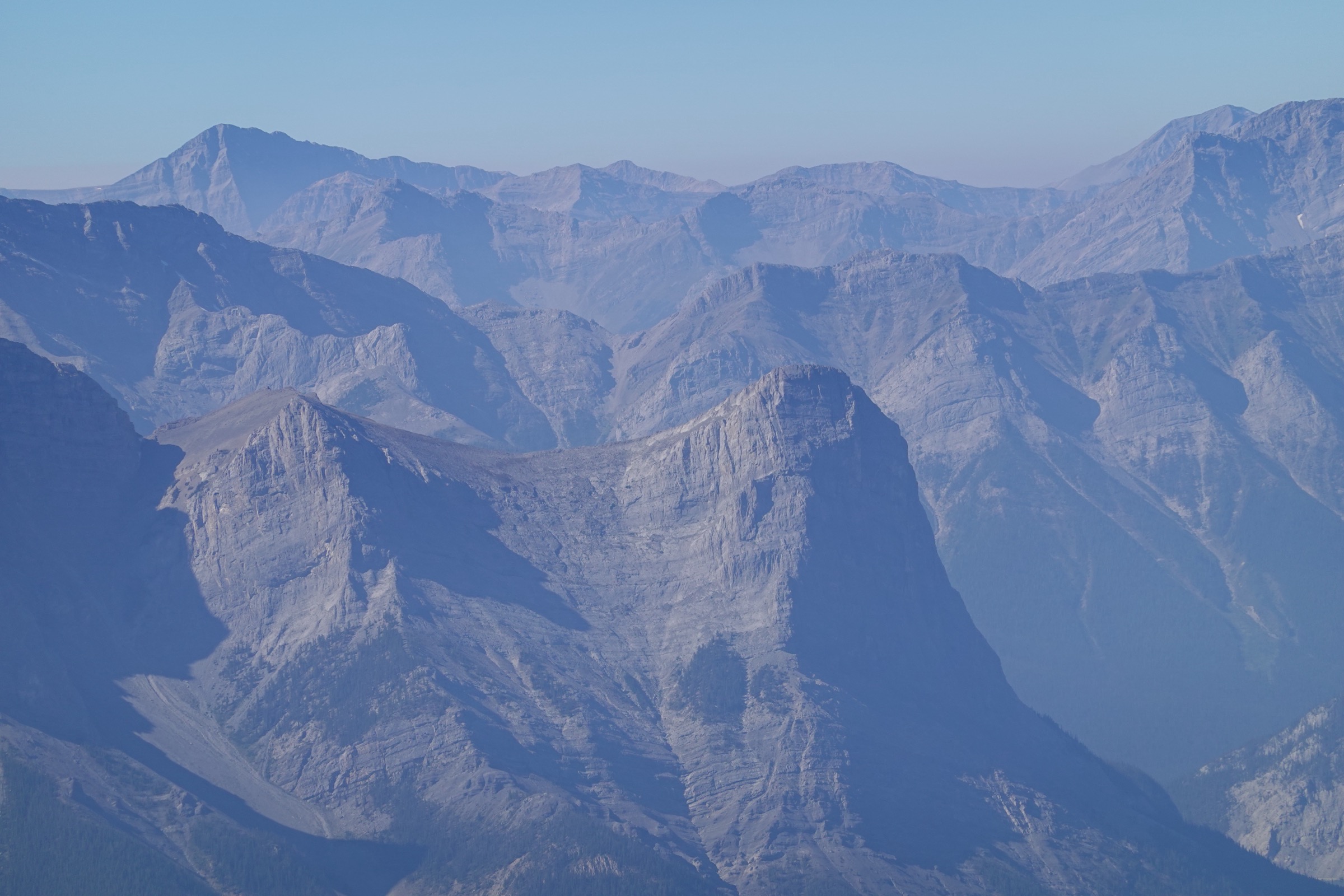
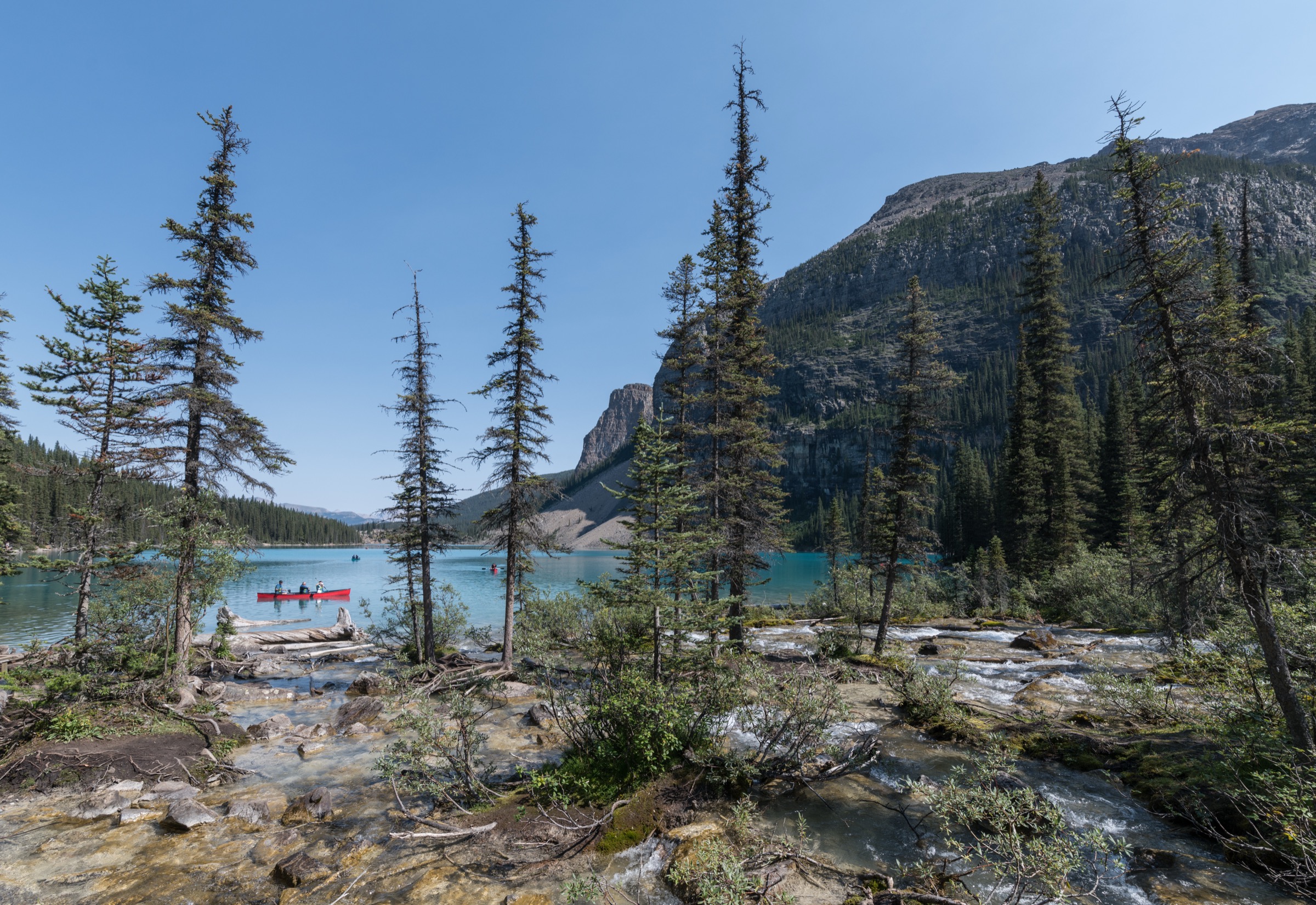
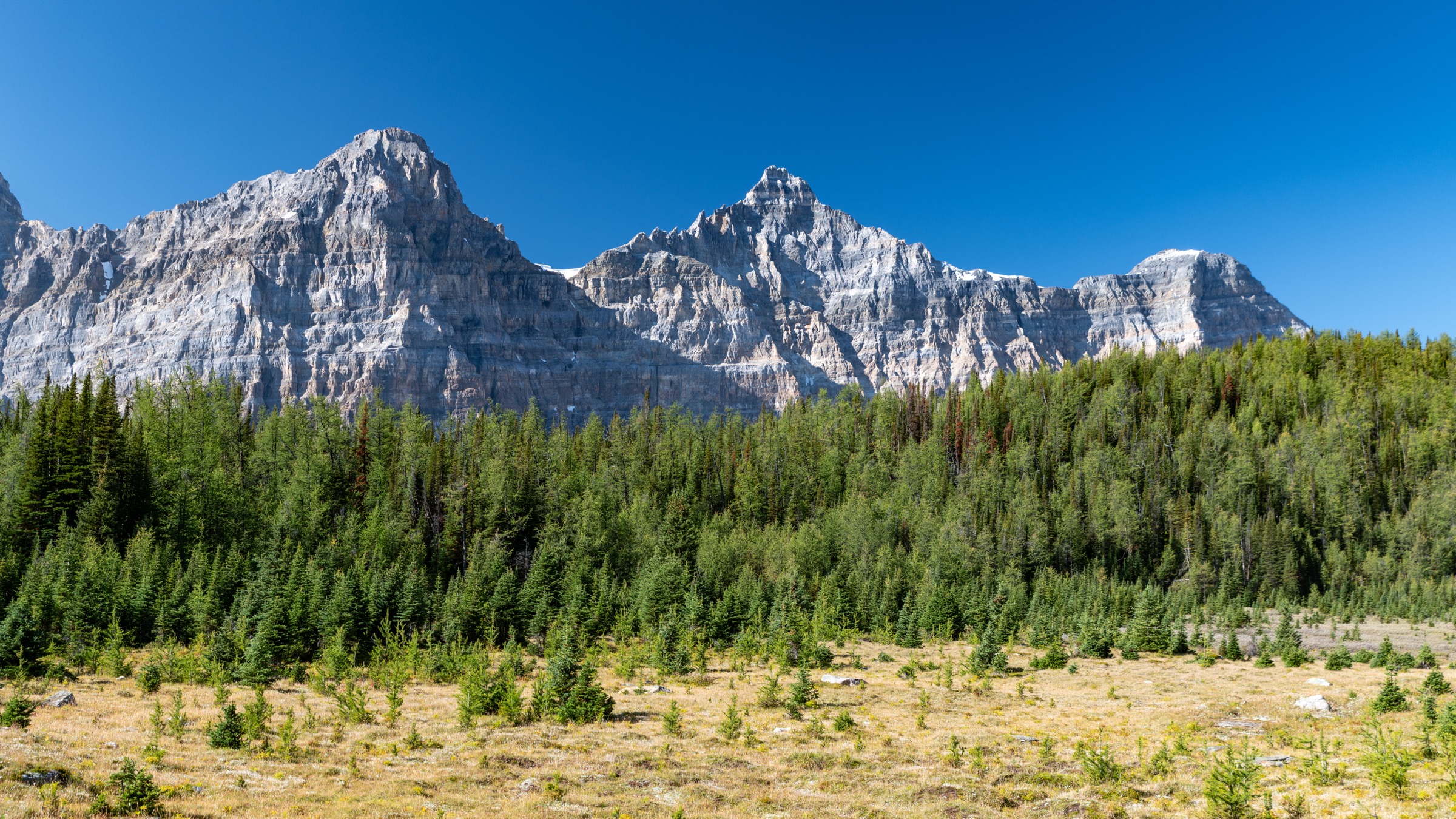
Banff National Park covers 6,641 km² of the Front and Main Ranges of the Canadian Rockies, straddling the Continental Divide along the Alberta–British Columbia border. The terrain that hikers experience is shaped by Cambrian and Devonian sedimentary rock, carved by Pleistocene ice and still dressed in active glaciers — the Wapta and Waputik Icefields, Victoria Glacier above Lake Louise, and the Crowfoot, Bow and Peyto glaciers on the Icefields Parkway. Three landscapes dominate: the deep U-shaped Bow Valley with Banff townsite at 1,383 m; the higher Lake Louise and Moraine Lake basins with their classic milk-blue glacial tarns at around 1,700 m; and the alpine meadow zone above 2,100 m where subalpine larch (Larix lyallii) forms the most photographed autumn forest in North America.
The hiking season runs roughly mid-June to mid-October. Higher passes (Sentinel, Healy, Cirque) commonly hold snow into early July and after big winters access is sometimes delayed further — Sunshine Meadows trails opened only on 6 July in 2026 after a heavy snowpack winter. Wildflower peak in the alpine is mid-July to mid-August; the famous golden larches turn in the last ten days of September and the first week of October, when Moraine Lake and Healy become the busiest backcountry destinations of the year.
Access has changed materially since 2023. Moraine Lake Road is permanently closed to private vehicles; visitors must reach the trailhead by Parks Canada shuttle, Roam Transit, commercial shuttle, taxi, or bicycle. The Lake Louise lakeshore parking is paid (CAD 42 per day, 15 May – 13 October) and routinely fills before 06:00 in summer — most hikers use the free Lake Louise Ski Resort Park & Ride and the Parks Canada connector shuttle, with reservations released on 15 April for the season plus a rolling two-day window. Roam Transit Route 8X links Banff townsite to Lake Louise year-round; Route 9 serves Johnston Canyon mid-May to October. A Banff Park Pass is required (CAD 12.25 adult daily, CAD 83.50 annual Discovery Pass), although 19 June – 7 September 2026 admission is free under the federal Canada Strong Pass initiative.
Safety is non-trivial. Banff is core grizzly habitat: bear spray, group hiking and bear-aware behaviour are expected. Several trails — most frequently the Moraine Lake cluster (Larch Valley, Sentinel Pass, Eiffel Lake, Paradise Valley) — carry a Parks Canada group-access order in late summer requiring parties of four or more; wardens enforce it at the trailhead and fines apply. Lightning storms build fast on exposed passes in afternoons; an early start is standard practice. Snow lingers on north aspects below Sentinel and around Cirque Peak into August.
Selection rationale
The five chosen hikes triangulate the park’s signature landscapes while accommodating the 2023–2026 access reality. Plain of Six Glaciers is the definitive Lake Louise glacier walk and the best non-scrambling approach to the Victoria Glacier headwall. Larch Valley and Sentinel Pass is the canonical Moraine Lake larch hike and the highest day-hike pass in the park (2,611 m); its inclusion is also a vehicle for explaining the shuttle system. Healy Pass balances the entry geographically (Sunshine side of the Bow Valley) and delivers the most extensive larch parkland in Banff without the Moraine crowds. Helen Lake represents the southern Icefields Parkway, a quieter alpine cirque hike with optional extension to Cirque Peak. Sunshine Meadows (Rock Isle and Standish loop) is the easiest essential — a gondola-accessed alpine traverse on the Continental Divide that gives hikers with limited time or fitness genuine high-country scenery.
Summary table
| # | Hike | Country | Route type | Distance | Gain | Max elevation | Difficulty |
|---|---|---|---|---|---|---|---|
| 1 | Plain of Six Glaciers | Canada | Out-and-back | 13.8–14.6 km | 365–410 m | 2,135 m | Moderate |
| 2 | Larch Valley & Sentinel Pass | Canada | Out-and-back | 11.4–12.0 km | 725–820 m | 2,611 m | Moderate–difficult |
| 3 | Healy Pass | Canada | Out-and-back | 18.4–20.3 km | 655–816 m | 2,330 m | Moderate (length) |
| 4 | Helen Lake | Canada | Out-and-back | 11.6–12.0 km | 455–530 m | 2,420 m | Moderate |
| 5 | Sunshine Meadows — Rock Isle / Standish loop | Canada | Loop | 8.5–10.3 km | 200–300 m | 2,395 m | Easy–moderate |
1. Plain of Six Glaciers
Snapshot
Itinerary
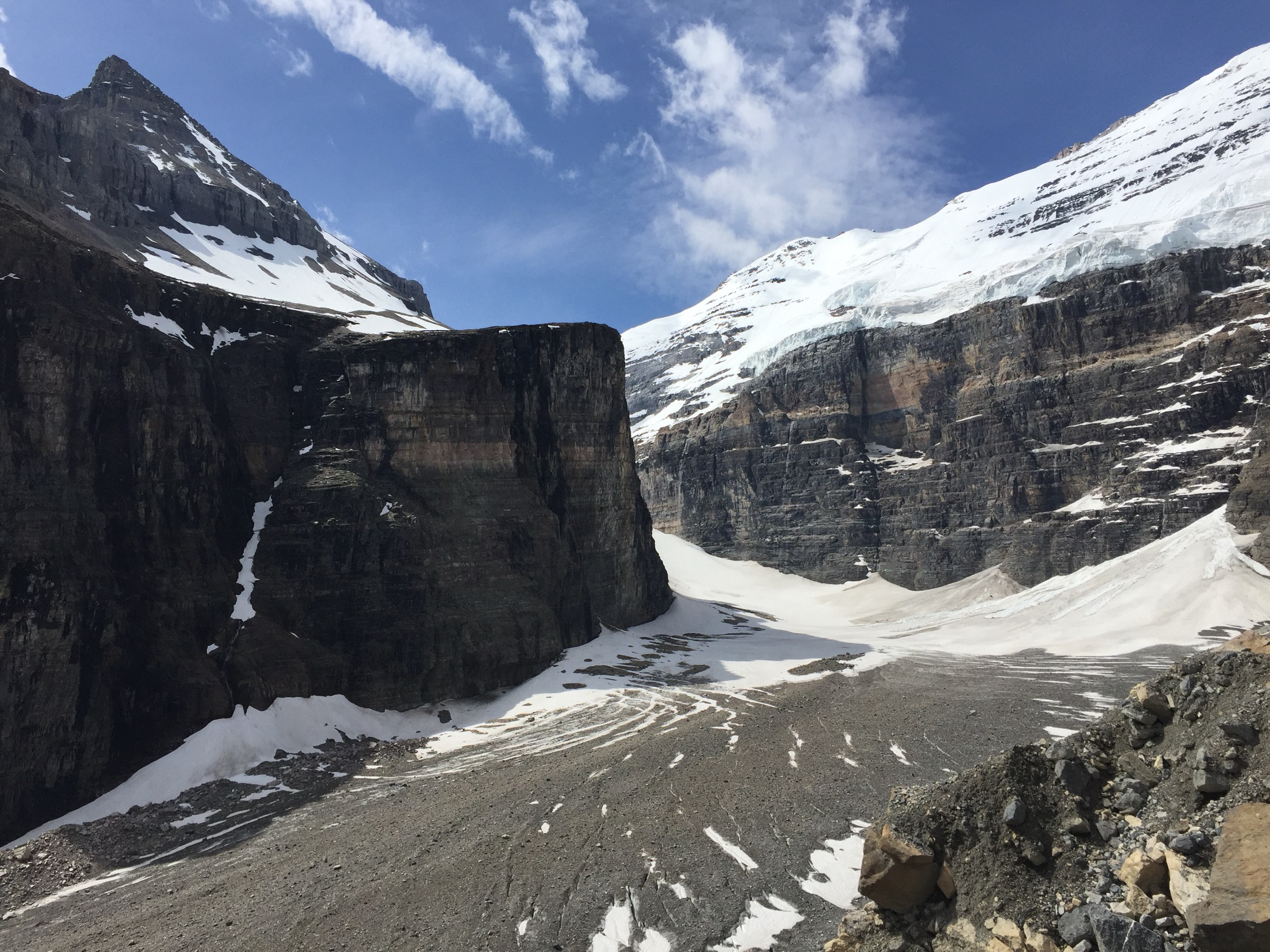
The trail begins at the northwest corner of Lake Louise, contouring the north shore for 2 km on a paved promenade past the canoe dock. Past the lake’s far end it crosses the broad outwash flats below Mount Victoria, then climbs in a steady forested switchback ramp on the south flank of the valley. At about 5.3 km the trail reaches the Plain of Six Glaciers Teahouse at 2,012 m, a log structure operating since 1927 and accessible only on foot. From the teahouse a marked spur continues 1.3 km up moraine ridges to a viewpoint at roughly 2,135 m above the Lower Victoria Glacier — a hanging-ice amphitheatre below Abbot Pass between Mount Victoria (3,464 m) and Mount Lefroy (3,423 m). Return is by the same route, or, for a longer day, by ascending the Highline Trail north over to Lake Agnes and descending past the Lake Agnes Teahouse to the start.
Why it is essential
The most efficient way to stand under a major Rockies icefall without technical skills. The route combines the iconic Lake Louise shoreline, an actively operating turn-of-the-century teahouse, and an alpine moraine viewpoint into a half-day outing reachable by transit. The recession of the Victoria and Lefroy glaciers is visibly recorded in successive moraine ridges along the upper trail — a teaching landscape as well as a postcard one.
Equipment
- Stiff trail shoes or light boots
- Trekking poles useful for the moraine spur
- Layered insulation; cold air drains off the glacier even in August
- Rain shell
- 1.5–2 L water
- Cash or card for the teahouse (no power or running water)
- Bear spray
Hazards and notes
The upper viewpoint sits beneath active serac fall on Mount Lefroy — stay on the marked trail and do not approach the glacier toe. The route is signed closed mid-October to mid-June for avalanche exposure on the lower switchbacks. Black and grizzly bears use the valley; carry spray. The Lake Louise shoreline is severely crowded 10:00–16:00 in July and August; starting before 08:00 is standard. Combining with Lake Agnes via the Highline Trail extends the day to roughly 17 km with an additional 100 m of gain.
GPX / KML links
| Source | URL | Format | Notes |
|---|---|---|---|
| OpenStreetMap | openstreetmap.org | OSM data (export GPX) | ODbL 1.0; reusable with attribution |
| AllTrails community track | alltrails.com | GPX (account) | AllTrails ToS — personal use only |
| Parks Canada — Lake Louise day hikes | parks.canada.ca | Source page | Trail descriptions; no published GPX |
Sources
- Parks Canada — Day hikes in the Lake Louise area
- Banff & Lake Louise Tourism — Lake Agnes / Plain of Six Glaciers
- AllTrails — Plain of Six Glaciers Trail
- Parks Canada — Lake Louise shuttle / Park & Ride
2. Larch Valley & Sentinel Pass
Snapshot
Itinerary
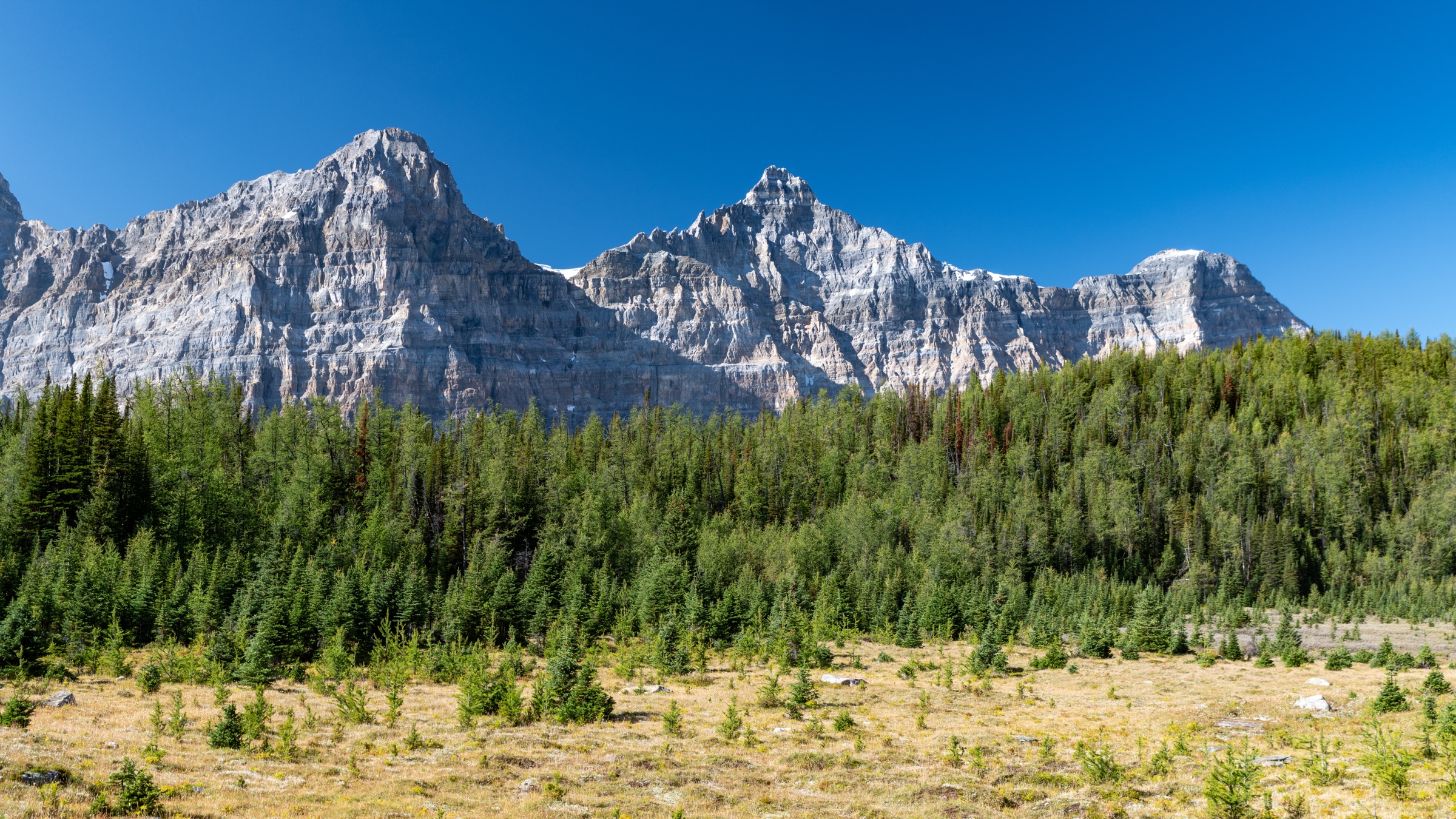
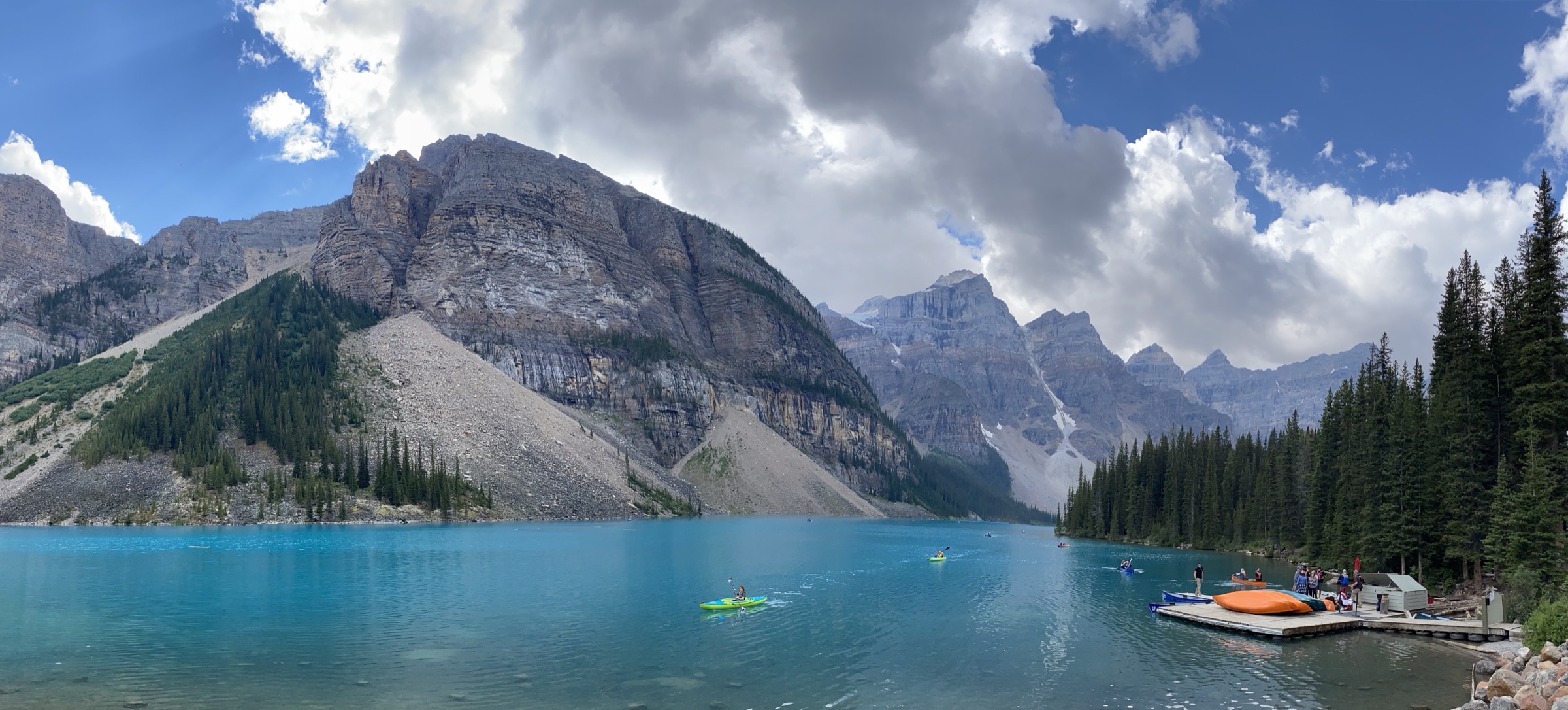
From the Moraine Lake lodge area, the signed Larch Valley / Sentinel Pass trail climbs the lateral moraine in approximately ten switchbacks through spruce and subalpine fir, gaining around 350 m to a signed junction at 2,360 m. Bearing right at the junction (left goes to Eiffel Lake), the gradient eases and the trail enters Larch Valley — a broad subalpine bench filled with Larix lyallii beneath Mount Fay, Mount Little, Mount Bowlen and the rest of the Ten Peaks rim. The next 2 km undulate gently past tarns and meadow. Beyond the upper meadow the trail steepens sharply onto a scree ramp leading to Sentinel Pass at 2,611 m, the col between Pinnacle Mountain and Mount Temple. From the pass the view extends north into Paradise Valley with the Horseshoe Glacier and Mount Aberdeen. Return is by the same route; the scree descent from the pass is the most demanding section.
Why it is essential
Sentinel Pass is the highest maintained day-hike pass in the park and gives the most concentrated alpine experience available in a single day from a Banff trailhead: aquamarine lake, lateral moraine, larch parkland, glacier-rimmed cirque, and a wind-cut col with a panorama in both directions. It is also the single hike most affected by the 2023 access reset — understanding how to actually get to the trailhead is part of the trip.
Equipment
- Sturdy boots (scree on the upper ramp)
- Trekking poles strongly recommended for the descent
- Warm layers and shell; the pass can be 10–15 °C colder than the lakeshore
- 2 L water minimum (no reliable source above the lower switchbacks)
- Bear spray (mandatory in practice)
- Cash for shuttle if not pre-booked
Hazards and notes
Moraine Lake Road is closed year-round to private vehicles. Use the Parks Canada shuttle (reservation via reservation.pc.gc.ca, opens 15 April; rolling 2-day window thereafter), commercial shuttles, or bicycle. Hotel guests of Moraine Lake Lodge may drive.
Parks Canada imposes a mandatory minimum group size of four on Larch Valley, Sentinel Pass, Eiffel Lake and Paradise Valley when grizzly bears are active in the drainage, typically late July through September. When the order is in force, wardens at the trailhead turn back smaller parties; fines apply for non-compliance. Check the trail report at parks.canada.ca on the morning of the hike. Single hikers should expect to buddy up at the trailhead.
Sentinel Pass holds snow into mid-July most years and can receive fresh snow in any month. The upper ramp is exposed and accumulates afternoon thunderstorm risk. During larch season (late September) the route sees more than 1,000 walkers per day; the earliest shuttle (04:00 / 05:00 departures) is the standard tactic to be in Larch Valley for sunrise on the Ten Peaks.
GPX / KML links
| Source | URL | Format | Notes |
|---|---|---|---|
| OpenStreetMap | openstreetmap.org | OSM data (export GPX) | ODbL 1.0; reusable with attribution |
| AllTrails community track | alltrails.com | GPX (account) | ToS — personal use only |
| Parks Canada — Lake Louise day hikes | parks.canada.ca | Source page | No published GPX |
Sources
- Parks Canada — Moraine Lake shuttle and access
- Parks Canada — Lake Louise area day hikes
- Parks Canada — Bear management (group-size protocol context)
- CBC — Shuttle service begins for Moraine Lake (private vehicle ban)
- AllTrails — Sentinel Pass Trail
3. Healy Pass
Snapshot
Itinerary
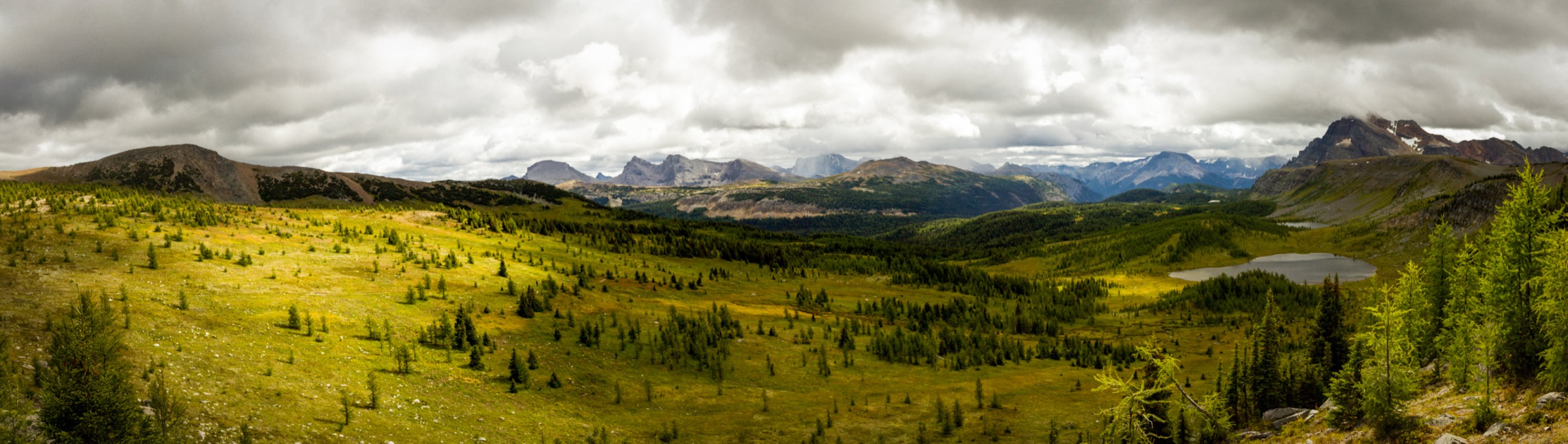
From the Sunshine ski area parking lot the trail leaves the south end and follows Healy Creek upstream on the true left bank through dense lodgepole pine and spruce. Gradient is moderate and steady. At about 5.5 km a signed junction marks the side trail to Simpson Pass and the start of the meadow zone. The forest opens past 6 km into the upper Healy Creek basin: a broad subalpine bowl with extensive subalpine larch stands, tarns, and views opening south toward Mount Bourgeau and west toward the Monarch Ramparts. The final 2 km wind through open larch meadows on a gently rising tundra ramp to Healy Pass at 2,330 m on the Continental Divide. The pass gives a 180° outlook west into Egypt Lake basin, the Pharaoh Peaks, Scarab Lake and Mummy Lake; on a clear day Mount Assiniboine (3,618 m) shows to the south. Return by the same trail, or descend via Simpson Pass for a longer loop back to the Sunshine parking.
Why it is essential
Healy is the largest contiguous larch parkland in Banff and the most reliable alternative to the Larch Valley crowds during the late-September colour window. Unlike the Moraine Lake hikes it has no shuttle constraint, no historic mandatory group-size order, and the grade is friendly enough for fit recreational hikers. The summit view directly onto the Egypt Lake and Pharaoh Peaks group is one of the best non-summit panoramas in the southern park.
Equipment
- Trail or light hiking boots
- Trekking poles for the descent (lower trail is rooty)
- Rain shell and warm mid-layer; the pass is exposed
- 2.5 L water (sources on lower trail only)
- Food for a long day
- Bear spray
- Gaiters useful before mid-July and after late September
Hazards and notes
The trail traverses prime grizzly habitat — bear closures and group restrictions are imposed periodically; check the Banff trail report before departure. Afternoon thunderstorms are common above treeline; aim to leave the pass by 14:00. Snow can linger in the upper meadow into mid-July and fresh snow is possible any month. The Healy / Simpson loop adds about 3 km and 100 m of additional climb on a less-maintained tread. The Sunshine Village summer gondola operates June–September 08:00–18:00 but is not required for Healy Pass — the standard trail starts from the public lower parking lot.
GPX / KML links
| Source | URL | Format | Notes |
|---|---|---|---|
| OpenStreetMap | openstreetmap.org | OSM data (export GPX) | ODbL 1.0; reusable with attribution |
| AllTrails community track | alltrails.com | GPX (account) | ToS — personal use only |
| Parks Canada — Banff hiking | parks.canada.ca | Source page | No published GPX |
Sources
- Parks Canada — Banff hiking page
- AllTrails — Healy Pass Trail
- AllTrails — Healy Pass and Simpson Pass Loop
4. Helen Lake
Snapshot
Itinerary
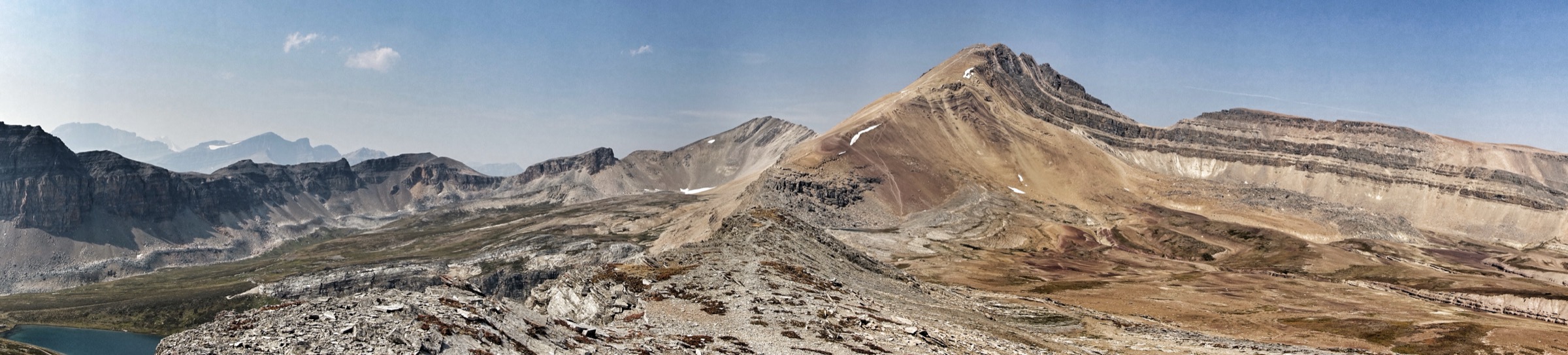
The trailhead sits on the east side of Highway 93N about 33 km north of Lake Louise, opposite the Crowfoot Glacier roadside viewpoint. The trail climbs through old spruce-fir forest, switchbacking up the steep flank below Mount Hector for the first 2.5 km. At about 3 km it breaks above treeline into a long traversing meadow ramp with views back across the Bow Valley to Bow Peak and the Waputik Icefield. The route crosses several small creek drainages, contours past hoary marmot colonies in the upper meadow, and reaches Helen Lake at 2,420 m, set in a glacial cirque under the south face of Cirque Peak. Strong parties continue from the lake’s north shore up a steep boot-beaten path to Dolomite Pass (additional 1.5 km, +100 m) or scramble the south ridge of Cirque Peak (additional 2.5 km, +570 m of loose scree) for one of the great south-Parkway summit panoramas.
Why it is essential
Helen Lake delivers a high alpine cirque, golden larches, wildflower meadows and a marmot colony with under 500 m of climbing — and it does so on the Icefields Parkway, which lets a visitor combine the hike with the Bow Lake and Peyto Lake roadside corridor in a single day. The optional Cirque Peak scramble extends the route into one of the easier non-glaciated 3,000-m summits in the park. It is also markedly quieter than anything in the Lake Louise basin.
Equipment
- Trail boots (rocky tread above treeline; mandatory if attempting Cirque Peak)
- Poles useful for the upper traverse
- Rain shell and warm layer
- 2 L water (creek sources in meadow)
- Bear spray
- Helmet not required for the standard route but advisable for the Cirque Peak scramble
Hazards and notes
The upper meadow has long sight lines but bears (both species) frequent the drainage; group up and make noise. The Cirque Peak extension involves sustained Class 2–3 scree with rockfall risk and full-day exposure to weather; it is not a Parks Canada–maintained trail. Snow lingers above the lake into early August. The Icefields Parkway is open year-round but commercial service is minimal; nearest amenities are Num-Ti-Jah Lodge (Bow Lake) and Saskatchewan River Crossing. There is no transit to this trailhead.
GPX / KML links
| Source | URL | Format | Notes |
|---|---|---|---|
| OpenStreetMap | openstreetmap.org | OSM data (export GPX) | ODbL 1.0; reusable with attribution |
| AllTrails | alltrails.com | GPX (account) | ToS — personal use only |
| Parks Canada — Banff hiking | parks.canada.ca | Source page | No published GPX |
Sources
- Parks Canada — Banff hiking page (Helen Lake 5.9 km / 530 m)
- 10Adventures — Helen Lake & Cirque Peak
- TwoOutliers — Cirque Peak & Helen Lake
5. Sunshine Meadows — Rock Isle and Standish Loop
Snapshot
Itinerary
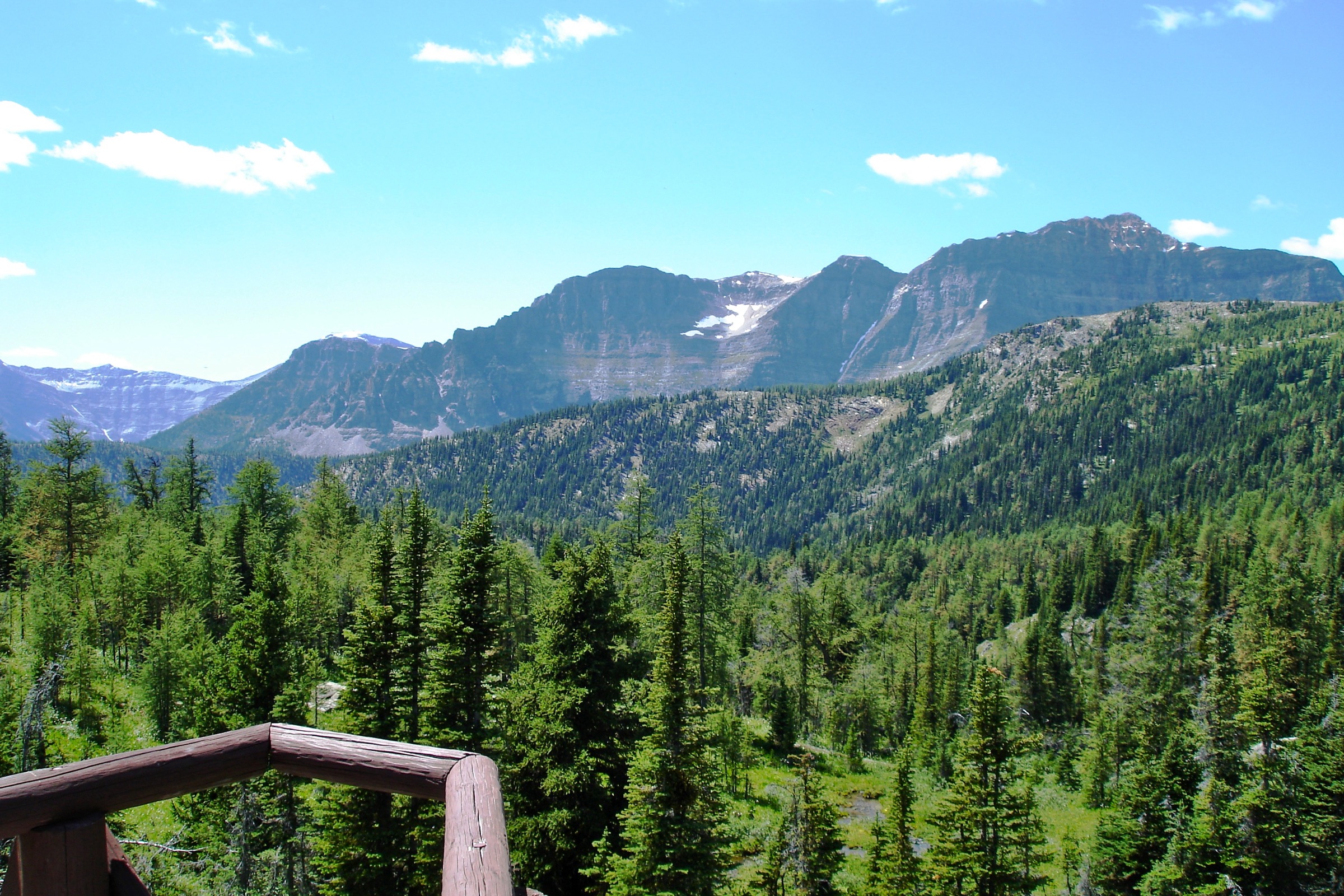
After taking the Banff Sunshine gondola from the lower base to the Sunshine Village upper terminal (~20 minutes) and the Standish Sightseeing Chairlift to the ridge (additional ~10 minutes), step off into open alpine tundra straddling the Alberta–BC border. The Standish Viewpoint platform sits 200 m from the lift at 2,395 m and gives a direct view down onto Rock Isle, Grizzly and Larix Lakes with Mount Assiniboine visible to the south on clear days. From the viewpoint a maintained gravel path descends gently to a junction; bearing right reaches Rock Isle Lake (2,280 m) in 0.5 km, the most photographed view in the meadow. Continuing past Rock Isle, a signed loop drops south to Grizzly and Larix Lakes, traverses through scattered larch and Engelmann spruce, and rejoins the main path on the return. Most parties close the loop back to the gondola top terminal via the wider Rock Isle Trail. The full circuit, with Standish, Rock Isle, Grizzly and Larix all included, totals about 10.3 km.
Why it is essential
This is the only Banff alpine meadow that can be reached comfortably by visitors who would otherwise be excluded from the high country: gondola and chairlift do the climb. The terrain — undulating subalpine larch parkland with three lakes and a Continental Divide viewpoint — is genuine, not contrived. It also acts as a gateway hike for the longer Citadel Pass (15.6 km return, ~400 m) and the multi-day route to Mount Assiniboine Provincial Park.
Equipment
- Trail shoes or light boots
- Warm layer and rain shell; the Divide is 8–12 °C colder than Banff townsite, with frequent wind
- Sun protection (no shade above treeline)
- 1.5 L water
- Gondola/chair ticket
- Bear spray (recommended in shoulder season)
Hazards and notes
The Banff Sunshine summer gondola operates June–September, 08:00–18:00; the Standish Chairlift 08:00–17:00. Trail opening is conditional on snowmelt — in 2026 the upper trails opened on 6 July following a record snowpack winter. Lightning develops fast in open meadow with no shelter; turn back at first thunder. Trails are partly inside Banff NP and partly inside Mt Assiniboine Provincial Park (BC); the Banff Park Pass covers the BC section for hiking access. Stay on hardened paths — the meadow vegetation is highly erosion-prone and recovery is measured in decades. The hike can be done without the lifts by walking up the ski-area service road (~6 km, +500 m), which is the off-season option once the gondola closes.
GPX / KML links
| Source | URL | Format | Notes |
|---|---|---|---|
| OpenStreetMap | openstreetmap.org | OSM data (export GPX) | ODbL 1.0; reusable with attribution |
| AllTrails | alltrails.com | GPX (account) | ToS — personal use only |
| Banff Sunshine Meadows | banffsunshinemeadows.com | Source page | Operator info only; no published GPX |
Sources
- Banff Sunshine Meadows (operator, hours, schedule)
- Parks Canada — Banff hiking page (Sunshine Meadows 10.3 km / 580 m)
- 10Adventures — Sunshine Meadows (Rock Isle, Grizzly, Larix)
- The Banff Guide — Sunshine Meadows (2026 schedule notes)
Further reading
| Source | URL |
|---|---|
| Parks Canada — Banff National Park hiking | parks.canada.ca |
| Parks Canada — Day hikes in the Lake Louise area | parks.canada.ca |
| Parks Canada — Visiting Lake Louise & Moraine Lake (transit, shuttle, Park & Ride) | parks.canada.ca |
| Parks Canada — Bear management (group-size protocol context) | parks.canada.ca |
| Parks Canada — Banff fees | parks.canada.ca |
| Banff & Lake Louise Tourism | banfflakelouise.com |
| Roam Transit — schedules & routes | roamtransit.com |
| Banff Sunshine Meadows (gondola, Standish chairlift) | banffsunshinemeadows.com |
| CBC — Moraine Lake private-vehicle ban (June 2023) | cbc.ca |
| OpenStreetMap (ODbL 1.0) | openstreetmap.org |
| AllTrails — Banff trails | alltrails.com |