Regional overview
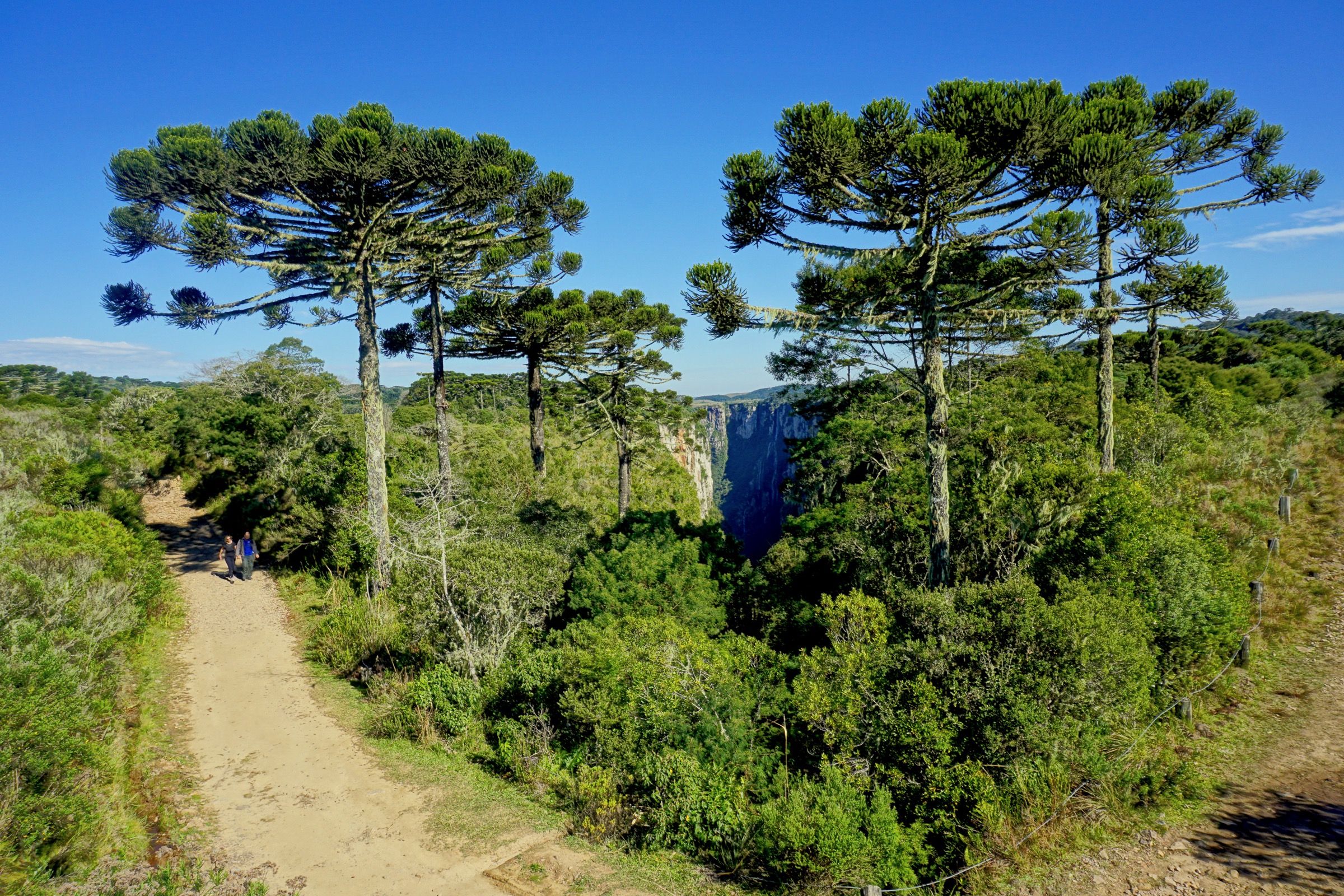
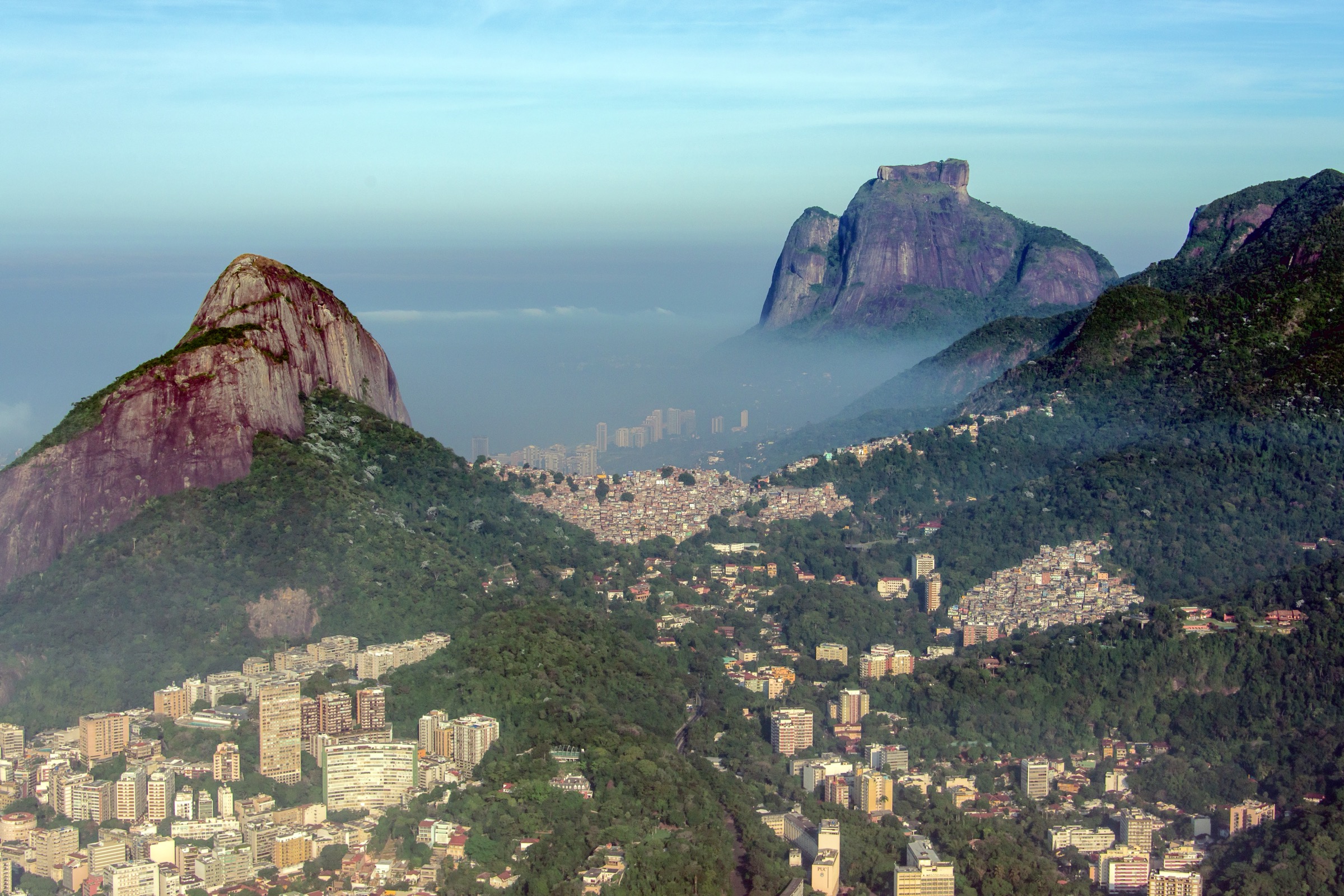
The southern Serra do Mar between São Paulo and Paraná states is the coastal escarpment where the Brazilian Highlands drop directly into the Atlantic. The range runs roughly 1,000 km along the seaboard but the densest concentration of granite-tower summits and historic trails sits in the Curitiba hinterland, between the towns of Antonina, Morretes, Quatro Barras, and Piraquara. The walking landscape is defined by sharp granite peaks rising abruptly out of dense Mata Atlântica, deep coastal valleys with permanent rivers, and a network of colonial cobbled mule trails that historically linked the Paraná plateau to the Atlantic ports.
The main hiking centres are Quatro Barras for Pico Paraná and Pico Caratuva; Morretes / Porto de Cima for the Pico Marumbi state park and the lower exits of the heritage trails; Piraquara for the Caminho do Itupava and the Anhangava massif; and Antonina for the Pico do Marumbi alternative approach. Many summits sit in the Parque Estadual do Pico do Marumbi or in adjacent Áreas de Proteção Ambiental that require Instituto Água e Terra (IAT) registration. Trailheads are generally reached by car or by the historic Curitiba-Paranaguá train line, which stops at Marumbi and Porto de Cima.
Best conditions are the cool, drier months from roughly April to September. Summer brings violent thunderstorms, flash floods in the rio valleys, and dangerous river crossings on the heritage trails; the cobbled colonial routes turn very slippery in any rain. Verify access permits with IAT and check current trail status before travel — landslides occasionally close trail sections for months.
Selection rationale
The five entries cover the southern Serra do Mar’s highest summit (Pico Paraná), its most famous state-park climb (Marumbi), an accessible Curitiba-side viewpoint (Anhangava), the most demanding adjacent peak (Caratuva), and the cobbled colonial heritage route that links the plateau to the coast (Caminho do Itupava). Together they span the granite spires of the upper range, the high coastal escarpment, and the colonial trail network in a balanced selection.
Summary table
| # | Hike | Country | Route type | Distance | Gain | Max elevation | Difficulty |
|---|---|---|---|---|---|---|---|
| 1 | Pico Paraná | Brazil | Out-and-back | ~12 km | ~900 m | 1,877 m | Very Hard |
| 2 | Pico Marumbi (Olimpo) | Brazil | Loop | 6.9 km | ~1,147 m | 1,539 m | Hard |
| 3 | Morro do Anhangava | Brazil | Out-and-back | 6.2 km | ~470 m | 1,420 m | Moderate |
| 4 | Pico Caratuva | Brazil | Out-and-back | ~10 km | ~890 m | 1,860 m | Hard |
| 5 | Caminho do Itupava | Brazil | Point-to-point | ~22 km | ~200 m gain / ~1,560 m loss | ~1,000 m | Moderate-Hard |
1. Pico Paraná
Snapshot
Itinerary
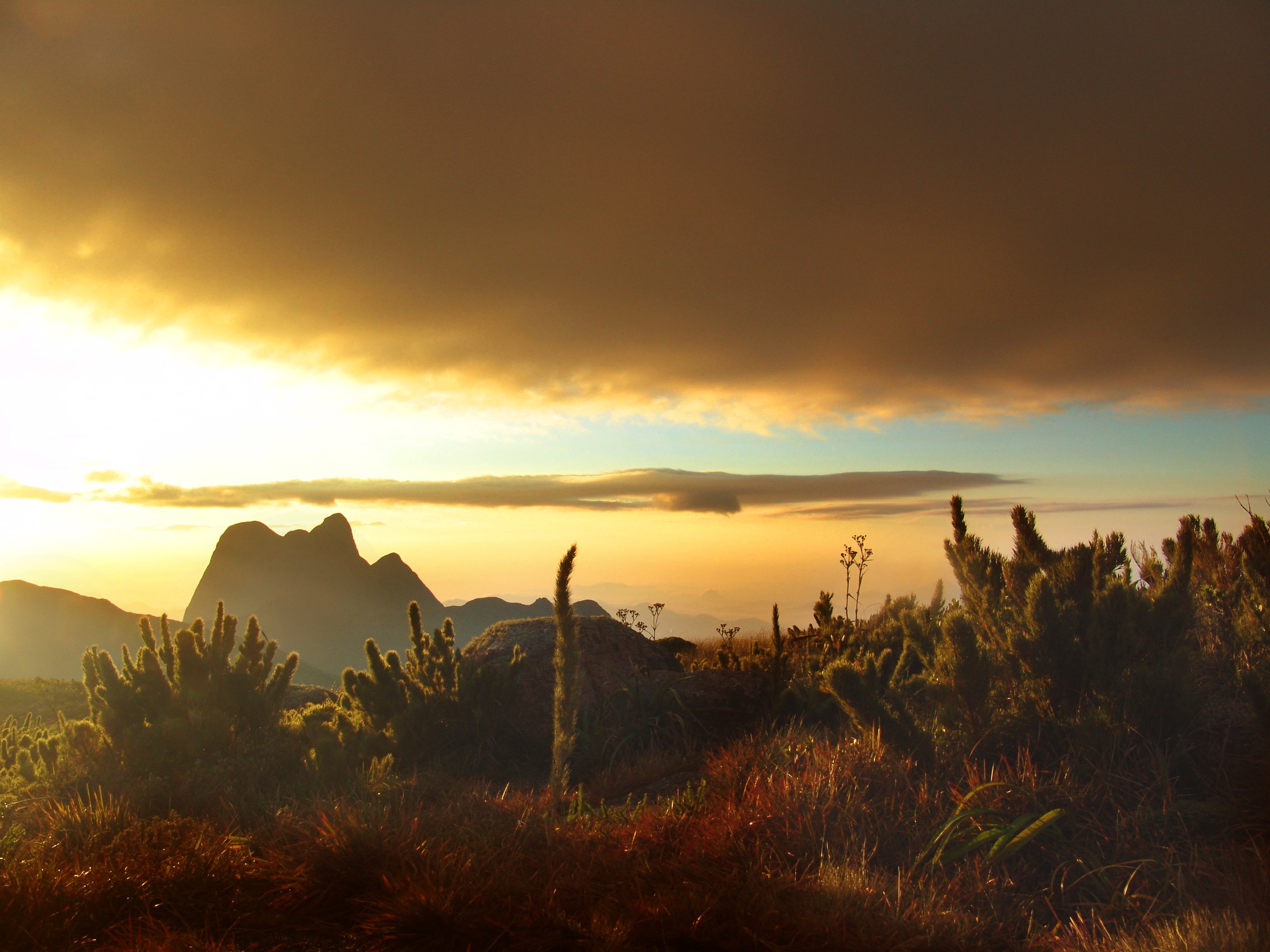
The path leaves the Sítio Pico Paraná trailhead, follows a forested gully to the Vale dos Crioulos, and climbs steeply through dense forest to the campsite of Cedro Velho. Above the campsite the route emerges onto the ridge, with extended sections of fixed rope and steel cable on the steepest steps. The final summit ridge is exposed scrambling between granite blocks to the 1,877 m high point, the highest summit in the southern Serra do Mar. Descent retraces the line of ascent.
Why it is essential
Pico Paraná is the highest summit of the southern Serra do Mar and one of Brazil’s most demanding standard day-hike summits; it is the defining objective of the Ibitiraquire massif.
Equipment
Mountain hiking kit, sturdy boots, gloves, headtorch (essential — many parties descend in the dark), warm and waterproof layers, plenty of water. A short helmet is sensible in busy weekends when other parties may be above. Cell coverage is limited; carry a satellite communicator if available.
Hazards and notes
The upper ridge is exposed, with serious consequence in a fall on the cables. The route is dangerous in rain, lightning, or strong wind. Land access is via private property; check current access arrangements with the Pousada Pico Paraná or local operators. Trailhead registration may apply.
GPX / KML links
| Source | URL | Format / access | Reuse status |
|---|---|---|---|
| Wikiloc: Pico Paraná | wikiloc.com | Source route page | Wikiloc terms; check author |
| AllTrails: Pico Paraná | alltrails.com | Source route page | AllTrails terms; GPX export/reuse not verified |
Further reading
2. Pico Marumbi (Olimpo)

Snapshot
Itinerary
The route starts at Marumbi station, follows the Rio Taquaral upstream, then climbs the well-engineered Trilha Frontal to the Conjunto Marumbi ridge. The upper section gains the Olimpo summit at 1,539 m via a series of fixed cables and steep stone steps; the loop can be closed via the Trilha das Rochedinhas back down to the main ridge. The Marumbi massif also offers traverses linking the Olimpo, Ponta do Tigre, Esfinge, and Boa Vista summits for fit parties.
Why it is essential
The Marumbi is the most-recognised state-park climb in Paraná and the defining short, fierce, granite-tower summit of the SP/PR Serra do Mar; it also has the best low-impact public-transport access of any climb in the region thanks to the historic railway.
Equipment
Mountain hiking kit, sturdy boots, gloves, helmet useful on busy weekends, headtorch, water for a full hot day.
Hazards and notes
Cables and steep rock steps are dangerous in rain or wind. Heat and humidity on the lower forest section are intense in summer. Park entry requires registration at the IAT station beside Marumbi station; verify current opening hours.
GPX / KML links
| Source | URL | Format / access | Reuse status |
|---|---|---|---|
| AllTrails: Pico Marumbi (Olimpo) | alltrails.com | Source route page | AllTrails terms; GPX export/reuse not verified |
| Wikiloc: Pico Olimpo - Conjunto Marumbi | wikiloc.com | Source route page | Wikiloc terms; check author |
Further reading
3. Morro do Anhangava

Snapshot
Itinerary
From the Quatro Barras / Borda do Campo trailhead the path climbs through Atlantic forest to a series of granite slabs and an open rocky summit at 1,420 m. A short scramble onto the upper blocks gives a panorama over the Curitiba basin, the Serra do Mar, and on clear mornings a long view to Pico Paraná and the Ibitiraquire massif. Descent retraces the ascent.
Why it is essential
Anhangava is the easiest 1,400-metre rocky summit within direct sight of Curitiba and the regional classic sunrise objective; it offers the broadest accessible introduction to the PR Serra do Mar.
Equipment
Standard mountain hiking kit and sturdy boots; gloves and a headtorch for sunrise starts; warm layer for the cool granite summit.
Hazards and notes
The upper rocks are slippery in rain or mist; lightning risk in summer storms. The trailhead is on private land in places; the trail is well-established but verify current public-access status.
GPX / KML links
| Source | URL | Format / access | Reuse status |
|---|---|---|---|
| Wikiloc: Morro do Anhangava | wikiloc.com | Source route page | Wikiloc terms; check author |
| AllTrails: Morro do Anhangava | alltrails.com | Source route page | AllTrails terms; GPX export/reuse not verified |
Further reading
4. Pico Caratuva

Snapshot
Itinerary
The path leaves the access road shared with the Pico Paraná approach, branches off through dense forest, and climbs a steep forested spur. Above tree line a series of slabs and fixed cables lead to the summit at 1,860 m, the second-highest peak of the southern Serra do Mar. The summit gives a direct view of the Pico Paraná massif and the upper Ibitiraquire ridges. Descent retraces the ascent.
Why it is essential
Caratuva is the natural “second peak” of the Ibitiraquire massif and one of the most demanding summit day-hikes in the region; it gives the cleanest single-summit view of Pico Paraná and the upper escarpment.
Equipment
Mountain hiking kit, sturdy boots, gloves, headtorch (essential), warm and waterproof layers, plenty of water. Helmet useful on busy weekends.
Hazards and notes
The upper cables are dangerous in rain or wind. Access is across private land and arrangements may vary; verify current access with the Pousada Pico Paraná or guides. Lightning risk in summer; turn back at the first sign of cells.
GPX / KML links
| Source | URL | Format / access | Reuse status |
|---|---|---|---|
| Wikiloc: Pico Caratuva | wikiloc.com | Source route page | Wikiloc terms; check author |
| AllTrails: Pico Caratuva | alltrails.com | Source route page | AllTrails terms; GPX export/reuse not verified |
Further reading
5. Caminho do Itupava
Snapshot
Itinerary
The path follows the historic Caminho do Itupava, the colonial cobbled road built between 1625 and 1654 that linked Curitiba to the Atlantic port of Paranaguá. From Borda do Campo the trail crosses the upper plateau, drops into the Serra do Mar escarpment past the Rio Taquari, and descends through dense Atlantic Forest to Porto de Cima. Long sections of the original cobbled pavement remain, alternating with packed dirt and river crossings. The route is normally walked downhill from plateau to coast.
Why it is essential
The Caminho do Itupava is the most historically important colonial trail in the southern Serra do Mar and the defining heritage day-walk of the Paraná coastal escarpment, listed as part of Brazil’s national historical heritage.
Equipment
Mountain hiking kit, sturdy boots with reliable traction, full waterproof and warm layers, headtorch (essential), navigation backup, plenty of water. Trekking poles strongly recommended for the cobbles. Tick protection sensible in summer.
Hazards and notes
The cobbles are extraordinarily slippery in rain; descents on the steepest stone sections require constant attention. Several river crossings can be impassable after heavy rain. The trail is mostly within state-protected land; verify current opening status with IAT.
GPX / KML links
| Source | URL | Format / access | Reuse status |
|---|---|---|---|
| Wikiloc: Caminho do Itupava | wikiloc.com | Source route page | Wikiloc terms; check author |
| AllTrails: Caminho do Itupava | alltrails.com | Source route page | AllTrails terms; GPX export/reuse not verified |
Further reading
Notes and caveats
- Confirm exact distance and elevation profile of the Caminho do Itupava with an authoritative measured GPX; sources differ between 20 km and 24 km.
- Locate a licence-compatible photograph of the Caminho do Itupava and of Pico Caratuva above the canopy on Wikimedia Commons.
- Verify Sítio Pico Paraná land-access fees and current permitting for Pico Paraná and Pico Caratuva.
- Confirm Litorina (Curitiba-Paranaguá) railway timetable for connection between Marumbi station and Curitiba; the line schedule changes with limited notice.
- Verify Anhangava trailhead access status — some local sources note seasonal closures during fire season.
- Verify Olimpo summit altitude (sources list 1,539 m and 1,547 m).
Further reading
| Source | URL |
|---|---|
| Wikipedia (pt) — Pico Paraná | pt.wikipedia.org |
| Wikipedia (pt) — Parque Estadual do Pico do Marumbi | pt.wikipedia.org |
| Wikipedia (pt) — Serra do Ibitiraquire | pt.wikipedia.org |
| Wikipedia (pt) — Caminho do Itupava | pt.wikipedia.org |
| Wikipedia (pt) — Parque Estadual da Serra da Baitaca | pt.wikipedia.org |
| IAT Paraná — Parque Estadual do Pico do Marumbi | iat.pr.gov.br |
| IAT Paraná — Caminho do Itupava | iat.pr.gov.br |
| Wikimedia Commons — Pico Anhangava | commons.wikimedia.org |
| Wikimedia Commons — Pico Caratuva | commons.wikimedia.org |
| AllTrails — Pico Paraná best trails | alltrails.com |