Regional overview
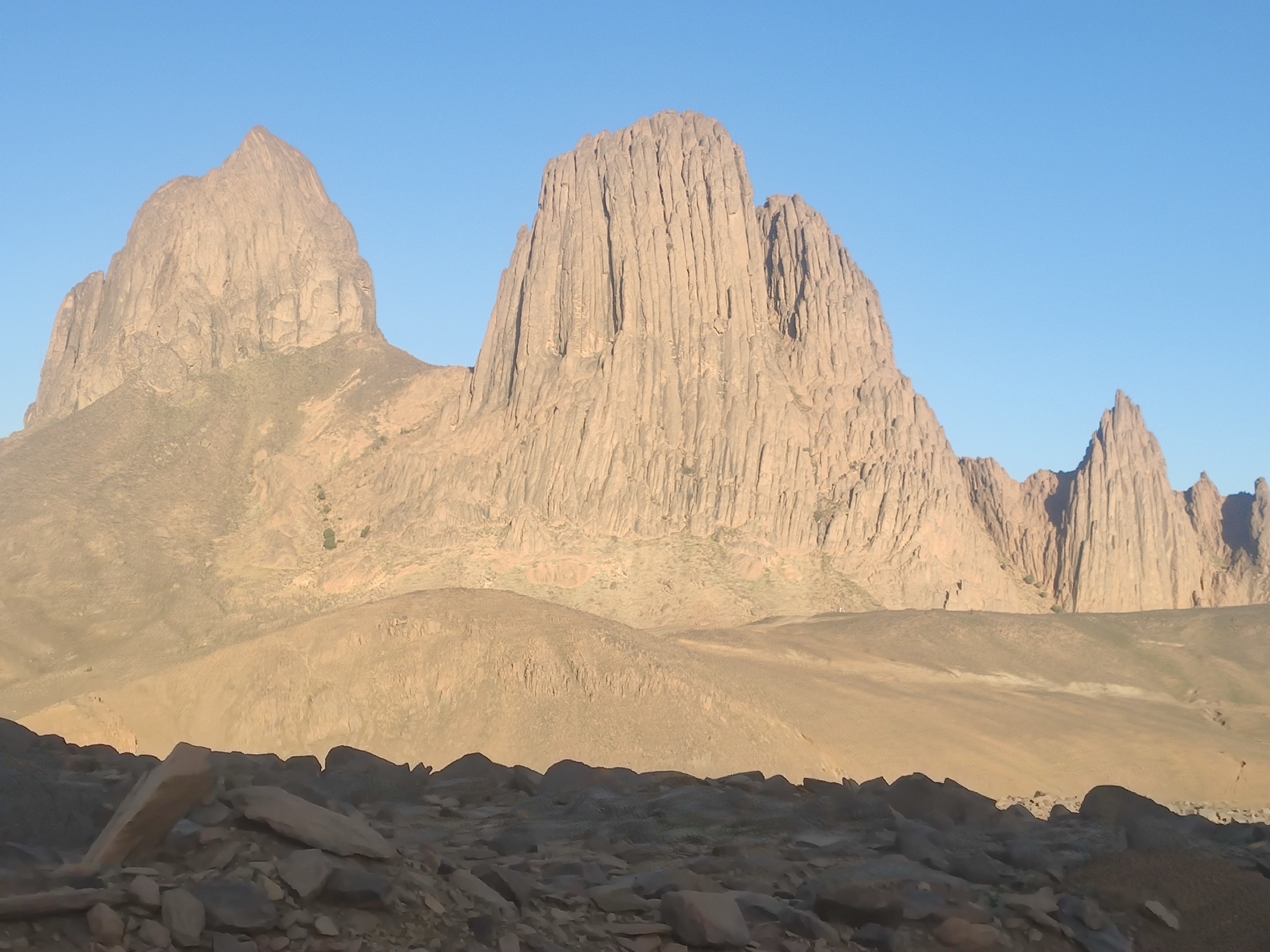
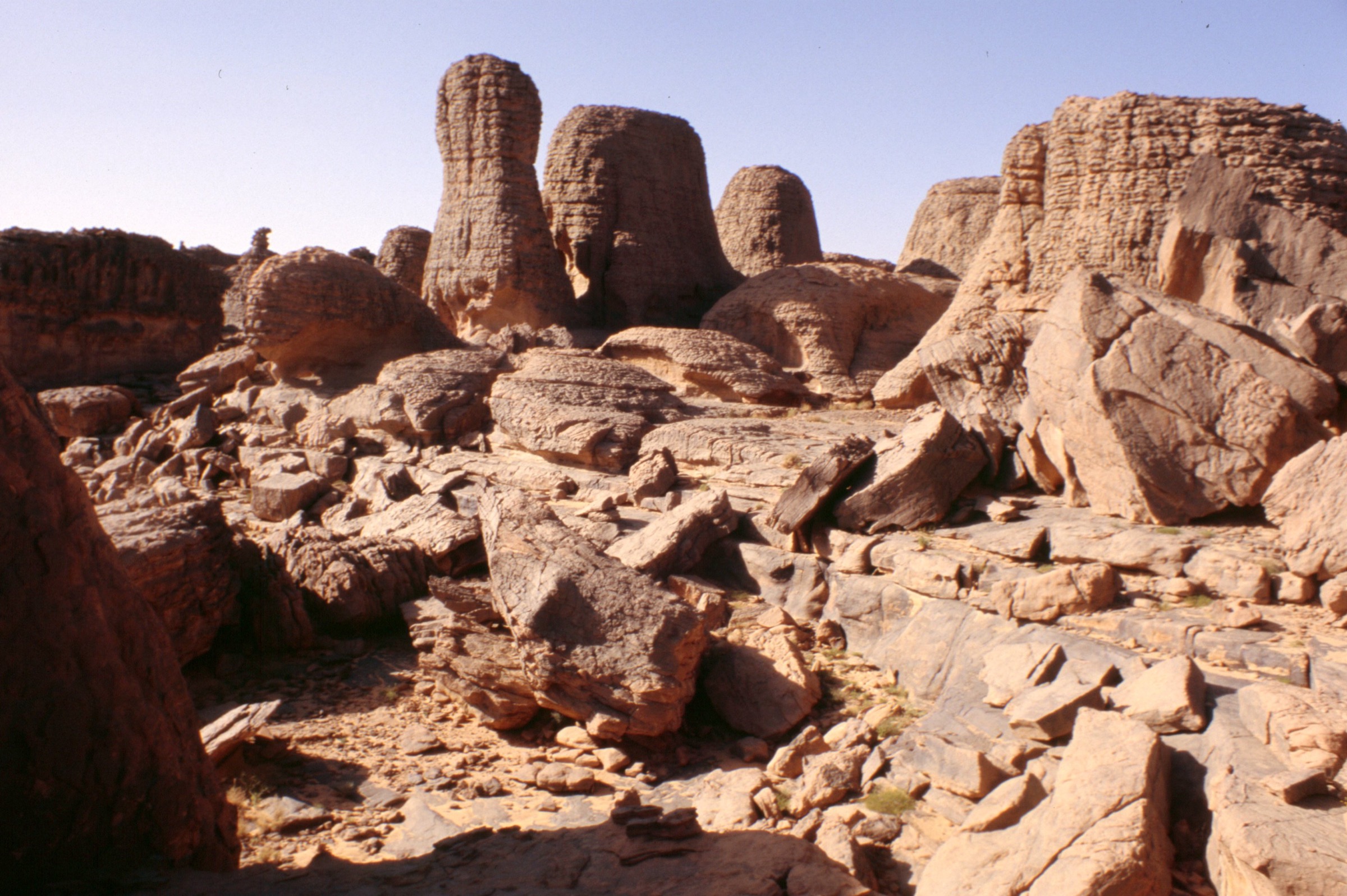
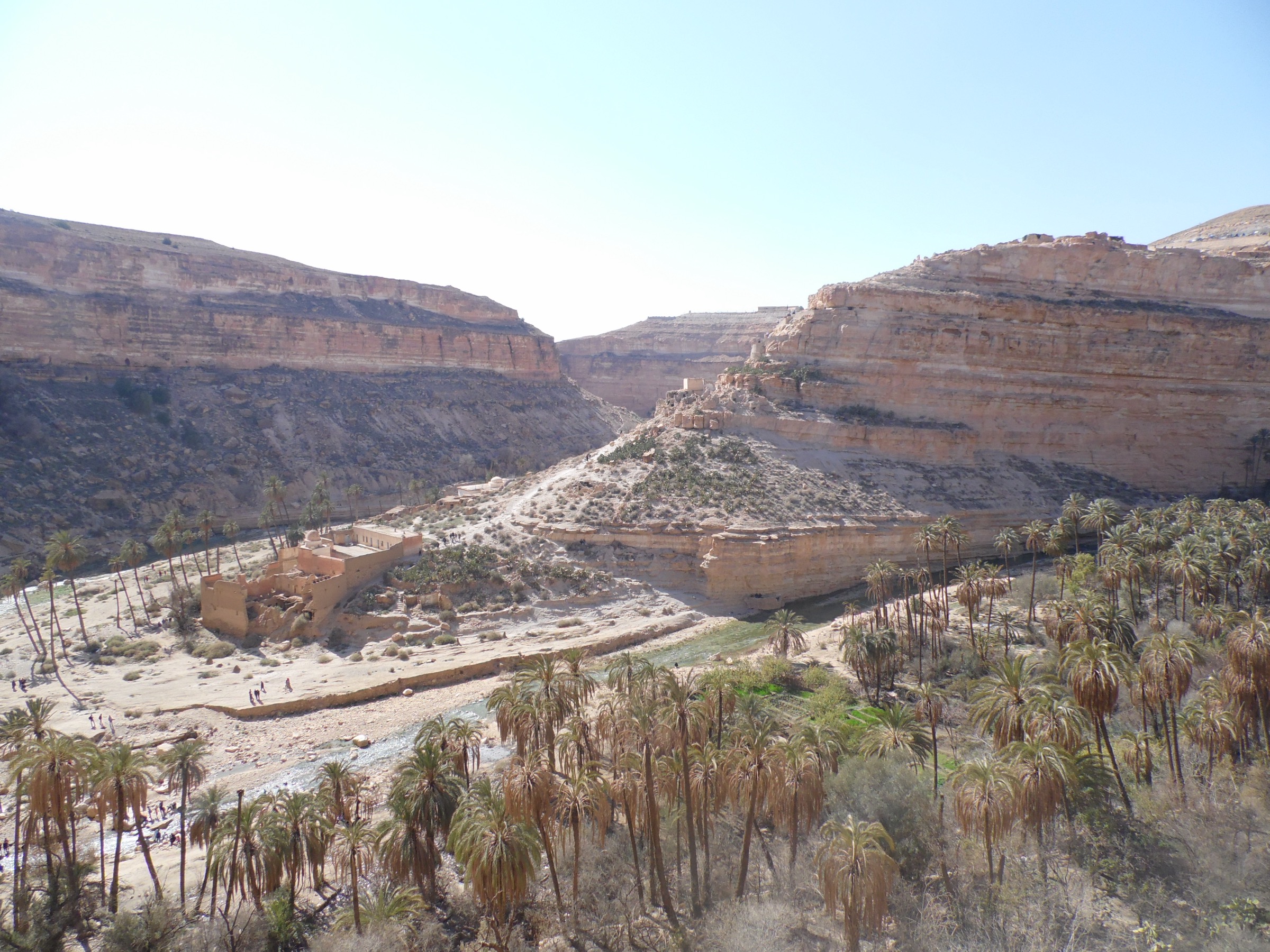
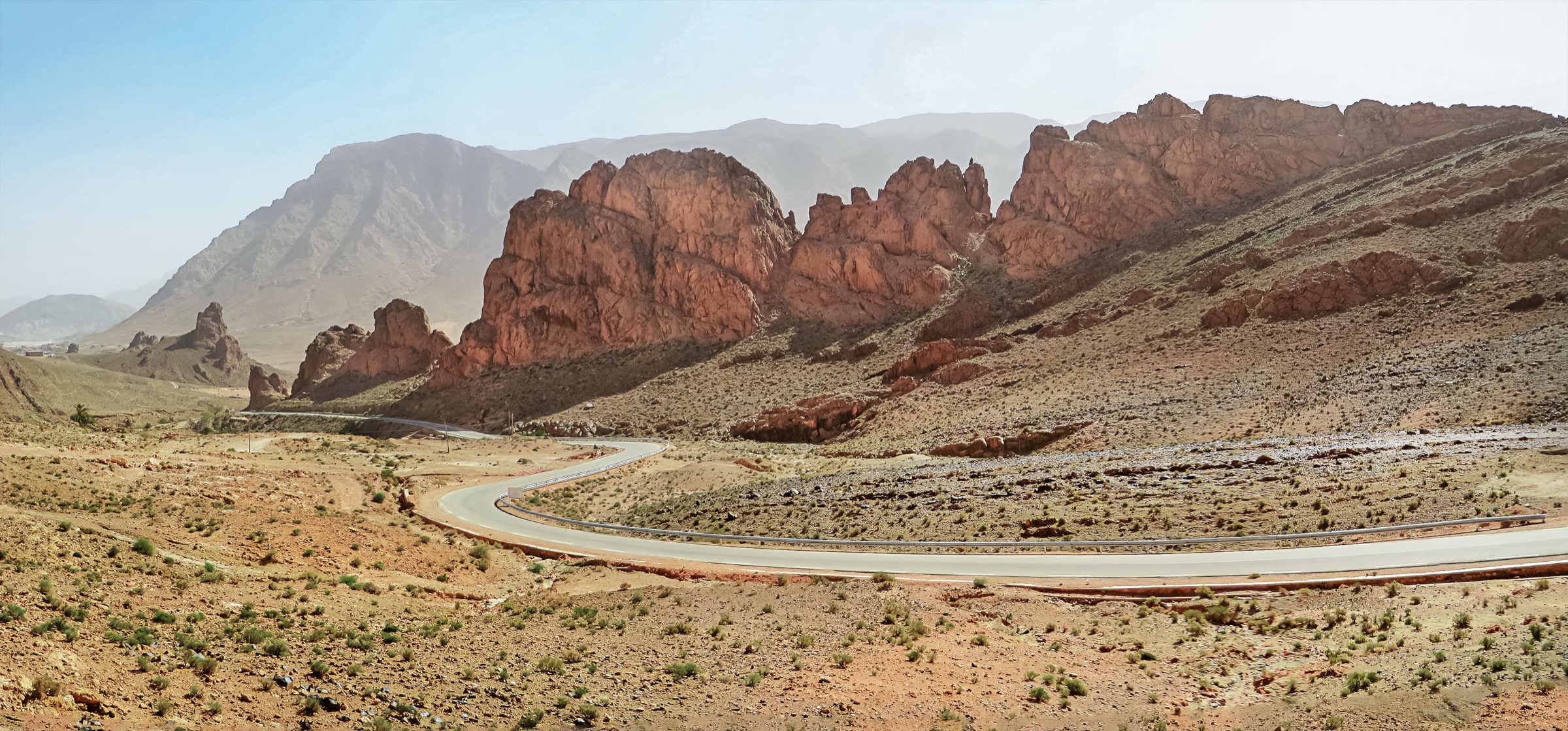
The Saharan Atlas forms the desert-facing southern arc of the Algerian Atlas, with the Ksour Range around Ain Sefra and Naama, the Amour and El Bayadh highlands, and the Ouled Nail country farther east. It is a dry mountain region of sandstone escarpments, isolated summits, ksour, wadis, dune edges, and long open ridges rather than a dense waymarked trail network.
The best public route data found comes from Wikiloc tracks around Ain Sefra, Stittene, Djebel Ksel, and Brezina. Djebel Aissa, the symbolic high point of the Saharan Atlas, is important enough to note at region level, but a defensible public day-hike track for it was not resolved, so it has not been promoted into the five-route table.
Selection rationale
The selection favours routes with actual published statistics while still representing the range: a major Ksour point-to-point crossing, two El Bayadh/Ksel ridge routes, and two Brezina sandstone/ksar walks. This means the entry is source-led rather than perfectly canonical; Djebel Aissa remains a priority follow-up route once official or locally reliable geometry is available.
Summary table
| # | Hike | Country | Route type | Distance | Gain | Max elevation | Difficulty | Photo status |
|---|---|---|---|---|---|---|---|---|
| 1 | Moghrar Tahtani to Ain Sefra high crossing | Algeria | Point-to-point | 26.18 km | 1,346 m | 2,051 m | Very difficult | No licence-compatible image found |
| 2 | Djebel Ksel traverse from Stittene | Algeria | Point-to-point | 15.77 km | 557 m | 1,994 m | Moderate | No licence-compatible image found |
| 3 | El Ghour Brezina loop | Algeria | Loop | 4.26 km | 220 m | 921 m | Moderate | No licence-compatible image found |
| 4 | Ksar Bent El Khas and Djebel El Ghour approach | Algeria | Out-and-back / local loop, exact geometry unresolved | 8.97 km | 87 m | 904 m | Moderate | No licence-compatible image found |
| 5 | Stittene steep ridge climb | Algeria | Out-and-back / short point-to-point, exact geometry unresolved | 5.50 km | 542 m | Hard for gradient | No licence-compatible image found |
1. Moghrar Tahtani to Ain Sefra high crossing
Snapshot
Itinerary
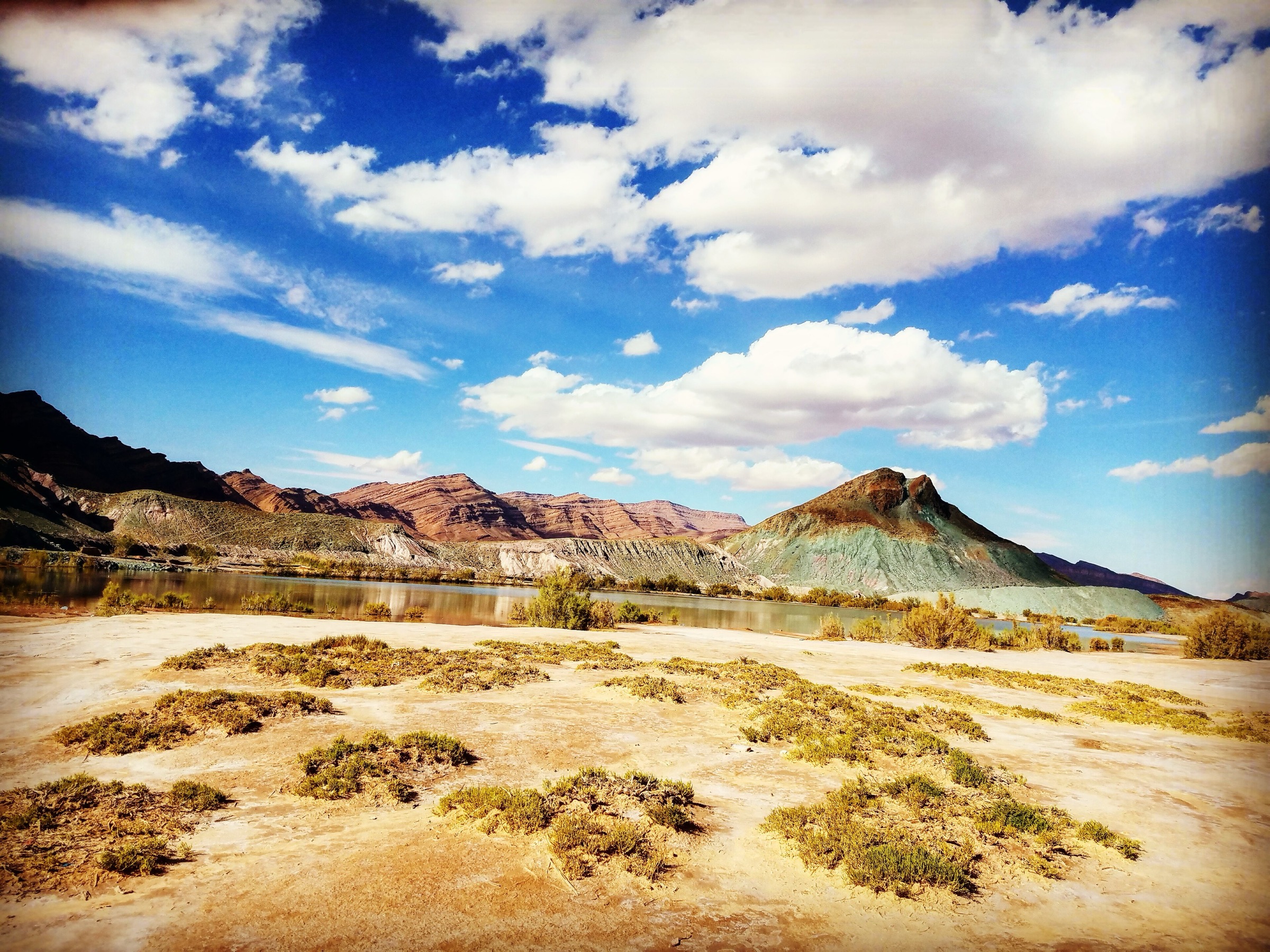
This is the most substantial sourced day in the Saharan Atlas batch: a long west-to-east crossing from the Moghrar Tahtani side toward Ain Sefra. The Wikiloc track records a one-way line with several summit/ridge waypoints and a high point over 2,000 m, so it should be treated as a full mountain day rather than a casual desert walk.
The route character is a dry Ksour Range traverse: open slopes, rocky ridges, broad views over the desert-edge basins, and a final descent toward the Ain Sefra side. Because the source description is minimal, later editorial work should inspect the GPS line against OSM/topographic mapping and confirm the exact trailhead, finish point, and water logistics with a local guide.
Why it is essential
It links two classic Saharan Atlas names, Moghrar and Ain Sefra, and gives the catalogue a serious mountain crossing rather than only short canyon walks. It is also one of the few public tracks found with full distance, ascent, descent, maximum elevation, and time.
Equipment
- Desert-capable day-hiking kit: broken-in boots or approach shoes, sun hat, sunglasses, high-SPF sunscreen, and light long sleeves.
- Large water carry. Treat 3-5 litres as a planning floor for moderate days and more for hot, exposed, or remote routes.
- Offline navigation, paper/map backup where available, power bank, headlamp, first-aid kit, and emergency shelter layer.
- Food, electrolyte salts, warm layer for high plateaus, and windproof layer for exposed ridges.
- Local guide or locally verified access plan where protected-area, border, military, or remote-desert rules apply.
Hazards and notes
- Heat, dehydration, sun exposure, and very long distances between reliable water points.
- Weak or absent waymarking; GPS tracks may describe an individual recording rather than a maintained trail.
- Flash-flood risk in wadis and canyons after storms, even where the surrounding desert is dry.
- Remote rescue context: phone coverage, road access, and local transport options may be poor or absent.
- Current access, guide, permit, and security conditions must be checked locally or field use.
- The recorded distance and ascent make this a committing day. A vehicle shuttle, early start, conservative turnaround plan, and guide/local contact are strongly recommended.
Photos
| Image | Source | Author | Licence | Reuse notes | Attribution |
|---|---|---|---|---|---|
| Unresolved | Unresolved | Unresolved | Unresolved | No verified reusable photo candidate found | Unresolved |
GPX / KML links
| Source | URL | Format | Licence / terms | Reuse status |
|---|---|---|---|---|
| Wikiloc: Moghrar Tahtani — Ain Sefra | wikiloc.com | Source route page / GPX via Wikiloc | Wikiloc terms apply | Stats verified from source page; route-file reuse not confirmed |
Further reading
2. Djebel Ksel traverse from Stittene
Snapshot
Itinerary
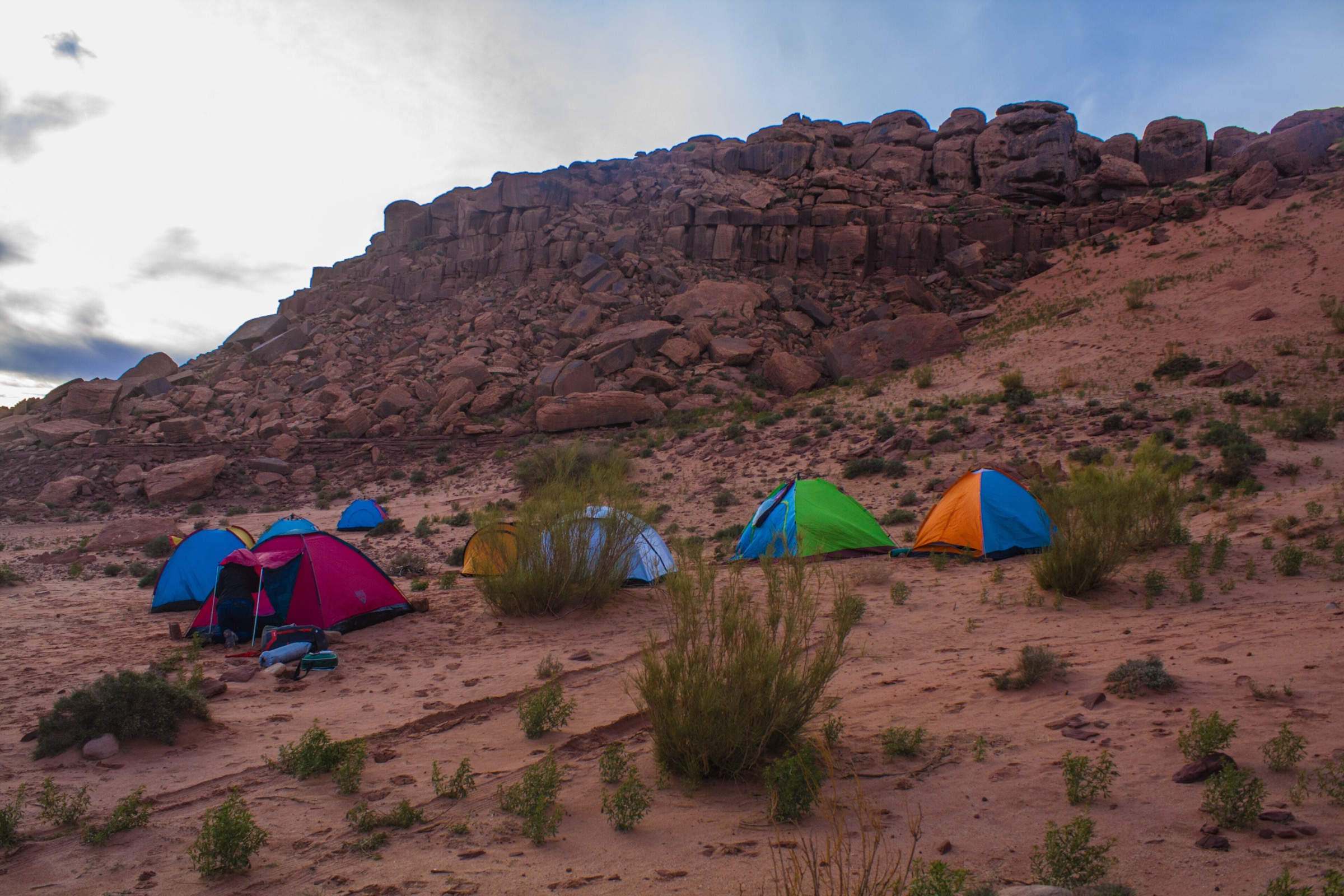
The route leaves the Stittene area and works upward through the Ksel highlands, passing spring/fountain waypoints and a sequence of ridge or summit points before descending. The published track is one-way, so a shuttle or planned return logistics are needed.
The high point of the source track is just under 2,000 m, giving a true upland Saharan Atlas profile: open ridge walking, long views, and exposed slopes rather than forested trail. The route should be checked for seasonal water at the named fountain waypoints before relying on them.
Why it is essential
Djebel Ksel is one of the strongest sourced summit-area routes in the El Bayadh/Amour section and gives the Saharan Atlas entry a highland traverse distinct from the Ain Sefra and Brezina sandstone routes.
Equipment
- Desert-capable day-hiking kit: broken-in boots or approach shoes, sun hat, sunglasses, high-SPF sunscreen, and light long sleeves.
- Large water carry. Treat 3-5 litres as a planning floor for moderate days and more for hot, exposed, or remote routes.
- Offline navigation, paper/map backup where available, power bank, headlamp, first-aid kit, and emergency shelter layer.
- Food, electrolyte salts, warm layer for high plateaus, and windproof layer for exposed ridges.
- Local guide or locally verified access plan where protected-area, border, military, or remote-desert rules apply.
Hazards and notes
- Heat, dehydration, sun exposure, and very long distances between reliable water points.
- Weak or absent waymarking; GPS tracks may describe an individual recording rather than a maintained trail.
- Flash-flood risk in wadis and canyons after storms, even where the surrounding desert is dry.
- Remote rescue context: phone coverage, road access, and local transport options may be poor or absent.
- Current access, guide, permit, and security conditions must be checked locally or field use.
- Published track includes point-to-point descent and fountain waypoints, but water reliability was not independently verified.
Photos
| Image | Source | Author | Licence | Reuse notes | Attribution |
|---|---|---|---|---|---|
| Unresolved | Unresolved | Unresolved | Unresolved | No verified reusable photo candidate found | Unresolved |
GPX / KML links
| Source | URL | Format | Licence / terms | Reuse status |
|---|---|---|---|---|
| Wikiloc: Jbel Ksel | wikiloc.com | Source route page / GPX via Wikiloc | Wikiloc terms apply | Stats verified from source page; route-file reuse not confirmed |
Further reading
3. El Ghour Brezina loop
Snapshot
Itinerary
A compact loop from Brezina into the El Ghour sandstone/canyon landscape. The source route is short but steep enough to register 220 m of ascent and descent, making it a useful half-day objective or acclimatisation route.
The walk is best treated as a landscape-and-heritage route: eroded forms, ksar context, dry wadis, and high viewpoints over the Brezina basin. Because the itinerary description is very brief, the final guide should verify exactly which paths are public and whether any local site access rules apply.
Why it is essential
Brezina is one of the clearest publicly sourced walking clusters in the Saharan Atlas. This loop adds sandstone canyon scenery and cultural-landscape context without requiring the long logistics of the Moghrar crossing.
Equipment
- Desert-capable day-hiking kit: broken-in boots or approach shoes, sun hat, sunglasses, high-SPF sunscreen, and light long sleeves.
- Large water carry. Treat 3-5 litres as a planning floor for moderate days and more for hot, exposed, or remote routes.
- Offline navigation, paper/map backup where available, power bank, headlamp, first-aid kit, and emergency shelter layer.
- Food, electrolyte salts, warm layer for high plateaus, and windproof layer for exposed ridges.
- Local guide or locally verified access plan where protected-area, border, military, or remote-desert rules apply.
Hazards and notes
- Heat, dehydration, sun exposure, and very long distances between reliable water points.
- Weak or absent waymarking; GPS tracks may describe an individual recording rather than a maintained trail.
- Flash-flood risk in wadis and canyons after storms, even where the surrounding desert is dry.
- Remote rescue context: phone coverage, road access, and local transport options may be poor or absent.
- Current access, guide, permit, and security conditions must be checked locally or field use.
- Short distance should not obscure desert exposure: shade and reliable water may be limited.
Photos
| Image | Source | Author | Licence | Reuse notes | Attribution |
|---|---|---|---|---|---|
| Unresolved | Unresolved | Unresolved | Unresolved | No verified reusable photo candidate found | Unresolved |
GPX / KML links
| Source | URL | Format | Licence / terms | Reuse status |
|---|---|---|---|---|
| Wikiloc: El Ghour Brezina El Bayadh | wikiloc.com | Source route page / GPX via Wikiloc | Wikiloc terms apply | Stats verified from source page; route-file reuse not confirmed |
Further reading
4. Ksar Bent El Khas and Djebel El Ghour approach
Snapshot
Itinerary
This candidate uses the Brezina listing for the Ksar Bent El Khas / Djebel El Ghour area. The track appears to be a low-ascent desert-edge walk linking ksar/cultural remains and the sandstone forms around El Ghour.
Because only the listing-level statistics were resolved, this route is not yet reliable as a turn-by-turn itinerary. It remains valuable because it represents the ksour-and-gour landscape that makes the Brezina side of the Saharan Atlas distinctive.
Why it is essential
The Saharan Atlas is not only summit terrain; its essential walking character includes ksour, dry valleys, and sculpted sandstone. This route keeps that cultural and geomorphological side in the five-route set while using actual published distance/gain figures.
Equipment
- Desert-capable day-hiking kit: broken-in boots or approach shoes, sun hat, sunglasses, high-SPF sunscreen, and light long sleeves.
- Large water carry. Treat 3-5 litres as a planning floor for moderate days and more for hot, exposed, or remote routes.
- Offline navigation, paper/map backup where available, power bank, headlamp, first-aid kit, and emergency shelter layer.
- Food, electrolyte salts, warm layer for high plateaus, and windproof layer for exposed ridges.
- Local guide or locally verified access plan where protected-area, border, military, or remote-desert rules apply.
Hazards and notes
- Heat, dehydration, sun exposure, and very long distances between reliable water points.
- Weak or absent waymarking; GPS tracks may describe an individual recording rather than a maintained trail.
- Flash-flood risk in wadis and canyons after storms, even where the surrounding desert is dry.
- Remote rescue context: phone coverage, road access, and local transport options may be poor or absent.
- Current access, guide, permit, and security conditions must be checked locally or field use.
- Exact GPX page and access status need manual confirmation before travel.
Photos
| Image | Source | Author | Licence | Reuse notes | Attribution |
|---|---|---|---|---|---|
| Unresolved | Unresolved | Unresolved | Unresolved | No verified reusable photo candidate found | Unresolved |
GPX / KML links
| Source | URL | Format | Licence / terms | Reuse status |
|---|---|---|---|---|
| Wikiloc Brezina hiking listing: Ksar Bent El Khas / Djebel El Ghour | wikiloc.com | Trail listing with source route link | Wikiloc terms apply | Listing statistics checked; exact route-file page still unresolved |
Further reading
5. Stittene steep ridge climb
Snapshot
Itinerary
A short but steep Stittene route recorded in the same local cluster as Djebel Ksel. The listing statistics show more than 500 m of gain in only 5.5 km, so the walk should be expected to climb directly through rough foothill or ridge terrain rather than follow an easy valley promenade.
This route gives the catalogue a compact option for the El Bayadh highlands. It should be checked against the exact Wikiloc page and local access conditions before it is treated as a standalone recommendation.
Why it is essential
It balances the long Moghrar crossing and the short Brezina loops with a steep, compact Amour Range-style climb using actual published distance and ascent.
Equipment
- Desert-capable day-hiking kit: broken-in boots or approach shoes, sun hat, sunglasses, high-SPF sunscreen, and light long sleeves.
- Large water carry. Treat 3-5 litres as a planning floor for moderate days and more for hot, exposed, or remote routes.
- Offline navigation, paper/map backup where available, power bank, headlamp, first-aid kit, and emergency shelter layer.
- Food, electrolyte salts, warm layer for high plateaus, and windproof layer for exposed ridges.
- Local guide or locally verified access plan where protected-area, border, military, or remote-desert rules apply.
Hazards and notes
- Heat, dehydration, sun exposure, and very long distances between reliable water points.
- Weak or absent waymarking; GPS tracks may describe an individual recording rather than a maintained trail.
- Flash-flood risk in wadis and canyons after storms, even where the surrounding desert is dry.
- Remote rescue context: phone coverage, road access, and local transport options may be poor or absent.
- Current access, guide, permit, and security conditions must be checked locally or field use.
- Steep gradient and unresolved route geometry mean this should remain a candidate until the exact track is reviewed.
Photos
| Image | Source | Author | Licence | Reuse notes | Attribution |
|---|---|---|---|---|---|
| Unresolved | Unresolved | Unresolved | Unresolved | No verified reusable photo candidate found | Unresolved |
GPX / KML links
| Source | URL | Format | Licence / terms | Reuse status |
|---|---|---|---|---|
| Wikiloc Stittene hiking listing: Stittene | wikiloc.com | Trail listing with source route link | Wikiloc terms apply | Listing statistics checked; exact route-file page still unresolved |
Further reading
Notes and caveats
- Djebel Aissa / Mount Issa is regionally essential, but no reliable public day-hike geometry was resolved.
- Ksar Bent El Khas and Stittene ridge need exact source-page confirmation beyond listing-level Wikiloc data.
- Official protected-area rules, guide requirements, and current local access conditions remain unresolved.
Further reading
| Source | URL |
|---|---|
| Britannica — Saharan Atlas | britannica.com |
| Britannica — Ain Sefra | britannica.com |
| Djebel Aissa National Park context | nationalparksassociation.org |
| Wikiloc — Moghrar Tahtani to Ain Sefra | wikiloc.com |
| Wikiloc — Brezina hiking listings | wikiloc.com |
| Wikiloc — Stittene hiking listings | wikiloc.com |