Regional overview
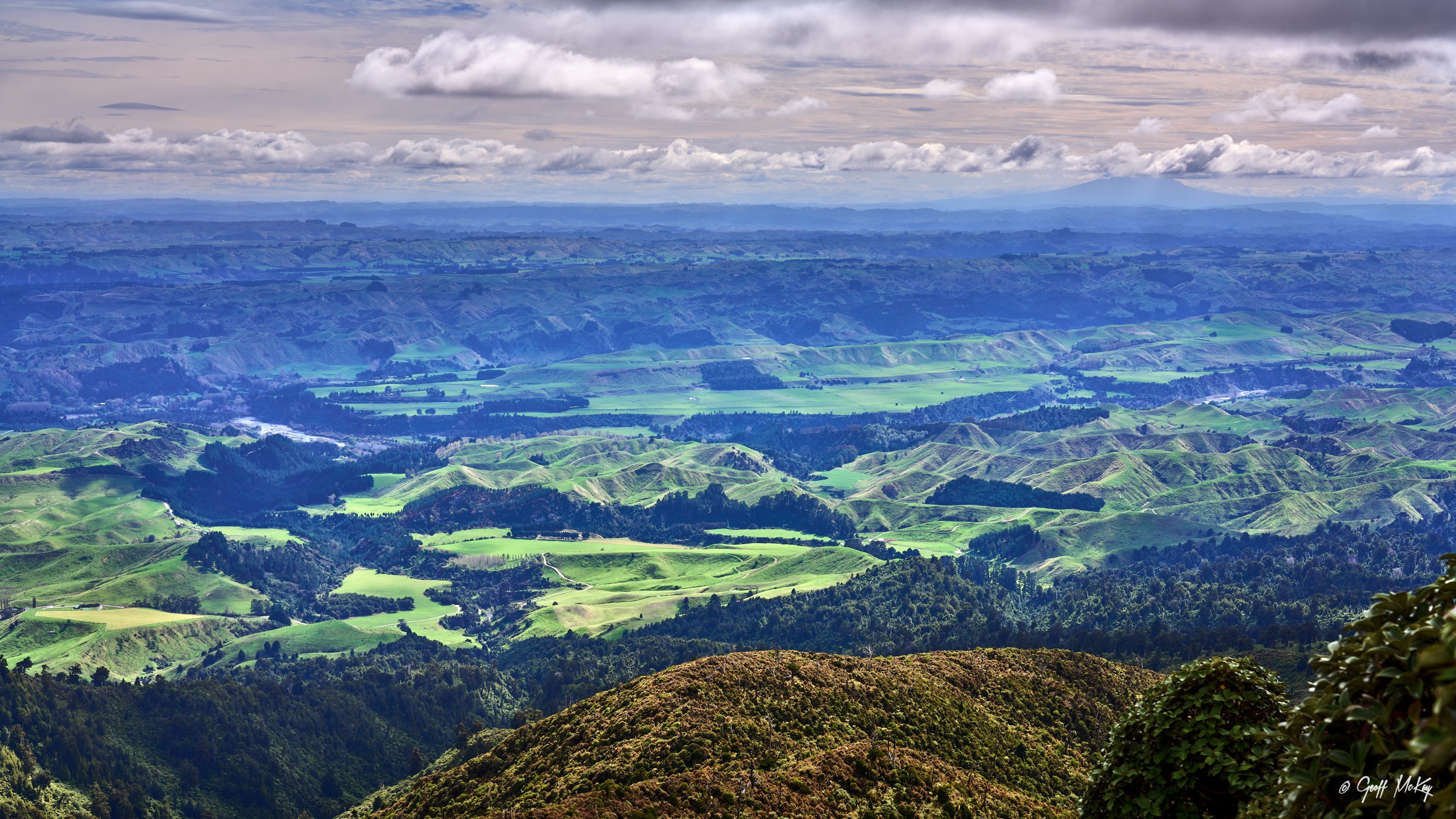
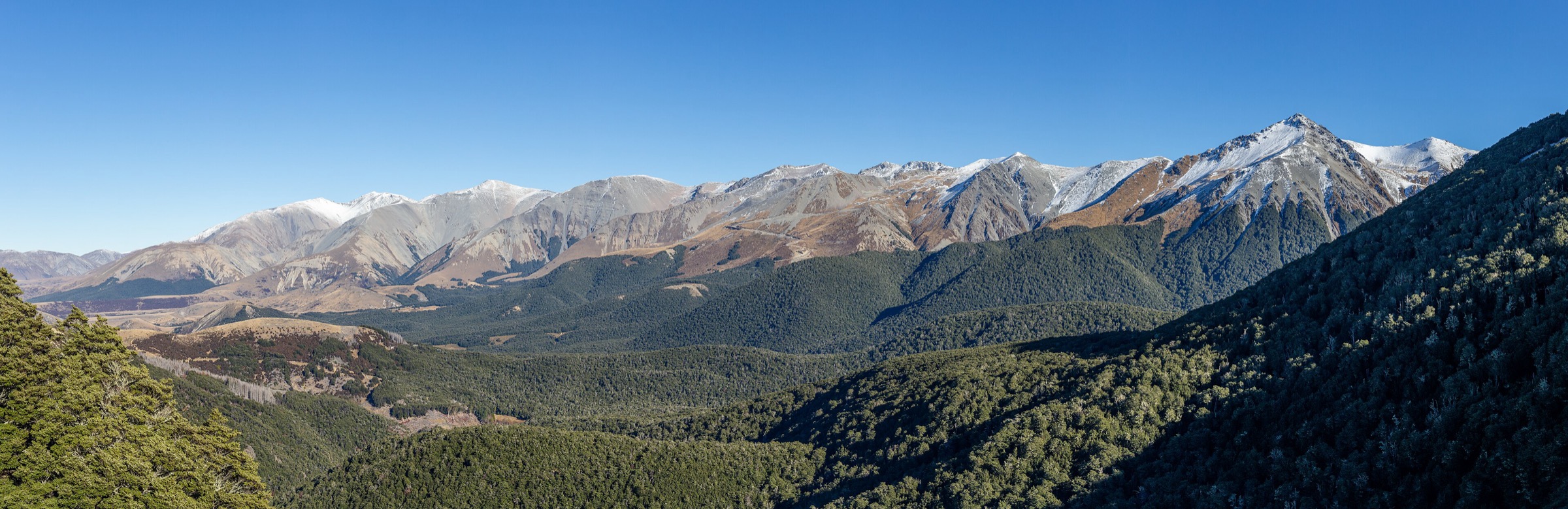
The southern Ruahines are the lower, more dissected southern third of the Ruahine Range, the long axial spine that closes off the North Island’s central watershed between the Manawatū and Hawke’s Bay catchments. Where the northern Ruahines carry the high tussock country of the Whanahuia, Hikurangi and Ngamoko ranges, the southern end runs down through Wharite, Maharahara and the Coppermine hills to the Manawatū Gorge — the famous water gap separating the Ruahines from the Tararuas and the only place a major North Island river breaks straight through the axial range. Access is from Woodville, Dannevirke, Ashhurst and the Pohangina valley, with road ends at the Tamaki, Pinfold/Coppermine and Opawe corridors.
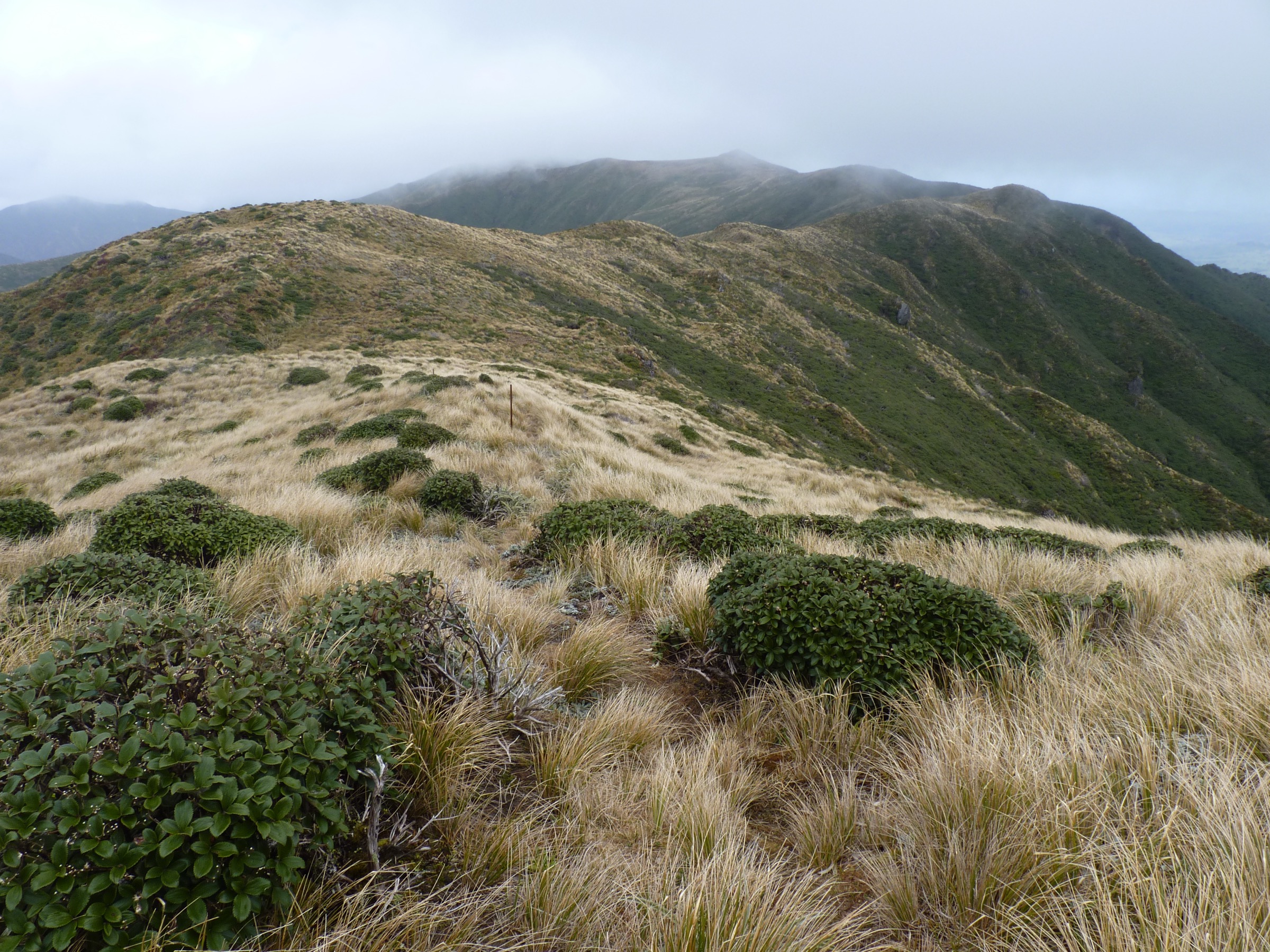
The hiking character at this end of the range is rougher underfoot than its modest elevations suggest. Muddy forest climbs, leatherwood scrub on the windswept knolls, slip-prone hillsides and gorge-edge bluffs all play a part. The bigger tops are gone but the day-hike grading often is not — three of the five routes here are signed by DOC as advanced tramping tracks despite short stated times, because the underfoot conditions, exposed knolls and unstable slopes need experience. The Manawatū Gorge Track is the exception: a graded walking track on benched ground, suitable for fitter day-walkers and the southern end’s flagship route.
Three planning issues dominate every southern Ruahine day-hike. The first is route documentation: DOC publishes one-way times and access notes for each route in this catalogue but in several cases does not publish a distance figure, and elevation gain and maximum elevation are largely unresolved in publicly reusable form. Snapshot fields below reflect DOC’s stated values and flag the rest as unresolved. The second is slips and unstable ground: the Coppermine sector and the Manawatū Gorge sides are actively erosion-prone, and DOC alerts close sections after heavy rain — always check the Ruahine Forest Park alerts page before driving in. The third is wind and exposure on the southern knolls: Wharite and Maharahara are short by axial-range standards but their leatherwood tops are wind-exposed, with cloud and visibility changing quickly.
Access is from Palmerston North Airport (PMR) or by road from Wellington and Napier. There is no direct public transport to any trailhead in this catalogue. The Manawatū Gorge Track is the only route in the set with a feasible drop-off / pick-up plan: the two ends sit on opposite sides of the gorge and a one-way traverse needs a vehicle shuttle.
Selection rationale
Five day-hikes are presented across the southern Ruahines: the Manawatū Gorge Track as the flagship gorge traverse, the Wharite Peak Track as the southern-tip tops climb, the Maharahara Peak Track as the steep forest-to-knoll day out of the Pohangina valley, the Coppermine Track and Coppermine Loop as the heritage walk above Woodville, and the Rokaiwhana Stream Walk as the short lowland-forest sampler from the Tamaki road end. The set is built around access road and route character rather than length: a graded gorge walk, two windy knoll climbs, a mining-heritage out-and-back with optional loop, and a short forest stream walk.
Routes that DOC describes primarily as multi-day tramps — the longer Tamaki and Pohangina through-trips, the full Wharite–Coppermine traverse via the high country, and connections to the northern Ruahine hut network — sit outside this day-hike entry.
Summary
| # | Hike | Trailhead | Route type | Distance | Gain | DOC time | Difficulty |
|---|---|---|---|---|---|---|---|
| 1 | Manawatū Gorge Track | Ballance / Western Gateway, gorge ends | Point-to-point | 11.2 km one way | Unresolved | 3–5 h one way | Easy–Intermediate |
| 2 | Wharite Peak Track | Wharite Peak road end | Point-to-point or out-and-back | Unresolved | Unresolved | 3–4 h | Advanced |
| 3 | Maharahara Peak Track | Opawe Road, Pohangina valley | Out-and-back | Unresolved | Unresolved | 4–6 h | Advanced |
| 4 | Coppermine Track (+ Loop) | Coppermine Road end, Woodville | Out-and-back (+ optional loop) | 6.2 km return; loop 4.1 km | Unresolved | 2 h; loop 2–3 h | Advanced |
| 5 | Rokaiwhana Stream Walk | Tamaki Road end, Dannevirke | Out-and-back | Unresolved | Unresolved | 1 h | Advanced |
1. Manawatū Gorge Track

Snapshot
Itinerary
Start from either the Woodville end at Ballance Gorge Road or the Ashhurst end at Western Gateway Park. The track climbs steadily — steep in places — onto a benched line that traverses high above the Manawatū River for most of its length. Five named viewpoints look down over the river, the rail corridor cut through the gorge, the Te Āpiti wind farm on the Ruahine flank, and the regenerating reserve forest. The Upper Gorge Bridge and the Tawa Loop allow shorter out-and-back variants from either end without committing to the full traverse. The track finishes at the opposite trailhead — there is no loop, so a vehicle shuttle is the standard plan.
Why it is essential
This is the iconic southern Ruahine traverse and the most accessible long native-forest day walk near Palmerston North. The water gap is the only place a major river cuts straight through the North Island axial system, and the track gives a long, graded, no-tramping-experience-required way to see it from above.
Equipment
- Walking shoes or light boots
- Rain shell and warm mid-layer
- 1.5–2 L water
- Food for the day
- Sun protection
- Vehicle-shuttle plan for the one-way traverse
Hazards and notes
- Steep drops and bluffs along the gorge edge — keep to the marked track
- Landslide and slip hazards after heavy rain — DOC closes sections; check alerts
- Slippery sections through native forest after rain
- Wasps and ongaonga (stinging nettle) along the lower track in summer
- No dogs in the Scenic Reserve
2. Wharite Peak Track

Snapshot
Itinerary
From the car park near Wharite Peak, the track climbs steeply from the road end onto the windswept leatherwood tops and continues along the southern Ruahine ridge to Wharite Road. The reverse direction is straightforward as an out-and-back, and the route also links from the northern end where it meets the Coppermine Track / Coppermine Loop for parties wanting a longer day across the southern hills.
Why it is essential
Wharite is the southernmost named peak of the Ruahine Range and gives the catalogue its broad-view objective. On a clear day the tops look south to Kāpiti Island, west across the Manawatū plains, north to the Tongariro mountains and east toward Mount Bruce — an unusually wide North Island panorama for the elevation gained.
Equipment
- Tramping boots with good ankle support
- Rain shell, warm mid-layer, warm hat and gloves
- 2 L water
- Food for a hard half-day
- Map / GPS
- Headlamp with spare batteries
Hazards and notes
- Boggy, windswept leatherwood tops with rapid weather change
- Steep climb from the car park is the day’s main physical work
- Slips and rough gravel access road — check DOC alerts after heavy rain
- 4WD strongly recommended on the upper access road in wet conditions
3. Maharahara Peak Track

Snapshot
Itinerary
Cross the farm access from the end of Opawe Road and climb steeply through southern Ruahine rimu, kamahi and tawa forest. Higher up the track passes into shrubbier vegetation and crosses open rocky knolls to the Maharahara high point. Return is by the same route — there is no loop variant at day length.
Why it is essential
Maharahara is the best southern Ruahine forest-to-leatherwood summit-style day walk — rougher and more local in feel than the gorge or Coppermine tracks. The forest climb is sustained and the open rocky knolls give a short alpine taste before the descent.
Equipment
- Tramping boots
- Rain shell and warm mid-layer
- 2 L water
- Food for a hard day
- Map / GPS
- Headlamp with spare batteries
Hazards and notes
- Steep muddy climb through the forest section
- Rocky open knolls can be exposed in wind and disorienting in cloud
- Leatherwood scrub on the upper track
- Farm access — close gates and respect stock
4. Coppermine Track and Coppermine Loop

Snapshot
Itinerary
From Coppermine Road end, the popular lowland forest track follows the line up to the former copper-mining area — a short heritage objective with interpretive context for the southern range. For a more strenuous circuit, use the Coppermine Loop to return via the upper farmland and viewpoint section, taking care near the steep drop-offs above the lower track.
Why it is essential
This is the southern Ruahines’ best short heritage walk — lowland forest, the remnants of 19th-century copper mining and, on the loop variant, views over southern Hawke’s Bay from the upper paddocks. It complements the longer gorge and tops days as a short objective with strong reason to be there.
Equipment
- Tramping boots
- Rain shell and warm mid-layer
- 1.5–2 L water
- Food for a half-day
- Map / GPS
Hazards and notes
- Unstable erosion-prone slopes — slips are common; check DOC alerts after heavy rain
- Steep drop-offs on the upper loop section
- Farmland and stock on the upper loop — close gates and respect access
5. Rokaiwhana Stream Walk
Snapshot
Itinerary
From the end of Tamaki Road, the route follows a low-level forest tramping track through Rokaiwhana Stream country. Return is by the same line.
Why it is essential
Rokaiwhana gives a short, accessible sample of the Tamaki lowland forest side of the southern Ruahines, balancing the harder tops and gorge routes elsewhere in the set. It is the only short forest walk in this catalogue and the most approachable entry for parties with limited time near Dannevirke.
Equipment
- Sturdy footwear — treat as a muddy tramping track rather than an urban walk
- Rain shell
- 1 L water
- Snacks
Hazards and notes
- DOC grades this as an advanced tramping track despite the short stated time — expect mud and rough ground
- Possible stream-level issues after heavy rain
- Limited facilities at the road end
Further reading
| Resource | Link |
|---|---|
| DOC — Ruahine Forest Park | doc.govt.nz |
| DOC — Ruahine Forest Park alerts | doc.govt.nz |
| DOC — Manawatū Gorge Track | doc.govt.nz |
| DOC — Wharite Peak Track | doc.govt.nz |
| DOC — Maharahara Peak Track | doc.govt.nz |
| DOC — Coppermine Track | doc.govt.nz |
| DOC — Coppermine Loop Track | doc.govt.nz |
| DOC — Rokaiwhana Stream Walk | doc.govt.nz |
| MetService — Manawatū regional forecast | metservice.com |
| Wikipedia — Ruahine Range | en.wikipedia.org |
| Wikimedia Commons — Ruahine Range category | commons.wikimedia.org |