Regional overview
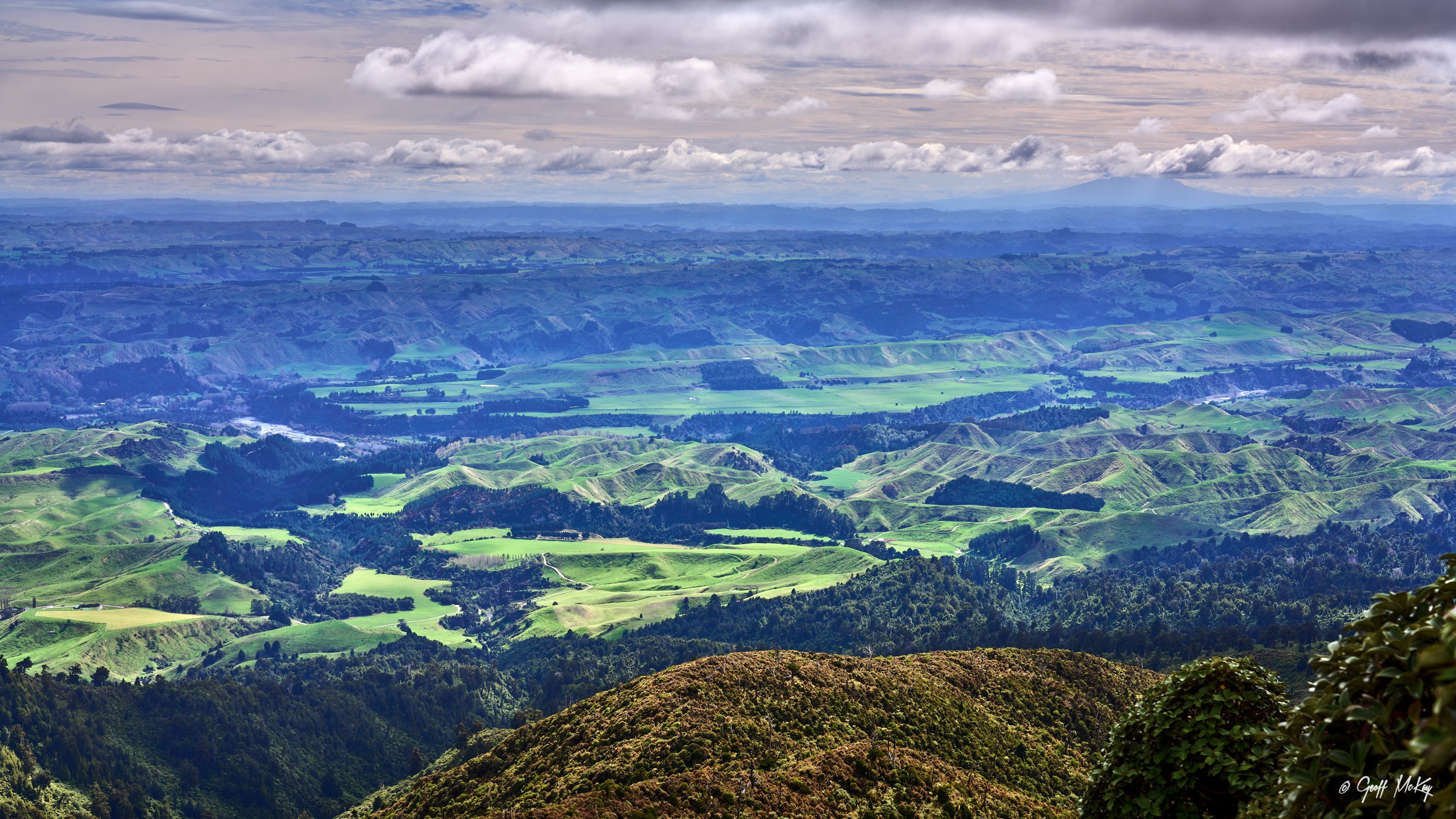
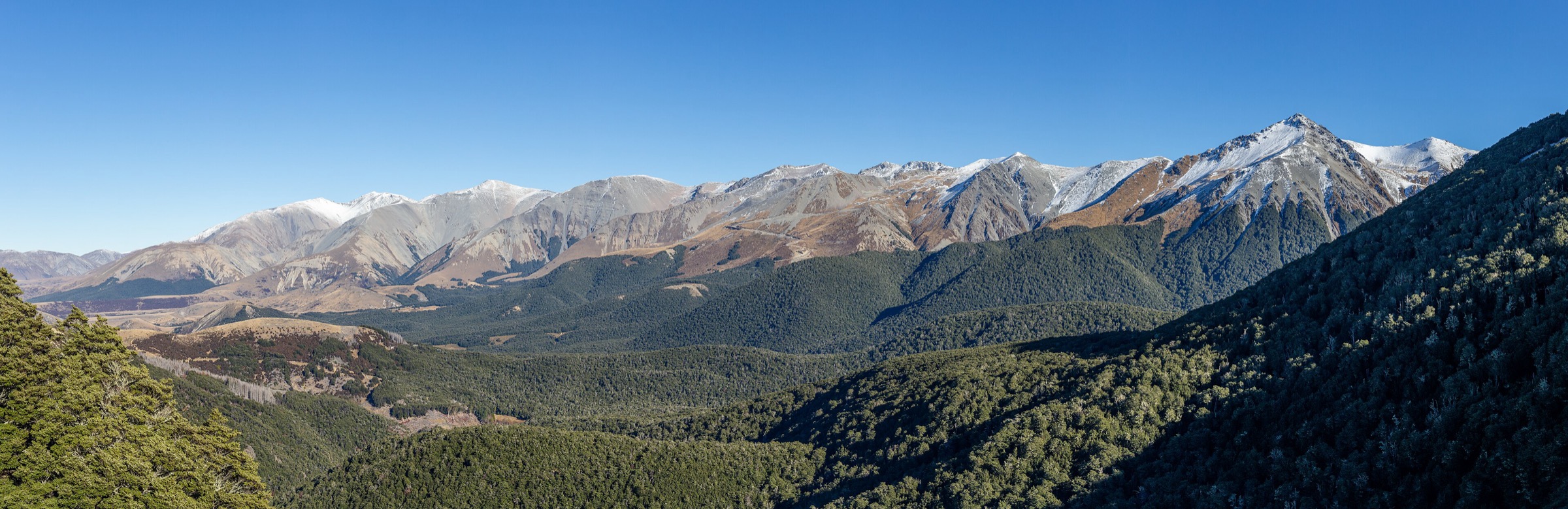
The eastern Ruahines are the Hawke’s Bay flank of the Ruahine Range — the catchment of the Tukituki, Waipawa, Makaroro and Tukipo rivers, draining east off the main divide between Wakarara and the Kashmir block. Where the northern Ruahines look west to the Rangitīkei and the southern Ruahines down to the Manawatū Gorge, the eastern flank rolls east into the Heretaunga Plains, and most trailheads here are reached from Hastings, Waipukurau and Ongaonga by sealed road that turns to gravel as it climbs onto the foothills. Three road systems dominate access: Wakarara Road and Kashmir Road open the central eastern flank (Sunrise, Armstrong Saddle, Longview and the Makaroro headwaters), the Makaroro / Barlow approach runs in along the river itself, and the Daphne / North Block sector is reached from the south through forestry land.
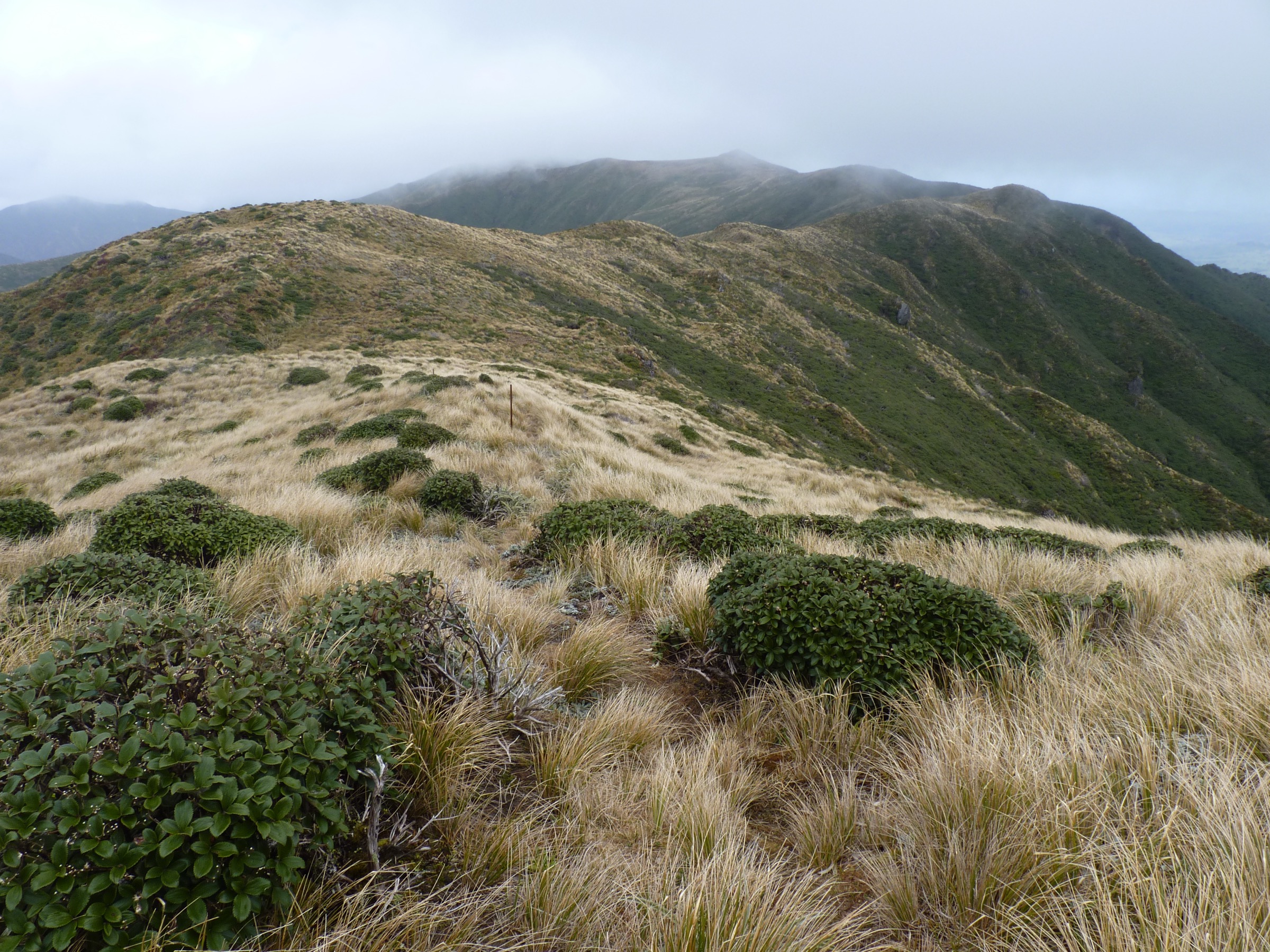
The hiking character on this side is, by North Island standards, drier and slightly more open than the western flank. Trails climb out of red-beech forest into leatherwood and tussock more quickly, and several tops huts — most famously Sunrise Hut above the Waipawa Saddle — sit on the bushline within a half-day’s walk of the road end. The river-valley routes (Daphne, Barlow) are the eastern flank’s longer counterpoint: they stay in the bush and follow the Tukituki, Makaroro and Waipawa branches on long sidles and river crossings. Together the two characters define a catalogue that runs from a short, sharp tops climb to an all-day river walk.
Three planning issues dominate every eastern Ruahine day-hike. The first is river levels. The Waipawa, Tukituki and Makaroro rise fast after rain, and the Daphne and Barlow approaches involve unbridged crossings that turn back parties more often than wind does — a forecast of even moderate rain in the headwaters is reason to postpone. The second is tops weather: Sunrise, Armstrong Saddle and Longview catch the same north-westerly that hits the western flank, but with steeper, more sudden cloud lift over the divide — turn-around discipline at the bushline is the single most important habit on these days. The third is route documentation: DOC publishes one-way times and access notes for each route but does not publish standalone GPX or accurate distance / ascent figures, so the snapshot fields below reflect DOC’s stated times and flag distance and gain as unresolved where they could not be verified independently. DOC alerts at the Ruahine Forest Park alerts page should be checked immediately before travel.
Access is from Hawke’s Bay Airport (NPE) or Palmerston North Airport (PMR) by hire car — there is no public transport to any of these trailheads, and the Wakarara, Kashmir, North Block and Makaroro road ends all finish on gravel that can deteriorate in wet conditions. Plan on 1 h 30 – 2 h 30 of driving from Napier or Hastings to most trailheads, with the last 30–60 minutes on unsealed road. For walkers crossing from the northern Ruahines, the road link between the two flanks runs through Norsewood and Takapau and adds roughly 1 h 30 of driving.
Selection rationale
Five day-hikes are presented across the eastern Ruahines: the Sunrise Hut Track with Armstrong Saddle as the marquee Waipawa Saddle tops day, the Longview Hut Track as the southern Wakarara tops walk, the Daphne Hut Track as the Tukituki river-valley day, the Parks Peak Hut Track as the long Wakarara forest-ridge climb, and the Barlow Hut Track via the Makaroro River as the eastern flank’s signature river walk. The set is built around access road and route character rather than length: two Wakarara / Kashmir tops walks (Sunrise and Longview), two beech-and-river valley days (Daphne and Parks Peak), and the long Makaroro entry to Barlow.
Routes that DOC describes primarily as multi-day tramps are excluded — the Sunrise–Top Maropea–Waipawa Forks circuit, the Howletts Hut traverse from Daphne onwards, and the through-routes from Barlow up the Makaroro headwaters all sit outside a day-hike catalogue. The Howletts Hut and Tiraha alpine routes above Daphne are mentioned in passing as the next objective beyond the Daphne hut day, but are treated as separate tops projects rather than a single-day extension.
Summary
| # | Hike | Trailhead | Route type | Distance | Gain | DOC time | Difficulty |
|---|---|---|---|---|---|---|---|
| 1 | Sunrise Hut Track + Armstrong Saddle | Triplex car park, North Block Road | Out-and-back | Unresolved | Unresolved | 2 h 30 – 3 h one way to hut; +1 h to saddle | Intermediate |
| 2 | Longview Hut Track | Wakarara Road end | Out-and-back | Unresolved | Unresolved | 3–4 h one way | Advanced |
| 3 | Daphne Hut Track | Kashmir Road end | Out-and-back | Unresolved | Unresolved | 4–5 h one way | Advanced |
| 4 | Parks Peak Hut Track | Kashmir Road end | Out-and-back | Unresolved | Unresolved | 4–5 h one way | Advanced |
| 5 | Barlow Hut Track via Makaroro River | Yeoman Track / Makaroro car park | Out-and-back | Unresolved | Unresolved | 5–6 h one way | Advanced |
1. Sunrise Hut Track + Armstrong Saddle

Snapshot
Itinerary
From the Triplex car park at the end of North Block Road, the track climbs steadily on a well-formed benched line through red beech forest, gaining height in long zig-zags. After about an hour, the route reaches Buttercup Hollow, an open subalpine clearing that gives the first tops view of the morning. From the hollow the gradient eases and the track contours through leatherwood and snow tussock to Sunrise Hut on the bushline at approximately 1,280 m, looking east over the Hawke’s Bay foothills and west to the main divide. Fit parties continue another hour on the poled tops route to Armstrong Saddle, the broad alpine pass between the Waipawa Saddle and the headwaters of the Waipawa River — the saddle extension turns the day into a proper alpine outing and should only be attempted in stable weather. Return is by the same route.
Why it is essential
Sunrise is the definitive eastern Ruahine introductory tops walk — the shortest, most direct climb to a hut on the bushline anywhere on the Hawke’s Bay flank, and the standard first day for parties working up to the harder Longview and Parks Peak objectives. The Armstrong Saddle extension turns the hut day into an alpine day without committing to a multi-day tramp.
Equipment
- Walking boots or sturdy approach shoes
- Rain shell and warm mid-layer (the hut is on the bushline)
- 2 L water
- Food for the day
- Map / GPS and basic navigation backup
- Headlamp with spare batteries if starting later in the day
- Light gloves and warm hat outside summer, and the same for the saddle extension at any time of year
Hazards and notes
- The lower track sits below an active slip belt in places; stay on the bench and do not stop in slide zones.
- The hut and the saddle extension are above the bushline — turn back at the hut if the cloud deck closes in or the wind is rising.
- No recreational dog walking is allowed in Ruahine Forest Park.
- No cell coverage above Buttercup Hollow.
2. Longview Hut Track
Snapshot
Itinerary
From the Wakarara Road car park, the track follows the Tukituki River a short distance, then climbs steeply onto the Wakarara Range through red beech forest. The route stays on the ridge for the bulk of the day, gaining height through forest and then leatherwood before reaching the bushline and the Longview Hut on the southern Wakarara tops, with the long view east over Hawke’s Bay that gives the hut its name. Return is by the same route. There is no day-length loop variant.
Why it is essential
Longview is the southern Wakarara counterpart to Sunrise Hut on the parallel North Block: it gives the same bushline-hut payoff from a different road end, with a longer, ridgier climb and a more sustained forest section. Together the two hut walks frame the Wakarara Range tops experience from north and south.
Equipment
- Full day-tramping kit
- Boots with good ankle support for the ridge climb
- Rain shell, warm mid-layer
- 2–3 L water
- Food for a long day
- Map / GPS, headlamp with spare batteries
- PLB recommended for the open tops section
Hazards and notes
- The ridge climb is steep and sustained; pace it on the way up and watch foot placement on the descent.
- The hut sits on the bushline and catches the same weather as Sunrise — turn around if cloud is sitting on the tops.
- Limited mobile coverage on the lower track and none above the bushline.
3. Daphne Hut Track

Snapshot
Itinerary
From the Kashmir Road car park, the track drops west off the road end into beech forest, descending steadily toward the upper Tukituki River. The middle section sidles above the river, dropping into side creeks and climbing out again on narrow ground typical of the Ruahine valley sidles. The route then crosses the Tukituki — an unbridged ford, manageable at normal flows but a hard turn-back trigger after rain — and reaches Daphne Hut in valley forest. The hut is the gateway to the Howletts Hut and Tiraha alpine routes higher up the catchment, but those sit beyond the scope of a day visit. The return climb back to the Kashmir road end is the day’s main physical work. Return is by the same line.
Why it is essential
Daphne is the definitive eastern Ruahine valley day — a hut walk that descends into bush rather than climbing out of it, with a river-crossing decision built into the route. Together with Barlow on the Makaroro, it frames the river-valley character of the eastern flank, in contrast to the Sunrise / Longview tops walks above.
Equipment
- Full day-tramping kit
- Sturdy boots for the descent and the return climb
- Rain shell, warm mid-layer
- 3 L water plus treatment for side-creek and river refills
- Food for a long day
- Map / GPS, headlamp with spare batteries
- Emergency shelter / PLB recommended
Hazards and notes
- The Tukituki ford rises rapidly after rain — check the forecast for the headwaters, not just the trailhead, and turn back at the river if it is anything other than easy.
- The side-creek sidles include short steep drops; pace the descent.
- The return climb to the Kashmir road end is the day’s main work — start early enough to have daylight on the way back.
- Limited mobile coverage on the lower track and none beyond the river.
4. Parks Peak Hut Track
Snapshot
Itinerary
From the Kashmir Road car park — the same trailhead as the Daphne route — the Parks Peak track climbs north along the Parks Peak ridge, gaining height steadily through red beech forest and into kaikawaka and subalpine shrub. The route is a near-continuous climb, with a few short flat sections to break the gradient, and reaches Parks Peak Hut in upper forest near the bushline. From the hut, the ridge continues to the main divide as a multi-day route — out of scope here. Return is by the same line.
Why it is essential
Parks Peak is the forest counterpart to Longview: a long, sustained beech-ridge climb to a hut tucked into upper forest, sharing the Kashmir Road trailhead with Daphne but going up rather than down. As a hard day with a clear objective and a single turn-around, it is the catalogue’s quiet workhorse — the route fit parties use to build legs and time before committing to the Sunrise–Armstrong Saddle or Longview tops.
Equipment
- Full day-tramping kit
- Boots with good ankle support for the sustained climb
- Rain shell, warm mid-layer
- 2–3 L water plus treatment
- Food for a long day
- Map / GPS, headlamp with spare batteries
- PLB recommended
Hazards and notes
- The ridge climb is long and sustained; pace it and respect the turn-around time.
- Roots, mud and wet rock make the descent slower than expected — leave time.
- The hut catches winter snow; turn around below the bushline if conditions look marginal.
- Limited mobile coverage on the lower track and none above.
5. Barlow Hut Track via Makaroro River

Snapshot
Itinerary
From the Makaroro car park at the Yeoman Track end, the route drops to the river and follows the Makaroro upstream on a mix of gravel flats, short forest sidles and repeated unbridged crossings. The walking is straightforward in good conditions and slow in marginal ones — flow, not gradient, sets the pace of the day. Several hours in, the valley narrows and the track climbs a short way to Barlow Hut, a standard backcountry hut on a bench above the river. From the hut, the upper Makaroro and the main Ruahine divide open west — multi-day country, out of scope as a day hike. Return is by the same line.
Why it is essential
Barlow is the longest day on the eastern flank and the catalogue’s signature river walk. It is the route that teaches eastern Ruahine river judgement — when a crossing is safe, when it is not, and how the Makaroro changes character on the way back compared with the way in. Where Daphne is the short, sharp valley day, Barlow is the full-length one.
Equipment
- Full day-tramping kit, lighter on the climb gear
- Boots that drain well — wet feet are the rule, not the exception
- Trekking poles strongly recommended for the river crossings
- Rain shell, warm mid-layer
- 3 L water plus treatment
- Food for a long day
- Map / GPS, headlamp with spare batteries
- Emergency shelter / PLB recommended
Hazards and notes
- River crossings are the principal hazard — the Makaroro can rise rapidly and the route involves repeated unbridged fords. If the river is up on the way in, turn back; if it rises while you are at the hut, wait it out rather than forcing a crossing.
- The valley is prone to washouts and route changes; check DOC alerts before driving in.
- The return leg is long and physically demanding even at normal flows — start at first light.
- Limited mobile coverage on the lower section and none beyond.
Routes excluded as out of scope
The following sit inside or adjacent to the eastern Ruahines but fall outside a day-hike entry, are too duplicative of the five above, or are better understood as multi-day tramps.
- Sunrise – Top Maropea – Waipawa Forks circuit. A multi-day traverse beyond Sunrise Hut; the hut + Armstrong Saddle is covered as entry 1.
- Howletts Hut and Tiraha from Daphne. Alpine routes treated by DOC as multi-day objectives; the day version to Daphne is covered as entry 3.
- Parks Peak – main divide traverse. Multi-day ridge route beyond Parks Peak Hut; the day version is covered as entry 4.
- Upper Makaroro and Mid-Pohangina hut routes beyond Barlow. Multi-day tramps; the day version to Barlow is covered as entry 5.
- Northern Ruahine huts (Rangiwahia, Iron Gate, Purity, Kelly Knight, Knights-Shorts). Covered in the northern Ruahines catalogue.
External links
| Source | URL |
|---|---|
| DOC — Ruahine Forest Park | doc.govt.nz |
| DOC — Ruahine Forest Park alerts | doc.govt.nz |
| DOC — Sunrise Hut Track | doc.govt.nz |
| DOC — Longview Hut Track | doc.govt.nz |
| DOC — Daphne Hut Track | doc.govt.nz |
| DOC — Parks Peak Hut Track | doc.govt.nz |
| DOC — Barlow Hut Track | doc.govt.nz |
| DOC — Ruahine Forest Park huts | doc.govt.nz |
| MetService — Hawke’s Bay forecast | metservice.com |
| Wikipedia — Ruahine Range | en.wikipedia.org |
| Wikimedia Commons — Ruahine Range category | commons.wikimedia.org |
| OpenStreetMap (ODbL 1.0) | openstreetmap.org |