Regional overview
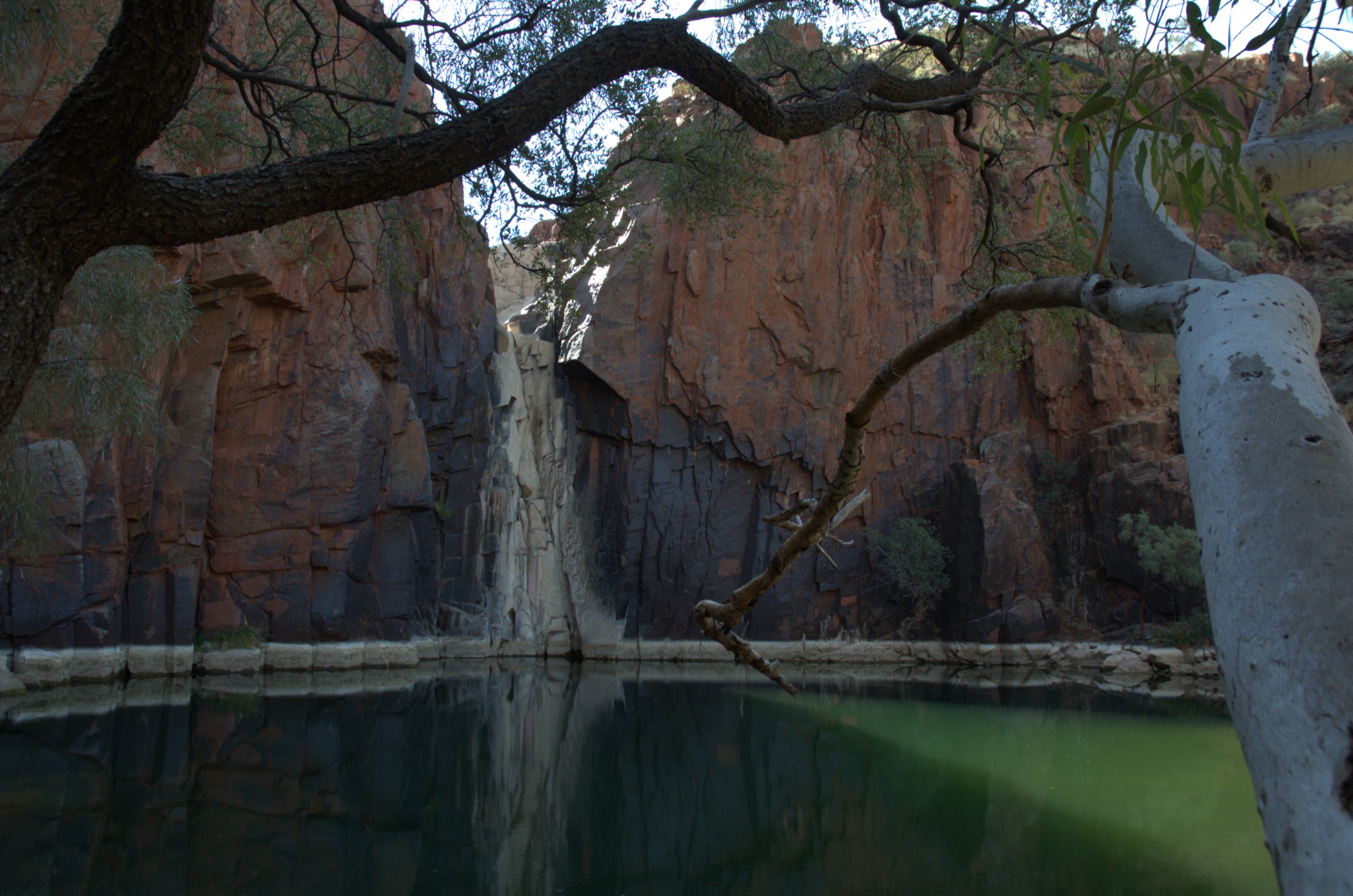
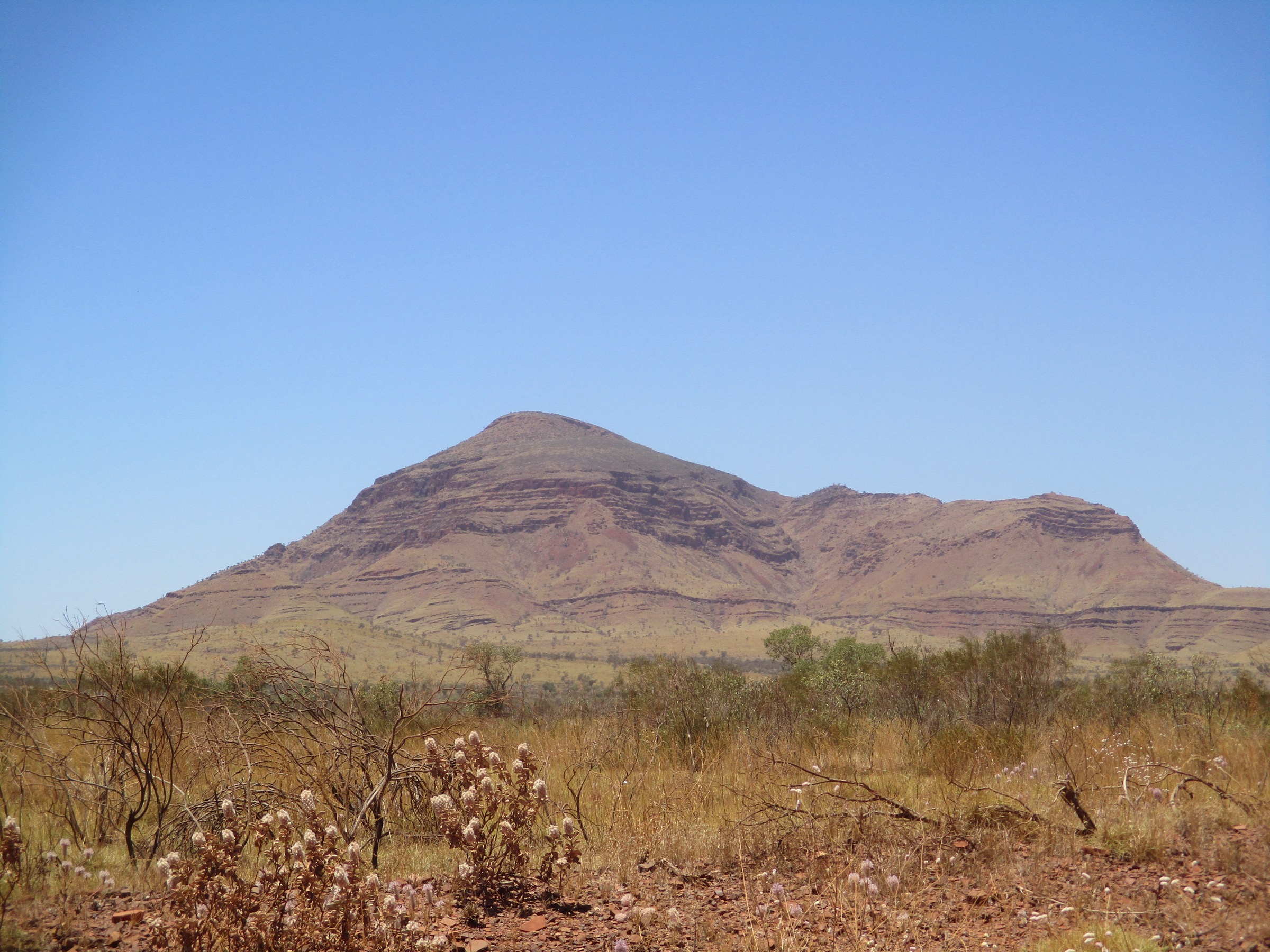
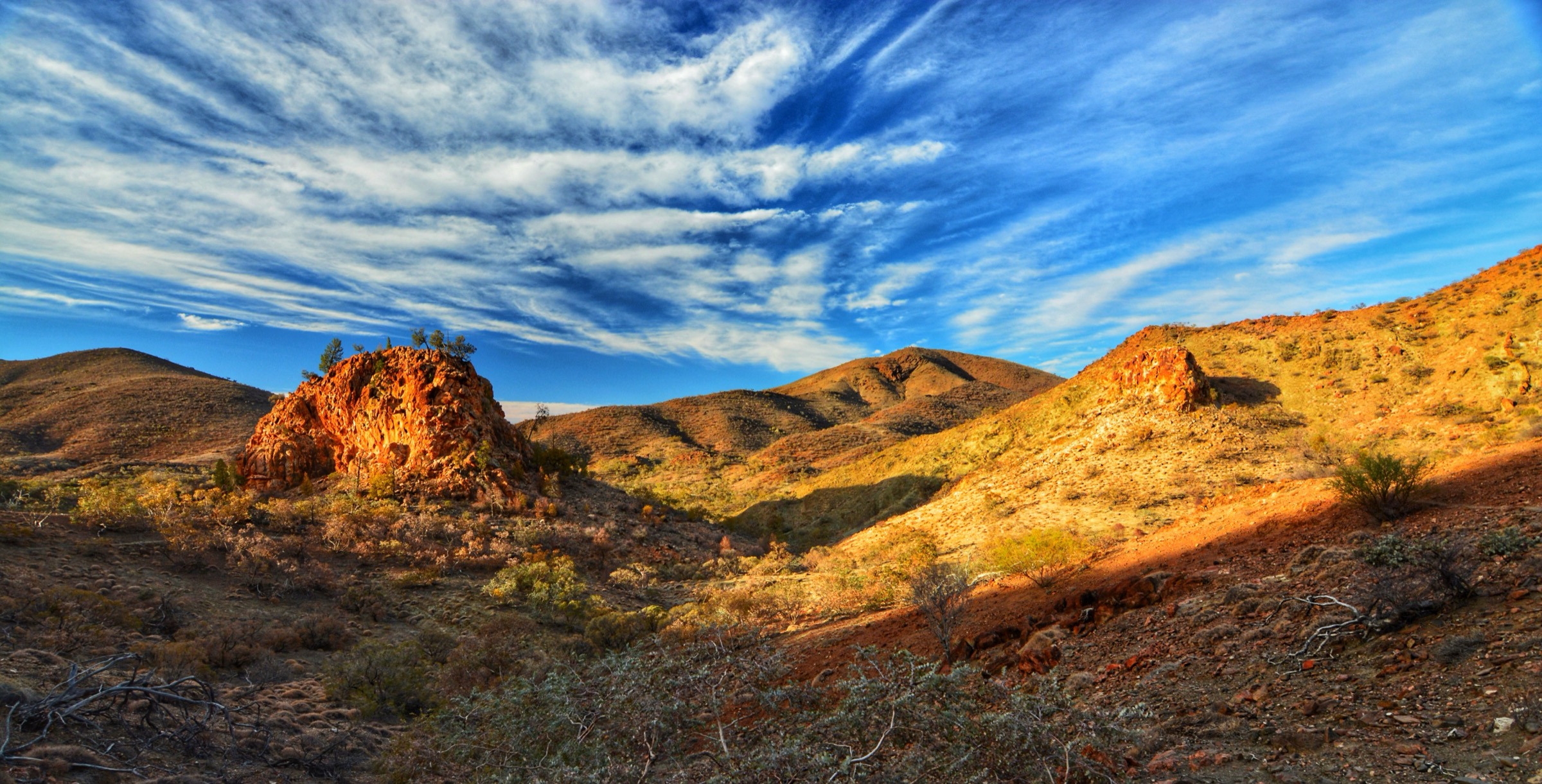
Karijini National Park covers roughly 627,400 hectares of the Hamersley Range in the central Pilbara of Western Australia, about 1,400 km north of Perth and 300 km inland from the Indian Ocean at Onslow. The Traditional Owners are the Banyjima, Kurrama and Yinhawangka (Innawonga) peoples, whose Country the park is co-managed on. Karijini is the second-largest national park in Western Australia and preserves banded ironstone and dolomite formations laid down between about 2.5 and 2.6 billion years ago — some of the oldest exposed rock on Earth — now eroded into a low plateau at 600–900 m from which a network of deep, narrow gorges has been cut by ephemeral rivers.
The walking character of Karijini is defined by those gorges. Four of them — Dales, Weano, Hancock and Joffre — cluster in the northern part of the park and are accessible from Karijini Drive and Weano Road, with the Karijini Visitor Centre serving as the practical hub. A fifth gorge, Hamersley, sits on the far north-western edge of the park and is treated as a separate day trip from the main cluster. Circular Pool at the eastern end of Dales Gorge has been closed to visitors since 2023 following geotechnical and asbestos-related assessments, and remains closed at time of writing; this article treats the Dales system as ending at Fortescue Falls and Fern Pool. Water is a defining feature — every named hike here ends at or passes through a permanent pool — but drinking water on the trails cannot be assumed and all water should be carried from the visitor centre or Dales Campground.
The reliable season for day walking runs from about May to September, the Pilbara “dry”, when overnight lows are cool, days are typically 25–30 °C and the gorge pools are cold but swimmable. Summer (November to March) is extreme: daytime highs regularly exceed 40 °C, cyclone-driven rainfall can trigger flash flooding in the gorges within minutes, and both heat exhaustion and drowning are documented causes of park fatalities. Class 5 gorge-floor routes are periodically closed after heavy rain and during the wet season; check DBCA alerts (parks.dpaw.wa.gov.au) and the Karijini Visitor Centre before any descent.
Karijini uses the DBCA six-class trail grading system rather than the Australian Walking Track Grading System (AWTGS) used in the eastern states. Classes 1 and 2 are boardwalks and formed paths accessible to most visitors; Class 3 is a marked bushwalk on rougher tread; Class 4 involves steeper gradients, unstable surfaces and no continuous formed tread; Class 5 is an unmarked route in remote terrain requiring scrambling, wading, chimneying and route-finding skills; Class 6 requires technical equipment (ropes, harnesses) and is by permit or guide only. The gorge floors at Weano, Hancock, Knox and Joffre include long Class 5 sections; the notorious “Spider Walk” beyond Kermits Pool in Hancock Gorge is Class 6 and off-limits without a licensed guide.
Access is by road. Sealed Karijini Drive links Auski Roadhouse on the Great Northern Highway with the Visitor Centre and Dales Recreation Area; Weano Road on the western side of the park is partly unsealed and links Weano, Hancock, Joffre and Knox trailheads; Hamersley Gorge is reached via Nanutarra–Munjina Road and a separate unsealed spur. A DBCA park entry fee applies. There is no public transport to any trailhead; cell coverage is absent through the park interior, with the nearest reliable signal at the Visitor Centre and at Tom Price, about 90 km west.
Selection rationale
These five hikes were chosen to sample the full range of Karijini’s gorge walking without duplication: the family-scale eastern gorge with the park’s two headline waterfalls (Dales Gorge circuit); the classic slot-gorge scramble that most visitors remember from the western cluster (Weano Gorge to Handrail Pool); the shorter tributary with a photogenic amphitheatre pool at the end (Hancock Gorge to Kermits Pool); the compact viewpoint-and-descent walk at Joffre with its curved amphitheatre waterfall (Joffre Gorge); and the remote north-western outlier whose Spa Pool is one of the most-photographed water features in the Pilbara (Hamersley Gorge and Spa Pool). Mount Bruce / Punurrunha, the second-highest peak in Western Australia, is covered separately as it sits on the plateau above the gorges and is a distinct type of walk. Knox Gorge was considered but excluded to avoid overlap with Weano and Hancock; Kalamina Gorge was excluded as a quieter mid-park alternative; the Class 6 permit-only routes (Regan’s Ford, Red Gorge, the Miracle Mile) are not walker-accessible without guided expeditions.
Summary table
| # | Hike | Country | Route type | Distance | Gain | Max elevation | Difficulty |
|---|---|---|---|---|---|---|---|
| 1 | Dales Gorge circuit (Fortescue Falls, Fern Pool, Gorge Rim) | Australia | Loop | ~4.5 km | ~120 m | ~640 m | Class 3–4 (DBCA) |
| 2 | Weano Gorge to Handrail Pool | Australia | Out-and-back | ~1.6 km | ~80 m | ~700 m | Class 5 (DBCA) |
| 3 | Hancock Gorge to Kermits Pool | Australia | Out-and-back | ~1.5 km | ~80 m | ~700 m | Class 5 (DBCA) |
| 4 | Joffre Gorge Lookout and Falls | Australia | Out-and-back | ~2.3 km | ~100 m | ~720 m | Class 3 rim / Class 5 descent |
| 5 | Hamersley Gorge and Spa Pool | Australia | Out-and-back | ~1.5 km | ~60 m | ~620 m | Class 4 (DBCA) |
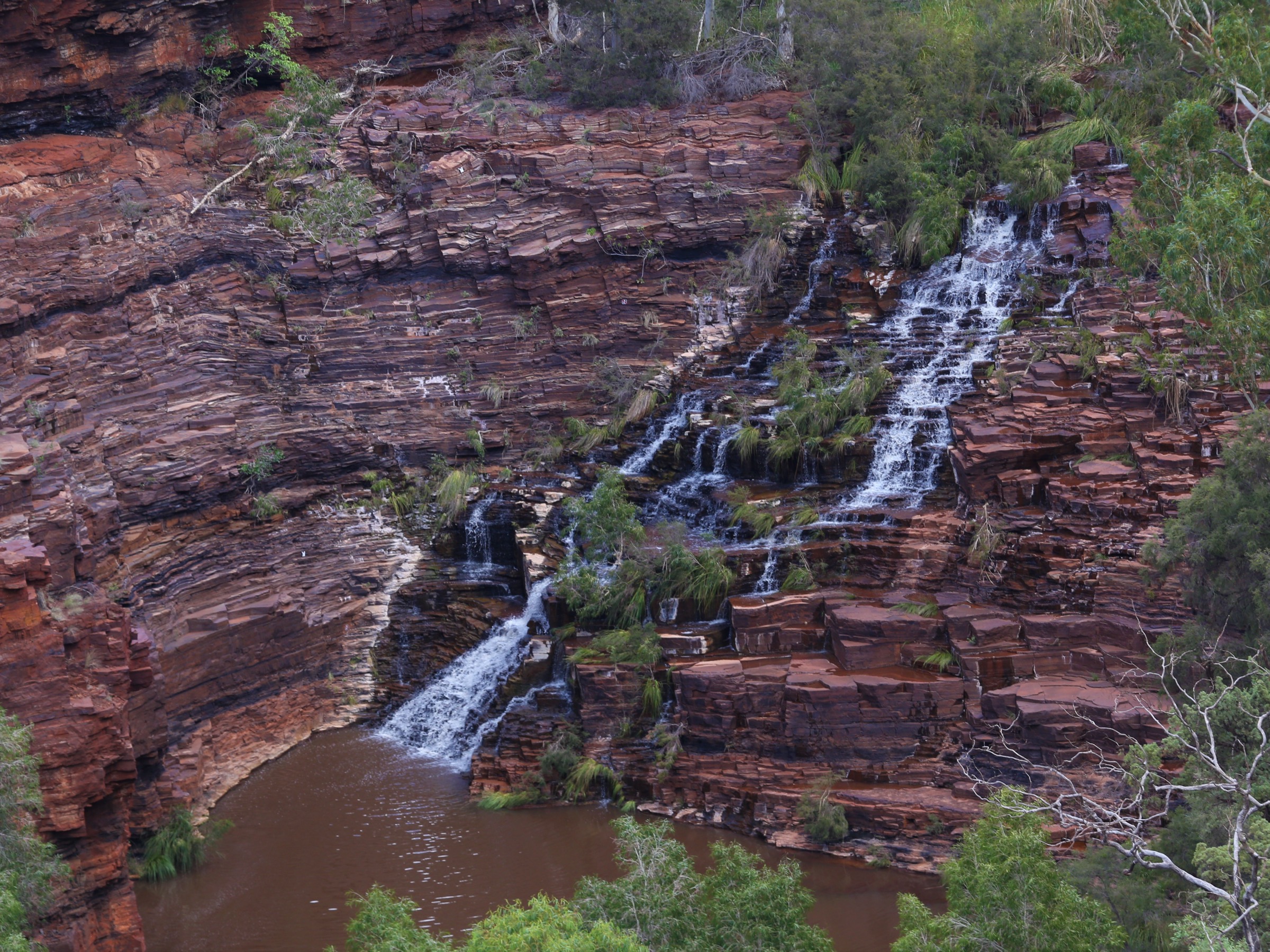
1. Dales Gorge circuit (Fortescue Falls, Fern Pool, Gorge Rim)
Snapshot
Itinerary
The circuit starts from the Fortescue Falls car park on the northern rim of Dales Gorge. The Gorge Rim Walk (Class 3) traces the northern edge of the gorge west from the trailhead to the Fortescue Falls Lookout, then continues to the Three Ways Lookout at the head of the gorge. From Three Ways a steep signposted metal staircase descends through banded ironstone benches to the gorge floor at the base of Fortescue Falls, where the Fortescue River drops over a curved dolomite ledge into a permanent tiered pool.
A short signposted spur (Class 4) follows the gorge floor upstream about 400 m to Fern Pool (Jubura), a spring-fed permanent pool ringed by ferns and paperbark. The pool is a registered Adnyamathanha and Banyjima cultural site — swimming is permitted but silence and modesty are requested, and the small timber platform at the water’s edge should not be crossed. Return is on the same line: back to Fortescue Falls, up the metal staircase, and along the rim east to the car park. The Circular Pool spur east of Three Ways is closed to visitors indefinitely.
Why it is essential
Dales is the accessible “sampler” gorge that gives Karijini’s headline features in one compact half-day: the twin waterfalls, the banded-ironstone gorge walls, and Fern Pool as a cultural centrepiece. It is the only major Karijini gorge circuit that does not require Class 5 wading and scrambling, and it is the standard first-day introduction to the park.
Equipment
- Sturdy walking shoes or light boots (metal staircase and rocky rim)
- Broad-brimmed hat, long sleeves and high-SPF sun protection
- 2–3 L of water
- Swimwear and quick-drying clothing for Fern Pool and Fortescue Falls
- First-aid kit
- Camera; no drones permitted in the park
Hazards and notes
- Circular Pool is closed indefinitely; do not attempt the eastern spur past Three Ways.
- Fern Pool is a cultural site — no jumping, no loud noise, and stay within signed swimming areas.
- Metal staircase to Fortescue Falls is steep and hot in the sun; take care in wet conditions.
- Fully exposed rim; no shade above the gorge.
- Flash-flood risk during summer thunderstorms — do not descend if rain is forecast.
- DBCA park entry fee applies.
GPX / route file
| Source | URL | Format | Notes |
|---|---|---|---|
| DBCA Explore Parks WA — Karijini National Park | exploreparks.dbca.wa.gov.au | Web page | Official route source; no direct GPX download published |
| Trails WA — Gorge Rim Walk, Dales Gorge | trailswa.com.au | Web page | Distance and grade cross-check |
Sources
- DBCA Explore Parks WA — Karijini National Park
- Trails WA — Gorge Rim Walk, Dales Gorge
- Wikimedia Commons — Fortescue Falls within Dales Gorge
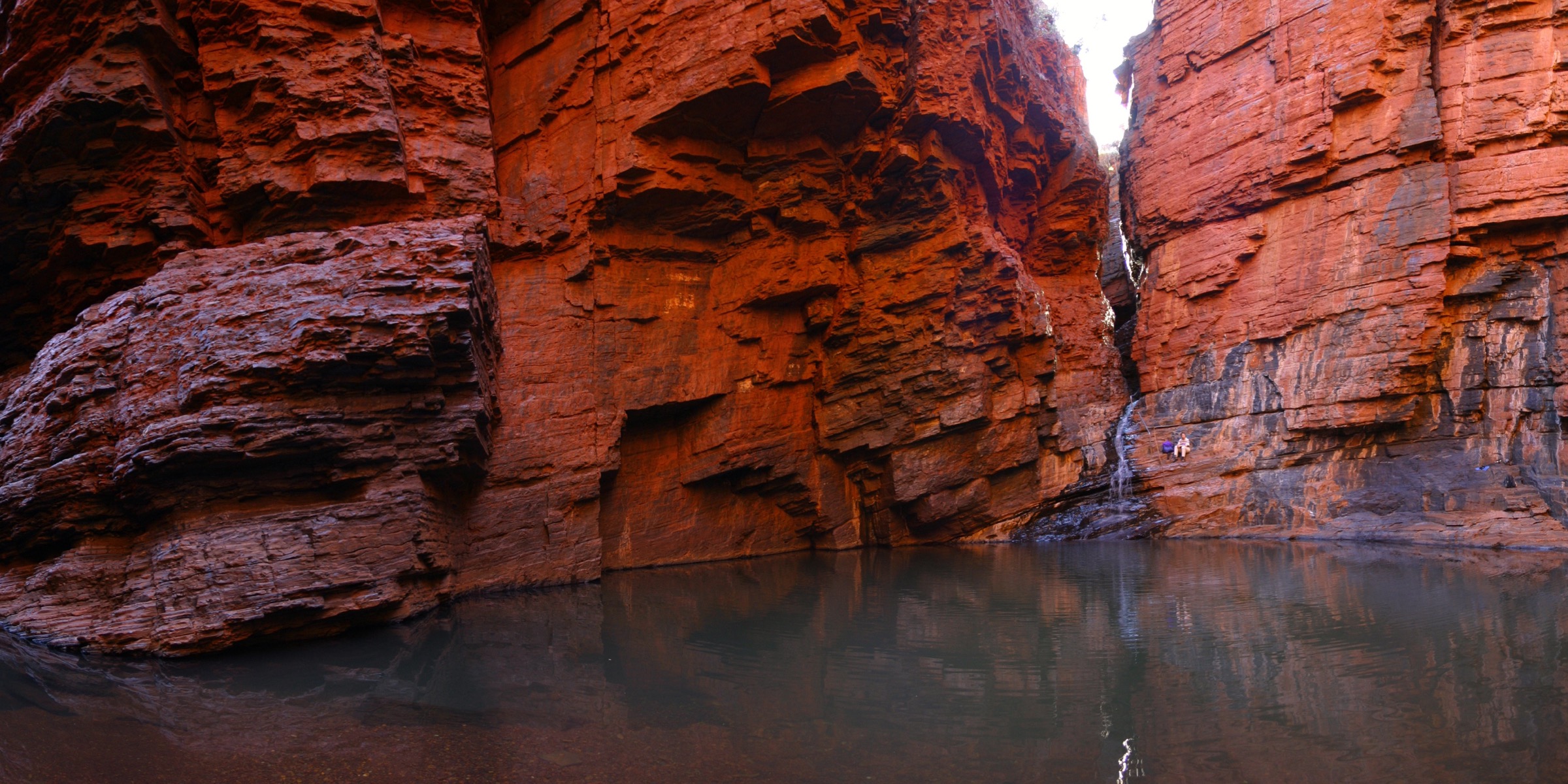
2. Weano Gorge to Handrail Pool
Snapshot
Itinerary
From the Weano day-use area the track drops off the rim through banded ironstone slabs on a rough Class 3 approach and reaches the gorge floor at the Upper Weano pool. Turning right (downstream), the route becomes Class 5: walkers wade shin- to knee-deep along the Weano Creek line, chimney between the narrowing walls of the slot, and follow the water south-east into the lower gorge. About 500 m in, a fixed steel handrail bolted to the polished dolomite wall leads down a short chute into Handrail Pool, a permanent circular pool at the head of the drop into Junction Pool. Return is on the same line back up the handrail and out at the Weano rim.
Fit walkers can extend the day with the short Oxer Lookout track from the Weano Recreation Area car park to the rim junction of Weano, Hancock, Joffre and Red Gorges — treated in this article as the equivalent short spur at the trailhead complex rather than a separate hike.
Why it is essential
Weano is the archetypal Karijini slot-gorge experience: the narrow, polished walls, the handrail step-down and the permanent pool at the base are the images most visitors associate with the park. Handrail Pool is the shortest way into genuine Class 5 gorge terrain in Karijini and the standard headline half-day walk.
Equipment
- Sturdy grippy shoes suitable for wading (closed toe recommended)
- Swimwear worn under quick-dry clothing
- 1.5–2 L of water
- Small dry bag for phone/camera
- Sun protection for the rim approach
- Cool-weather layer for the sunless slot
- No drones (park-wide)
Hazards and notes
- Class 5 — expect to wade and chimney; not suitable for young children or walkers without scrambling experience.
- Handrail is well-maintained but slippery when wet; take care descending in single file.
- Flash floods can fill the slot within minutes. Do not enter if rain is falling or forecast anywhere in the upper catchment.
- No route continues safely past Handrail Pool without licensed-guide support (the “Spider Walk” section is Class 6).
- Fully sunless in the slot; can be cold even in the dry season.
GPX / route file
| Source | URL | Format | Notes |
|---|---|---|---|
| DBCA Explore Parks WA — Weano Recreation Area | exploreparks.dbca.wa.gov.au | Web page | Official route source; no direct GPX download published |
| Karijini Eco Retreat — Gorges guide | karijiniecoretreat.com.au | Web page | Distance and grade cross-check |
Sources
- DBCA Explore Parks WA — Weano Recreation Area
- DBCA Explore Parks WA — Karijini National Park
- Wikimedia Commons — Handrail Pool, Weano Gorge
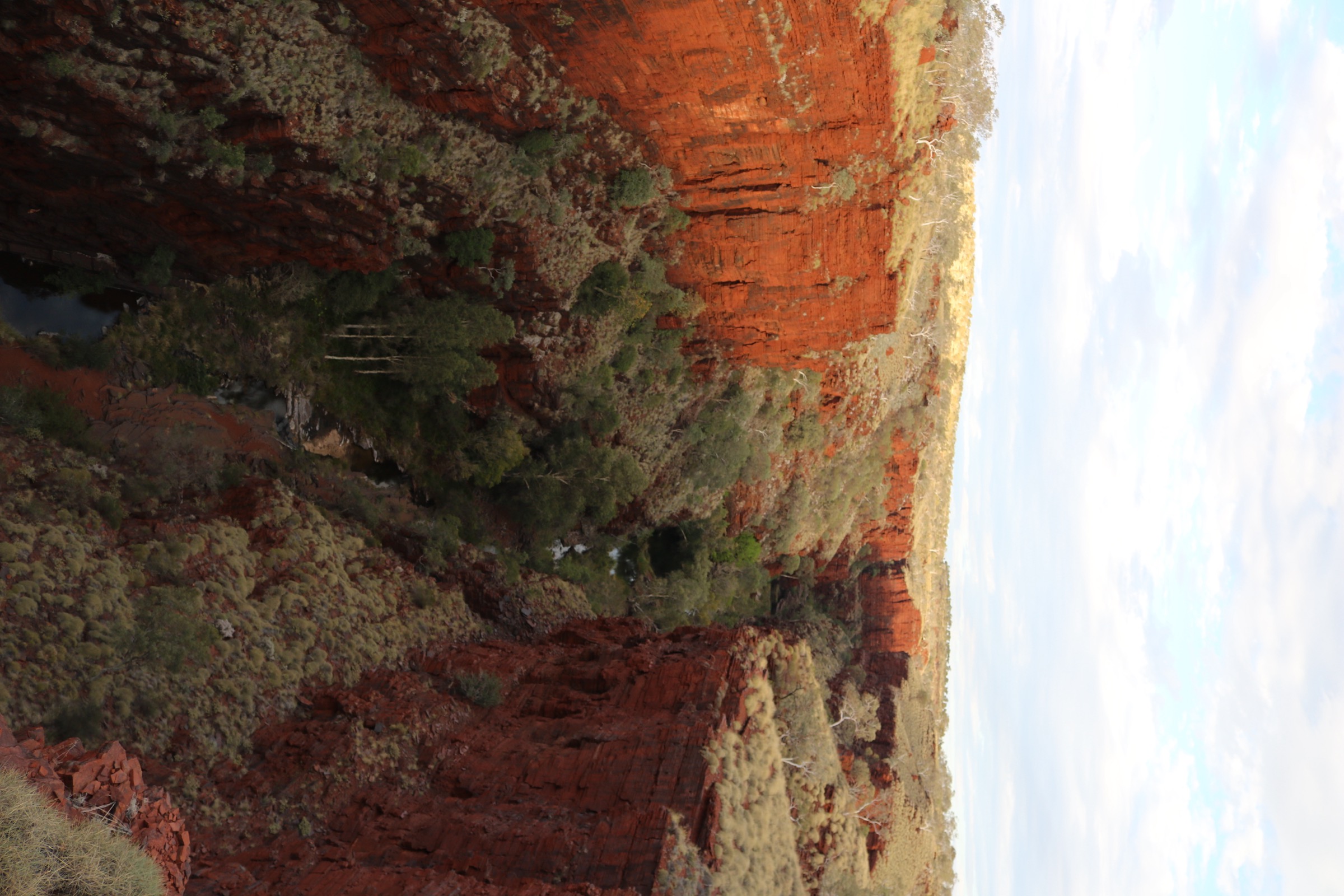
3. Hancock Gorge to Kermits Pool
Snapshot
Itinerary
The Hancock Gorge track leaves the same car park cluster as Weano and Oxer Lookout, drops off the rim on a rough Class 3 approach, and reaches a permanent ladder that descends the final steep step into the gorge floor. From the ladder base the route becomes Class 5: walkers wade downstream through a series of narrow rock chambers along the Hancock Creek line, then negotiate a short chimney section between polished dolomite walls to reach Kermits Pool, an oval green pool tucked at the end of a curved amphitheatre. Return is on the same line back up the chimney and ladder to the rim.
The famous “Spider Walk” continues from Kermits Pool along a narrow slot with feet braced on one wall and hands on the other, dropping to Regan’s Pool and the Miracle Mile. That section is classified Class 6 by DBCA and is only accessible with a licensed adventure operator.
Why it is essential
Kermits Pool is the most photographed cul-de-sac in Karijini’s western gorge cluster. The short walking distance disguises the technical character — the chimney and ladder sections are what most walkers remember as the definitive Karijini experience. It complements Weano’s handrail step-down with a shorter, more contained scramble.
Equipment
- Sturdy grippy shoes suitable for wading
- Swimwear and dry-bag as for Weano
- 1.5 L of water
- Cool-weather layer for the sunless slot
- No drones
Hazards and notes
- Class 5 with a laddered descent; not suitable for parties without scrambling experience.
- The Spider Walk section beyond Kermits Pool is Class 6 (permit / guided only) and has been the site of documented rescues and fatalities. Do not continue past Kermits without a licensed guide.
- Flash-flood risk as for Weano — do not descend if any rain is forecast.
- Cold water and sunless walls — hypothermia possible in shoulder seasons.
GPX / route file
| Source | URL | Format | Notes |
|---|---|---|---|
| DBCA Explore Parks WA — Weano Recreation Area | exploreparks.dbca.wa.gov.au | Web page | Official route source; no direct GPX download published |
Sources
- DBCA Explore Parks WA — Weano Recreation Area
- Wikimedia Commons — Hancock Gorge (Karijini National Park)
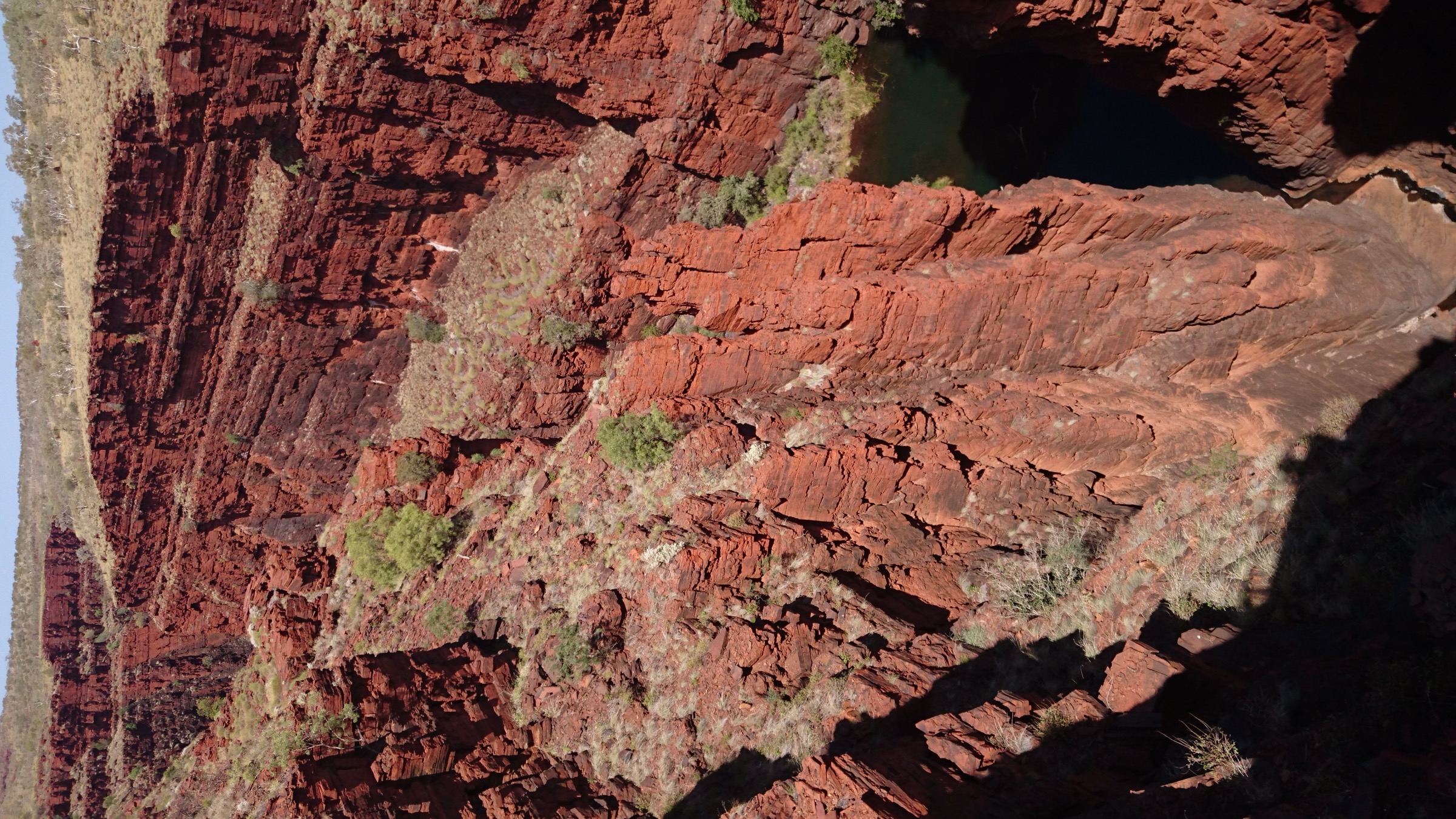
4. Joffre Gorge Lookout and Falls
Snapshot
Itinerary
The trailhead sits on the Karijini Eco Retreat access road, a short drive north of Weano. A short Class 3 spur from the car park reaches the Joffre Lookout, a signposted platform on the northern rim that gives the standard photograph of the curved amphitheatre 80 m below — a semi-circular wall of banded ironstone stepped into pools, with the seasonal Joffre Falls dropping into the head pool after summer rain. From the lookout a signposted descent (Class 5) drops steeply through boulders and short scramble steps to the amphitheatre floor and the base of the falls, where a swimming pool holds water year-round. Return is on the same descent line back to the rim.
Why it is essential
Joffre is the region’s most photogenic amphitheatre and is often photographed as the “wedding cake” gorge for its stepped pools. As a half-day walk it slots neatly between Weano’s slot experience and Hancock’s short chimney and is the natural third stop of a Weano-Hancock-Joffre day.
Equipment
- Sturdy grippy shoes
- Swimwear and dry-bag
- 1.5–2 L of water
- Sun protection for the rim
- No drones
Hazards and notes
- Rim section is fenced and family-friendly; the descent to the falls is Class 5 — do not attempt without scrambling confidence.
- Fully exposed rim; sunless amphitheatre floor.
- Flash-flood risk — do not descend if any rain is forecast.
- No public toilet at the trailhead; use Karijini Eco Retreat facilities.
GPX / route file
| Source | URL | Format | Notes |
|---|---|---|---|
| DBCA Explore Parks WA — Karijini National Park | exploreparks.dbca.wa.gov.au | Web page | Official route source; no direct GPX download published |
| Karijini Eco Retreat — gorge guide | karijiniecoretreat.com.au | Web page | Distance and grade cross-check |
Sources
- DBCA Explore Parks WA — Karijini National Park
- Karijini Eco Retreat — gorges guide
- Wikimedia Commons — Joffre Gorge (Karijini National Park)
5. Hamersley Gorge and Spa Pool
Snapshot
Itinerary
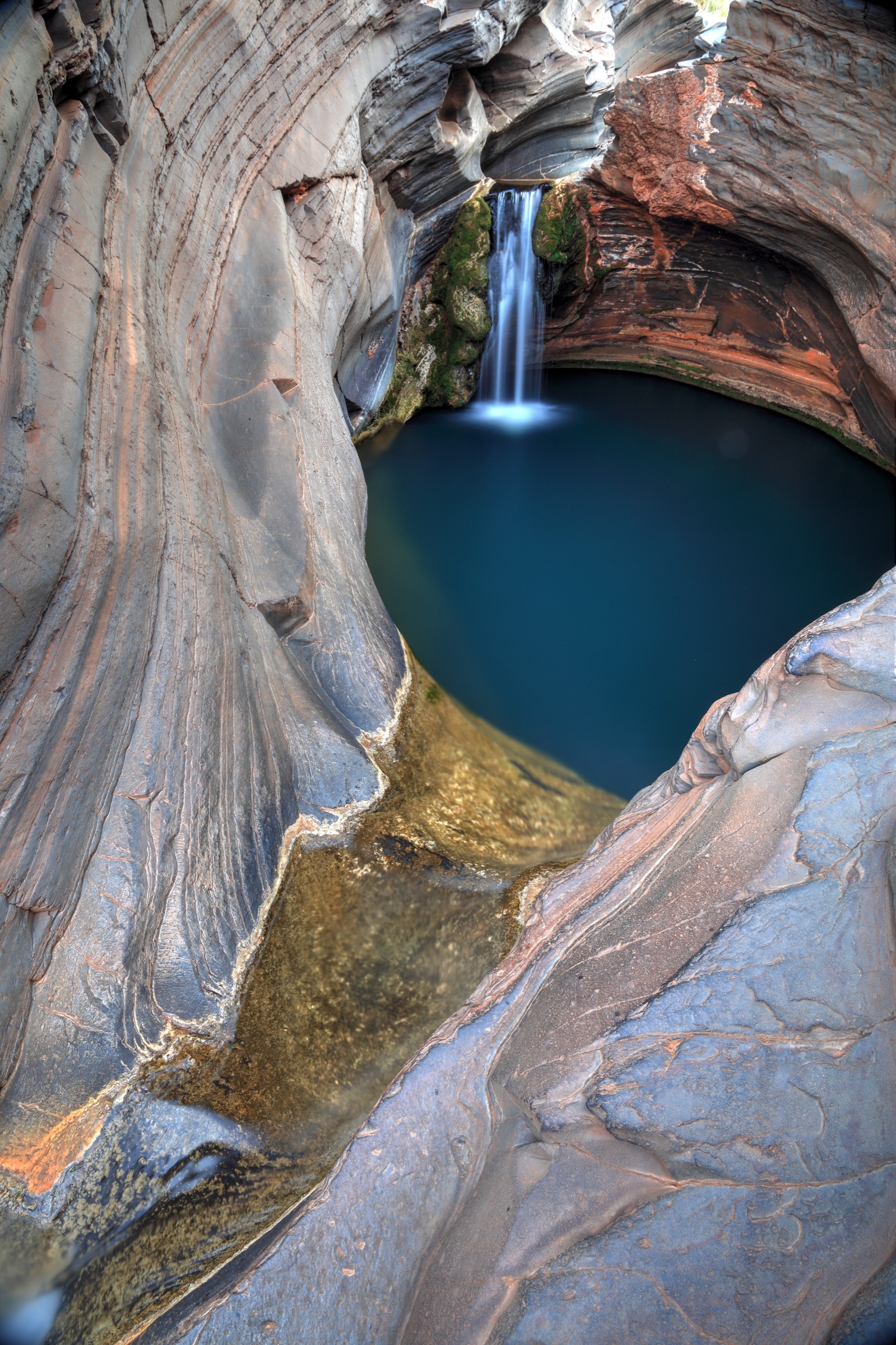
Hamersley Gorge sits on the north-western edge of the park, roughly 90 km from the main gorge cluster and best combined with a separate day drive. From the small day-use car park a signposted stone staircase (Class 4) drops directly to the gorge floor at Hamersley Pool, where the folded and colour-banded ironstone walls form the tightest S-bend curves in the park. Most visitors turn back here.
For Spa Pool, the route continues upstream along the gorge floor — wading through shallow riffles, scrambling around chockstones and short pour-overs — for roughly 400–500 m to a hidden circular pool tucked into a curved dolomite chute. The upstream scramble is Class 4 rising to Class 5 in the final section. Return is on the same line back to the stone staircase.
Why it is essential
The folded banded ironstone walls at Hamersley are the most striking geological feature in the park, and Spa Pool is one of the most-photographed water features in the Pilbara. The gorge sits far enough from the main cluster to feel like a separate destination — worth the additional drive as a stand-alone day.
Equipment
- Sturdy grippy shoes for wading
- Swimwear and dry-bag
- 1.5–2 L of water
- Sun protection for the rim
- Full fuel tank and spare tyre for the unsealed access spur
Hazards and notes
- The stone staircase is steep and hot; take care in wet conditions.
- Spa Pool scramble includes short Class 5 sections and is not signposted or marked beyond the initial pool — turn back if the route is not obvious.
- Access spur is unsealed and can be badly corrugated; cyclone-driven wet-season rain closes the road periodically.
- Flash-flood risk as elsewhere in Karijini.
GPX / route file
| Source | URL | Format | Notes |
|---|---|---|---|
| DBCA Explore Parks WA — Karijini National Park | exploreparks.dbca.wa.gov.au | Web page | Official route source; no direct GPX download published |
Sources
Region-level sources
| Source | URL |
|---|---|
| DBCA Explore Parks WA — Karijini National Park | exploreparks.dbca.wa.gov.au |
| DBCA Explore Parks WA — Weano Recreation Area | exploreparks.dbca.wa.gov.au |
| DBCA — Karijini National Park Improvement Project | dbca.wa.gov.au |
| Karijini Eco Retreat — Gorges and Waterfalls guide | karijiniecoretreat.com.au |
| Trails WA — Gorge Rim Walk, Dales Gorge | trailswa.com.au |
| Tourism Western Australia — Karijini | westernaustralia.com |
| Wikipedia — Karijini National Park | en.wikipedia.org |
Further reading
Nearby Hamersley Range guides on Storm
- Chichester Range / Millstream
- Karijini National Park Improvement Project
- Australia’s North West — Karijini National Park
- Wikipedia — Banyjima people
Missing data / follow-up work
- DBCA does not publish direct GPX or KML downloads for individual Karijini walks. All route files listed above are official web-page sources; a legally reusable GPX would need to be captured on the ground or drawn from OpenStreetMap.
- Elevation gain for each gorge descent is estimated from the rim–to-floor drop rather than any published cumulative-gain figure.
- Distances for the wading sections in Weano, Hancock and Hamersley vary between sources; DBCA gives the shortest official quote (e.g. Hancock 400 m return to the head of the descent), while trail databases quote longer figures that reach the terminal pool.
- Circular Pool spur in Dales Gorge remains closed indefinitely; confirm current status via DBCA alerts before travel.
- Wet-season closures of Class 5 gorge floors vary year to year — confirm with the Karijini Visitor Centre before any descent.